You’ve likely spent hours searching, comparing websites, and trying to decipher the landscape of executive coaching in Singapore. You see figures ranging from a few hundred dollars to five-figure packages, leaving you with a critical question: What am I actually paying for?
The search for a price tag is often a search for certainty. But when it comes to deep, sustainable leadership growth, the cost isn’t just a number on an invoice. It’s an investment in dismantling the invisible barriers – the overthinking, the people-pleasing, the imposter syndrome that cap your impact, no matter how successful you appear on the outside.
This guide provides a transparent breakdown of executive coaching rates in Singapore for 2026. More importantly, it offers a framework to help you move beyond comparing hourly rates and start measuring the real ROI of your professional and personal growth: the reclamation of your grounded authority.
The Current Market Rates for Executive Coaching in Singapore
Navigating the cost of executive coaching in Singapore requires understanding that you’re not just buying an hour of someone’s time; you’re investing in a specific level of depth, experience, and transformational journey. The market generally falls into three distinct tiers.
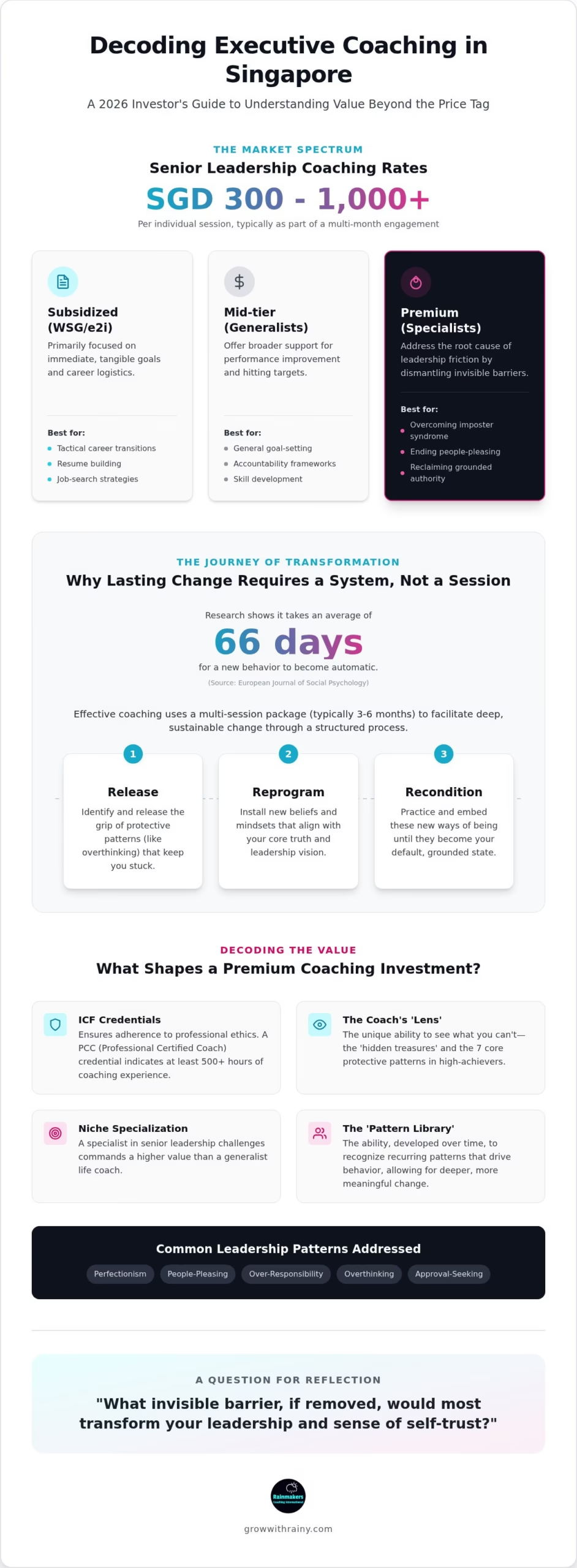
For senior-level leaders, the 2026 market range for individual executive coaching sessions in Singapore is typically between SGD 300 and SGD 1000+. However, this session rate is just one piece of the puzzle. The true cost reflects the depth of the coaching process, the coach’s proprietary system, and the length of the engagement needed to create lasting behavioural change.
- Subsidized (WSG/e2i): Often focused on tactical career transitions, resume building, and job-search strategies.
- Mid-tier (Generalists): Coaches who offer broader support, often focusing on goal-setting and accountability.
- Premium (Specialized Executive Transformation): Specialists who work with senior leaders on the underlying patterns (like perfectionism or fear of failure) that inhibit their leadership.
The critical distinction is this: are you looking for a tactical fix for your resume, or a grounded shift in how you show up, lead, and trust yourself?
Subsidized vs. Private Coaching: Which Is Right for You?
Government-supported programs, such as those through Workforce Singapore (WSG) and e2i, provide valuable resources, particularly for individuals in a career transition or seeking job-matching support. They are structured, accessible, and excellent for addressing immediate, tangible goals.
However, senior leaders often face challenges that are less about the ‘what’ and more about the ‘how’. The exhaustion from over-responsibility or the feeling of being a fraud in the boardroom isn’t something a new job title can solve. Private executive coaching provides a confidential, psychologically safe space to address these ‘invisible protective strategies’.
The hidden cost of a free or heavily subsidized service can be a directive, one-size-fits-all approach – executed by generalist coaches who inadvertently misses the deeper patterns of overthinking or perfectionism that are the true source of friction.
Understanding the Multi-Session Package Model
One-off coaching sessions are rare in the executive space for a simple reason: meaningful transformation doesn’t happen in 60 minutes. Most effective coaching engagements in Singapore are structured as 3- to 6-month packages. This duration is not arbitrary; it’s rooted in the science of neuroplasticity and habit formation.
A multi-session package allows for a structured journey, like our 3R Integration (Release, Reprogram, Recondition). This process moves beyond surface-level advice and facilitates deep, sustainable change:
- Release: We first identify and release the grip of the protective patterns that keep you stuck.
- Reprogram: We then work to install new beliefs and mindsets aligned with your core truth.
- Recondition: Finally, we practice and embed these new ways of being until they become your default, grounded state.
This systematic approach ensures the investment leads to a permanent shift in your leadership operating system, not just a temporary boost of motivation .
Factors That Shape Your Coaching Investment
When you see a premium price for executive coaching, it’s rarely just about the coach’s time. The investment is shaped by a combination of their credentials, their unique diagnostic lens, and the proven effectiveness of their coaching approach.
Key factors influencing the cost include:
- ICF Credentials: A baseline certification from the International Coaching Federation (ACC, PCC, MCC) ensures the coach adheres to professional ethics and has a minimum number of logged coaching hours.
- The Coach’s ‘Lens’: A great coach doesn’t just listen; they see what you can’t. The ‘Rainmakers Lens’, for example, is our ability to quickly identify the 7 core protective patterns in high-achievers and see the ‘hidden treasures’ they conceal. This is more valuable than generic advice.
- Specialization: A coach specializing in the specific challenges of senior leaders, such as navigating imposter syndrome after a promotion, will command a higher fee than a generalist life coach.
- Methodology: The depth and proof behind the coach’s system. For instance, our work is grounded in the understanding that creating new neural pathways for behaviour requires consistency over time. Research published in the European Journal of Social Psychology suggests it takes an average of 66 days for a new behaviour to become automatic, which is why we advocate for longer-term engagements.
The Role of Experience and Credentialing
In the Singapore corporate landscape, a Professional Certified Coach (PCC) credential from the ICF is often considered a benchmark of quality, indicating at least 500 hours of coaching experience. However, credentials are just the starting point.
Beyond certification, what matters is the coach’s depth of experience in helping leaders navigate real-world challenges and create meaningful change. A skilled executive coach understands the complexities leaders face – not simply from studying leadership, but from successfully coaching leaders through challenges involving confidence, communication, influence, stakeholder relationships, decision-making and leadership presence.
Over time, experienced coaches also develop what I call a **Pattern Library – **the ability to recognise recurring patterns such as perfectionism, people-pleasing, over-responsibility, overthinking or approval-seeking that may be quietly influencing how a leader thinks, behaves and leads.
Recognising these patterns allows the coach to go beyond addressing the presenting problem and help uncover what may be driving it underneath – so the coaching can focus on deeper, more meaningful change.
The Depth of the Transformation System
Many coaching models focus on goal-setting and action plans. While useful, this approach often fails high-achievers because it doesn’t address the underlying reasons why they aren’t already doing what they know they should. This is where the depth of the coach’s system becomes paramount.
‘Release’ work – the process of identifying and letting go of long-held protective strategies is far more complex and requires more skill than traditional goal-setting. It involves creating a space of profound psychological safety where a leader can be vulnerable enough to examine the fears and beliefs that drive their behaviour. This grounded, proven coaching approaches and real client experience to rebuilding self-trust is the cornerstone of true transformation.
Reflective question: If your overthinking costs you two hours of sleep a night and hours of indecision at work, what is the real ‘price’ of that exhaustion?
The Cost of the ‘Cheap’ Option: Why Tactical Fixes Often Fail
In a market with so many options, it’s tempting to choose a coach based on the lowest price. But this often leads to the ‘Tactical Fix’ Trap: you get a short-term solution for a surface-level problem, while the root cause remains untouched. Fixing your LinkedIn profile or rehearsing interview answers doesn’t stop the inner critic from following you to your next role.
The true measure of a coaching investment isn’t the upfront cost; it’s the longevity of the results. Is ‘expensive’ a number, or is it the lack of a meaningful outcome? A SGD 500 ‘fix’ that wears off in a month is far more costly than a SGD 5,000 transformation that reshapes your entire career trajectory.
For example, many leaders struggle with the ‘Over-Responsibility’ pattern, believing they must do everything themselves to ensure it’s done right. A tactical coach might offer time-management tips or delegation frameworks. While well-intentioned, this simply gives an already overwhelmed leader another to-do list, feeding the burnout cycle.
A transformational coach, however, would help the leader explore the underlying fear of losing control or letting others down, releasing the pattern at its source.
Tactical Coaching vs. Transformational Coaching
Understanding the difference between these two approaches is key to making an informed investment. One addresses the symptoms; the other heals the cause.
| Feature | Tactical Coaching | Transformational Coaching |
|---|---|---|
| Focus | External results (e.g., new job, promotion, resume). | Internal shifts (e.g., self-trust, grounded confidence, authenthic leadership, releasing patterns). |
| Method | Providing answers, tools, and ‘hacks’. | Asking powerful questions to unlock the client’s own wisdom, innate strengths and resources. |
| Duration | Short-term, session-based. | Medium- to long-term engagement (6-12+ months). |
| Goal | Achieving a specific, immediate outcome. | Creating a sustainable new way of being and leading. |
In this context, the ROI of coaching is best defined as the reduction of internal friction and the corresponding increase in self-trust, leading to clearer, faster, and more courageous decisions and growth.
The Risk of Stagnation
Choosing a low-cost, generic coach can feel like the ‘safe’ option. However, this approach often carries a hidden risk. A coach who lacks the depth to challenge you may inadvertently reinforce the very protective strategies you’re trying to overcome. They might praise your perfectionism as ‘high standards’ or your people-pleasing as ‘strong stakeholder management’, leaving you validated but still stuck.
In a competitive and dynamic hub like Singapore, the opportunity cost of delayed leadership growth is immense. Every month spent in indecision, burnout , or self-doubt is a month of lost impact, influence, and fulfilment.
Reflective question: What has it already cost you – in energy, peace of mind, or career opportunities – to stay exactly where you are?
A Practical Framework for Choosing Your Executive Coach
Once you’re clear on the type of coaching you need, the selection process becomes less about price and more about fit and methodology. A generic checklist isn’t enough; you need to test for depth and resonance.
Here is a five-step framework to guide your choice:
- Look for a diagnostic ‘lens’ that goes beyond your symptoms. Does the coach talk about your situation in a way that provides a new perspective? A great coach won’t just hear that you’re stressed; they’ll help you see the underlying pattern that’s causing it.
- Evaluate the coach’s presence. During the initial conversation, pay attention to how you feel. A truly effective executive coach in Singapore should feel grounded, present, and empathetic. This creates the psychological safety necessary for real change.
- Ask about their transformation system. Go beyond “What’s your process?”. Ask how they facilitate change that lasts. A clear, proven system (like our Rainmakers Transformation System™️: Release, Reprogram, Recondition) is a sign of a coach who has refined their craft.
- Check for stories that mirror your own. Testimonials are good, but breakthrough stories that detail the ‘before’ and ‘after’ of a client’s internal world are better. Look for evidence that they have guided people with your struggles.
- Prioritize a coach who challenges you. The goal isn’t to hire a friend who agrees with everything you say. The right coach will respectfully challenge your assumptions and hold up a mirror to the beliefs that are holding you back.
Questions to Ask During Your Discovery Call
A discovery call is your opportunity to interview the coach. Move beyond logistics and ask questions that reveal their depth:
- “How do you help leaders move from fear-based decision-making to a place of grounded self-trust?”
- “From your experience, what are the most common protective patterns you see in high-achieving leaders?”
- “How do you ensure the changes we make are sustainable and integrated, not just a temporary ‘coaching high’?”
The Importance of ‘Chemistry’ and Safety
Ultimately, the most critical factor is the quality of the relationship . High-stakes leadership development requires a foundation of psychological safety. You must feel that you can bring your whole self to the conversation – your fears, your doubts, your ambitions without judgment.
There is a key difference between a mentor and a coach. A mentor gives you their playbook; a coach helps you discover and write your own. The right coach creates a space where you feel seen for your highest potential, not just analyzed for your current patterns.
Reflective question: In your initial conversation with a potential coach, do you feel seen for your potential, or just judged for your patterns?
Beginning Your Transformation: The 90-Minute Conversation
Understanding the cost and value of executive coaching is the first step. The next is experiencing it. The journey to reclaiming your leadership doesn’t start with a ‘buy’ button; it begins with a deep, honest, and powerful conversation.
We invite you to a complimentary 90-minute coaching conversation designed to give you a firsthand experience of our coaching style. This isn’t a sales pitch. It’s a dedicated coaching session focused entirely on you, your challenges, and the hidden treasures locked within your protective patterns. It is the bridge between ‘knowing’ you need a change and ‘feeling’ the clarity of the path forward.
What to Expect in Your First Session
This initial session is a space for you to put down the heavy ‘mask’ of the perfect executive. Together, we will:
- Create a safe space to explore the core challenges and sources of friction in your professional life.
- Begin to identify the primary protective strategy (e.g., perfectionism, overthinking, people-pleasing) that is currently costing you the most.
- Outline a clear, grounded path forward that is tailored not to a generic leadership model, but to your personal truth and innate wisdom.
Your Invitation to Lead with Impact
The cost of overthinking, self-doubt, and playing small is far greater than any coaching fee. Now is the time to stop managing your exhaustion and start investing in your freedom. It’s time to trust your own wisdom and lead from a place of grounded confidence.
If you are ready to move from protection to presence, we invite you to take the next step.
Book your 90-minute coaching conversation with Rainy today and discover what it feels like to lead with your full, authentic impact.
Final reflective question: What treasures are you currently keeping hidden behind your need for control?
Frequently Asked Questions About Executive Coaching Costs
Is executive coaching in Singapore tax-deductible?
For individuals, professional development expenses may be tax-deductible if they are incurred to enhance skills and knowledge relevant to your current employment. For businesses sponsoring coaching for their employees, it is generally considered a deductible business expense. However, tax laws can be complex, so it’s always best to consult with a qualified tax advisor in Singapore to understand your specific situation.
What is the difference between a life coach and an executive coach in Singapore?
How many sessions are typically included in an executive coaching package?
Most transformative executive coaching packages in Singapore run for a minimum of 3 to 6 months. This often translates to anywhere from 6 to 18 sessions, typically held weekly or bi-weekly. This cadence provides enough time for deep work during sessions and for the client to practice and integrate the new insights and behaviours between calls.
Do I need my company’s approval to engage a private executive coach?
No, you do not. Many senior leaders choose to invest in private and confidential coaching on their own. This allows for a completely safe space to discuss sensitive topics without any perceived conflict of interest or reporting requirements back to the organization.
What are the standard ICF credentials I should look for in Singapore?
The ICF offers three main credentials: ACC (100+ coaching hours), PCC (500+ hours), and MCC (2,500+ hours). Credentials indicate training and experience, but coaching effectiveness is not determined by hours alone. Also consider the coach’s track record, relevant client experience, testimonials, and ability to help clients achieve meaningful outcomes.
Can executive coaching help with burnout and overthinking?
How do I measure the ROI of my coaching investment?
The ROI of transformational coaching is both tangible and intangible. Tangible ROI can be seen in promotions, improved team performance, reclaimed time from indecision, and better business outcomes. However, the most profound ROI is often intangible: reduced stress and anxiety, better sleep, peace of mind, improved relationships, renewed career fulfilment, and the ability to lead with grounded confidence and clarity.
Is there a difference in cost between face-to-face and virtual coaching in Singapore?
Previously, face-to-face coaching often carried a premium due to travel time and overheads. However, since 2020, high-quality virtual coaching has become the norm for executives. Most top-tier coaches now charge based on the value and outcome of their system, not the delivery method. Virtual coaching offers greater flexibility and access to the best coach for you, regardless of location.

Article by
Rainy Rainmaker
Rainy Rainmaker is the founder of Rainmakers Coaching International and a transformational coach for confidence, self-trust, and authentic leadership. Based in Singapore, she helps high-achieving professionals, managers, and leaders who appear capable on the outside but feel quietly held back by self-doubt, overthinking, imposter feelings, burnout, or a loss of direction.
Through her signature Rainmaker Transformation Journey™: Release, Reprogram, Recondition – Rainy helps clients uncover the insights already within them and turn inner clarity into aligned action that creates lasting change in life, career, and leadership.
