
You may already have a reputation. The question is whether it reflects the leader you are becoming. Perhaps you are known as dependable, analytical, driven, commercially sharp, or the person who gets difficult things done. Those qualities may have built your credibility, but they may not fully capture the value you now want to be recognised for. That is where personal branding for corporate leaders becomes important.
A strong personal brand is not about creating a polished image or becoming more visible for the sake of visibility. It is about becoming clearer about what you stand for, the strengths you want to be known for, and the kind of leadership presence you want to build. As your career evolves, your reputation also needs to evolve with you. If people still see you mainly through the strengths that got you here, they may miss the broader leadership value you are ready to bring next.
In this guide, we’ll explore how to shape a personal brand that reflects your strengths, values, leadership identity and future direction, so the way others experience you is more aligned with the leader you are becoming.
Key Takeaways
- Understand why a polished LinkedIn profile often creates a “High-Achiever Self-Trust Gap” and how to bridge it with true presence.
- Identify the 7 protective patterns, such as overachievement, that keep you feeling like a “bonsai” version of yourself at work.
- Discover why personal branding for corporate leaders is actually a journey of reconnecting with your truth rather than adding another layer of performance.
- Learn to apply the 3R methodology—Release, Reprogram, Recondition—to clear the mental clutter and lead with quiet, grounded strength.
- Shift your focus from superficial metrics to grounded success, ensuring your authority is recognized for your true value, not just your performance.
Beyond the LinkedIn Profile: Why Traditional Branding Feels Hollow
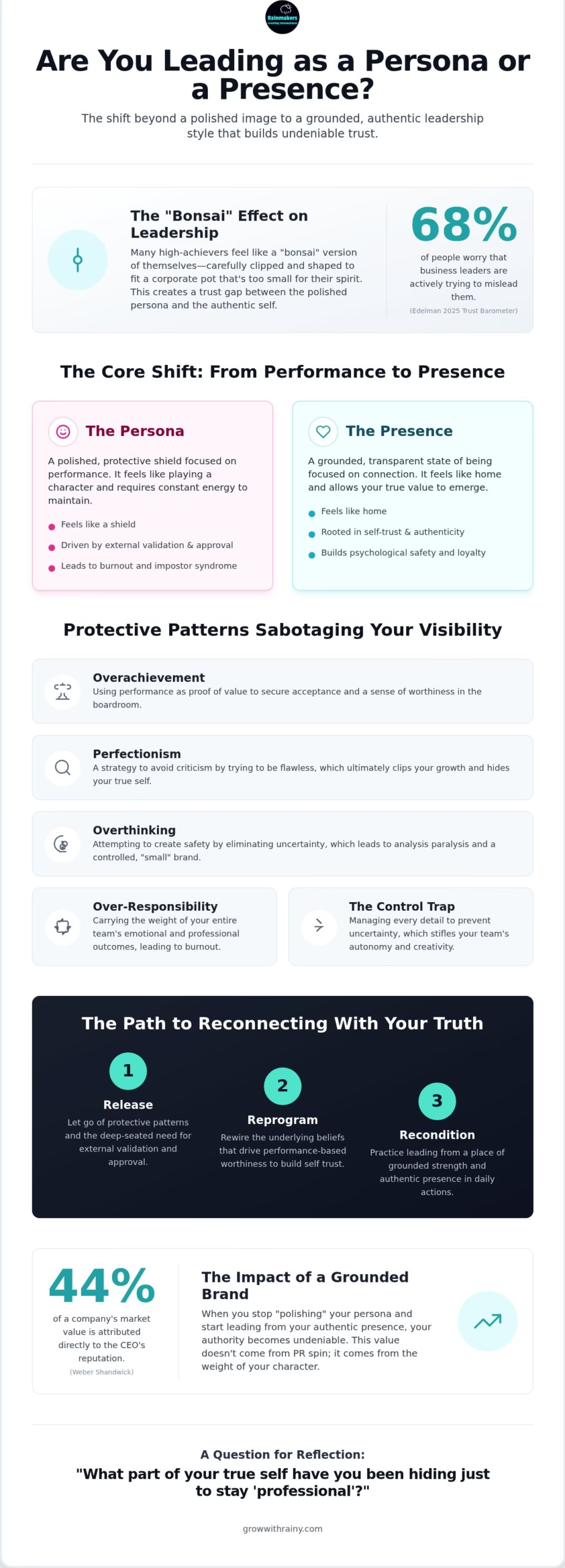
Most executives approach What is personal branding? as a checklist of external credentials. You polish the bio, update the headshot, and list your board seats. Yet, there’s often a lingering sense of friction. You look successful on paper, but you feel like you’re playing a character. This is what I call the "High-Achiever Self-Trust Gap." Success hasn’t led to a resonant brand because that brand is built on a persona, not a presence. Your capability isn’t the problem. The pattern underneath is. When you focus only on the "bio," you might be masking a deeper fear of being truly seen.
The High-Achiever’s Paradox
Why does more evidence of capability fail to build more self trust? It’s because you’ve learned to "perform" leadership. You’ve become an expert at what the board wants to see, but you’ve clipped your own natural edges in the process. It’s the "bonsai" effect. You fit the corporate pot, but you’ve lost your wild strength. Insight into this is helpful, but it isn’t transformation.
If you’re struggling with impostor syndrome after a promotion, it’s often because your persona is doing the work while your true self is hiding. Real personal branding for corporate leaders requires moving from performance to presence.
- Persona: Polished, protective, and focused on performance. It feels like a shield.
- Presence: Grounded, transparent, and focused on connection. It feels like home.
Reconnecting with Your Truth
Building a leadership development plan for 2026 requires reconnecting with your truth. This is the bedrock of your brand. It isn’t about fixing flaws. It’s about allowing your hidden treasures to emerge. When you lead from a grounded place, you create psychological safety for your team. They stop looking for the "catch" because they can feel your authenticity. A grounded brand isn’t loud; it’s solid. It provides the stability others need to follow you with confidence.
The impact of this shift is measurable. Research from Weber Shandwick shows that executives attribute 44% of their company’s market value directly to the CEO’s reputation. This value doesn’t come from a PR spin. It comes from the weight of a leader’s character. When you stop "polishing" and start being, your authority becomes undeniable. What part of your true self have you been hiding just to stay "professional"?
The 7 Protective Patterns Sabotaging Your Professional Visibility
Your leadership brand isn’t something you build from scratch. It is already there, like a diamond, but it’s often covered in the "mud" of protective patterns. Most of us learned early on that performance is proof of value. We use overachievement to secure love, acceptance, and a sense of worthiness in the boardroom.
This constant need for approval creates a heavy weight. It drains your executive presence because you’re too busy managing how others see you to actually be seen. This is a primary challenge in personal branding for corporate leaders today.
If you find yourself constantly adjusting your message to please the board, you might be falling into a career misalignment. This is the cost of approval-seeking. It silences your authentic voice. While a guide to personal branding for CEOs might suggest strategic communication, that strategy must be rooted in truth, not a desperate plea for acceptance.
Perfectionism and Overthinking: The Visibility Killers
Perfectionism is rarely about excellence. It is a strategy for protecting your worthiness. By trying to be flawless, you’re trying to avoid the pain of criticism. At Rainmakers, we see overthinking as an attempt to create safety by eliminating uncertainty. If you can anticipate every objection, you feel safe. But this creates a "bonsai" brand. You remain clipped, controlled, and small. You never grow into the full expression of your authority because you’re too afraid of making a "mess." Reclaiming personal branding for corporate leaders starts with acknowledging these internal blocks.
The Over-Responsibility and Control Trap
Do you carry the weight of your entire team’s emotional state? Over-responsibility is a pattern that prevents you from standing in your own authority. When you are busy carrying everyone else’s burden, you lose your own agency.
This often stems from a need for control, which is just another way to find safety in high-stakes environments. Breaking the cycle of people-pleasing is essential to find an authentic leadership voice. You must define your personal value examples to guide your choices instead of letting others’ expectations drive you.
According to Tenet (Dec 2025), while 70% of professionals believe personal branding is important, only 15% have a clearly defined strategy for it. This gap exists because many are trapped in these protective patterns.
If you feel stuck in these cycles, a coaching conversation can help you identify which patterns are currently dimming your light. Which of these patterns do you recognize in your daily work life?
Reconnecting with Your Truth: The Shift from Persona to Presence
You can’t build a resonant brand on top of a shaky foundation. If your current professional identity feels like a heavy coat you put on every morning, it’s time to stop adding layers. Real personal branding for corporate leaders isn’t about becoming "more"; it’s about releasing what is in the way.
Confidence is not about becoming louder or more aggressive. It’s about being yourself when the stakes are high. When you shift from a polished persona to a grounded presence, you stop performing and start leading. This transition requires a commitment to reconnecting with your truth before you ever post a status update or step onto a stage.
The 3R Methodology for Branding
The Rainmakers Transformation System™ uses a specific sequence to move you from pattern awareness to authentic expression. Unlike traditional programs that treat you like a product to be modularized, this process focuses on your internal state. To build a brand that lasts, you must follow the 3R Methodology:
- Release: You must let go of the protective strategies, like perfectionism or over-responsibility, that no longer serve your next stage of growth. These patterns served you once, but now they act as a ceiling.
- Reprogram: This involves shifting your inner narrative. You move from believing your value is tied to your performance to recognizing your innate value. It’s about building self trust from the inside out.
- Recondition: Here, you build new habits of visibility. You learn to share your insights in a way that feels safe and authentic, using strategies for your leadership brand that align with your actual values.
Evidence of Grounded Authority
The corporate world is changing. A 2024 study on executive presence suggests that "authenticity" is now valued higher than "dominance" in the boardroom. This confirms that the old "command and control" style is losing its weight. When you have self trust, you don’t need to dominate a room to lead it. You lead through the quiet strength of your presence.
This allows you to live authentically without the constant, exhausting weight of performance. You can explore more about this shift in my guide on Executive Presence: Reclaiming Self-Trust for Authentic Leadership.
By moving through the Rainmaker Change Sequence, you uncover the treasures that your protective patterns have been hiding. Wisdom, courage, and a clear sense of purpose are already within you. They don’t need to be "built"; they simply need to be revealed.
When you stop trying to be the leader you think they want, you finally become the leader they actually need. What treasures – wisdom, courage, or purpose – are you currently hiding behind your corporate persona?
5 Grounded Strategies to Build a Resonant Executive Brand
Are you posting to be seen, or are you posting because you have something to say? Most advice on personal branding for corporate leaders focuses on the "hustle"—more content, more platforms, more noise. But volume is not authority. If you’re exhausted from maintaining a digital presence that feels like a second job, it’s time to shift toward grounded success. This isn’t about superficial metrics like "likes" or "shares." It’s about the resonance of your message and the depth of your connection with those you lead.
True authority comes from the quality of your presence, not the quantity of your posts. When you lead from a place of self trust, your brand becomes a natural extension of your mission rather than a forced performance. This requires moving away from transactional networking and toward strategic alliances rooted in truth.
Audit Your Current Visibility Patterns
Before you update your profile again, look at the "why" behind your visibility. Is your branding driven by one of the 7 protective patterns? For example, if Perfectionism is the driver, you might only share carefully polished successes that reveal very little of what you have learned along the way.
If Approval-Seeking is the engine, you may find yourself looking to external validation to feel successful. To build a brand that actually moves people, you must replace performance-based proof with value-based presence.
Ask yourself: am I sharing this to get a "like," or to share a piece of hard-won wisdom?
Practical Visibility Tactics
Sharing "real-life moments" that illustrate your 10 key qualities of a leader is more effective than any polished press release. This doesn’t mean oversharing; it means being transparent about the challenges you’ve navigated. How you handle critical feedback gracefully also becomes part of your brand. When you are reconnecting with your truth, you don’t need to be right to be safe. You can listen with genuine curiosity because your value isn’t on the table.
The data supports this human-centric approach. According to research from Edelman and LinkedIn (July 2026), 73% of B2B decision-makers believe that a company’s thought leadership is a more trustworthy basis for assessing capabilities than traditional marketing materials. Your audience isn’t looking for a "perfect" leader; they are looking for a grounded one who speaks from experience.
When your leadership philosophy reflects your personal mission, you create a brand that feels like an invitation rather than a sales pitch. When you look at your current professional footprint, does it feel like a mask you wear, or a true reflection of the treasures you carry inside?
Integrating Self-Trust into Your Leadership Development Plan
The strategies that secured your seat at the table are often the very things that prevent you from leading it with presence. If you climbed the corporate ladder using Perfectionism or Overachievement as your primary tools, you’ve likely noticed a plateau. These patterns served you once, but now they create a "High-Achiever Self-Trust Gap."
They keep you in a "bonsai" state, clipped and controlled, when your next career move requires the wild strength of self trust. In 2026, personal branding for corporate leaders isn’t about adding more skills; it’s about removing the protective layers that hide your true authority.
Designing Your 2026 Growth Roadmap
Your leadership development plan for 2026 shouldn’t just be a list of external milestones. It must be a roadmap for reconnecting with your truth. When your brand is aligned with your personal mission and life vision, visibility feels safe. It stops being a performance and starts being a contribution.
According to Tenet (Dec 2025), while 70% of professionals recognize the importance of branding, only 15% have a clearly defined strategy. This gap usually exists because leaders are trying to brand their persona rather than their presence. Reclaiming your agency starts with a grounded understanding of your innate value.
The Path to Authentic Visibility
Real-world transformation happens when you move from insight to action. The Rainmakers Transformation System™ helps you sustain momentum by identifying the "invisible protective strategies" that drive your behavior. This is why Executive Coaching is so vital at the senior level.
You can’t always see the patterns that are dimming your light. By moving through the 3R process: Release, Reprogram, and Recondition, you ensure that your brand is grounded in who you actually are. The goal isn’t simply to achieve more success. It’s to become more fully yourself in every high-stakes environment you enter.
A 2026 study on leadership trends suggests that audiences now place significantly more trust in individual experts than in faceless corporate entities. This shift means that your authentic visibility is a financial asset to your organization.
When you stop hiding behind a polished bio and start leading from your inner truth, you bridge the trust gap that currently plagues 68% of the public. You are no longer just a performer; you are a grounded authority who commands respect through presence. If you trusted yourself completely, what would you say to your industry today?
Step Into Your Grounded Authority
You’ve spent years building a career based on performance, but the current leadership environment demands something deeper. True personal branding for corporate leaders isn’t about adding more polish to a mask. It’s about removing the protective patterns that keep you feeling like a "bonsai" version of yourself. When you shift from a persona to a presence, you finally bridge the High-Achiever Self-Trust Gap and lead with undeniable weight.
With more than a decade of experience coaching senior leaders, I’ve seen that real transformation requires reconnecting with your truth. Using the proprietary 3R Transformation Framework, we can release the overachievement and perfectionism that currently weigh you down. You don’t need to be louder to be heard; you simply need to be yourself when the stakes are high.
The wisdom and courage you need are already within you. If you stopped performing for just one day, what would be the first thing your team would notice about the real you? It is time to let that version of you lead.
Frequently Asked Questions
What is the difference between personal branding and executive presence?
Personal branding is the external story of your value; executive presence is the internal weight of your character. In 2026, these two must align. If your brand is just a polished persona, it lacks the grounded authority that presence provides. One is what others say about you; the other is how they feel when you lead. True personal branding for corporate leaders requires you to bridge this gap between public image and inner reality.
How do I build a personal brand if I am an introvert?
Building a brand as an introvert is about depth instead of volume. You don’t need to be the loudest person on LinkedIn to have an impact. Focus on sharing high-value insights that reflect your true wisdom. Authentic personal branding for corporate leaders who are introverted relies on a quiet, transformational strength. Use your natural tendency for reflection to create content that resonates deeply. If you trust your insights, your audience will too.
Why does my personal brand feel fake or forced even when I follow expert advice?
It feels forced because you’re likely branding a persona instead of your presence. When you follow generic advice, you often adopt a polished mask that hides your true self. This creates internal friction. Real transformation happens when you stop trying to "fix" yourself and start reconnecting with your truth. If your brand isn’t grounded in self trust, it will always feel like an exhausting performance you have to maintain for the board.
Can I build a personal brand without being active on social media?
Yes, you can. While platforms like LinkedIn are common, your brand is ultimately built through the quality of your interactions and the consistency of your leadership philosophy. You can build authority through speaking engagements, internal white papers, or strategic alliances. The goal is visibility that feels safe and authentic to you. Focus on the internal shifts that lead to external results rather than just chasing digital metrics like likes or shares.
How do I address a career transition in my personal brand?
Use the transition as a narrative of growth and evolution. Instead of hiding the shift, explain how your mission is expanding. This is where the Rainmakers Transformation System™ becomes vital. By releasing the protective patterns of your old role, you make space for your next stage of growth. Your brand should reflect who you are becoming, not just the performance of who you used to be. Transition is an opportunity for authentic expression.
What are the first steps to reconnecting with my truth as a leader?
Start by identifying which of the seven protective patterns, like Overachievement or Overthinking, are currently driving your branding efforts. Awareness is the first stage of the Rainmakers Change Sequence. Once you see the "mud" covering your natural diamond, you can begin the process of Release. Ask yourself: if I didn’t need external approval to feel worthy, what would be the first thing I would say to my industry today?
Is executive coaching necessary for building a personal brand?
It isn’t strictly necessary, but it is a powerful catalyst for releasing "invisible protective strategies." An expert coach helps you bridge the High-Achiever Self-Trust Gap that you might not see on your own. While you can learn tactics from a guide, real transformation requires the inside-out shift that occurs through a dedicated coaching relationship. It moves you from simple insight to the real-world transformation of your professional identity.
How do I overcome the fear of judgment when sharing my professional insights?
This fear often stems from the Approval-Seeking pattern. You are allowing other people’s responses to determine your worth. To overcome this, you must shift your focus from performance to contribution. When your brand is grounded in a desire to share wisdom rather than to be "perfect," the fear of judgment loses its power. Reconnecting with your truth allows you to stand firm even when the stakes and scrutiny are high.

Article by
Rainy Rainmaker
Rainy Rainmaker is the founder of Rainmakers Coaching International and a transformational coach for confidence, self-trust, and authentic leadership.
Based in Singapore, she helps high-achieving professionals, managers, and leaders who appear capable on the outside but feel quietly held back by self-doubt, overthinking, imposter feelings, burnout, or a loss of direction. Through her signature Rainmaker Transformation Journey™: Release, Reprogram, Recondition – Rainy helps clients uncover the insights already within them and turn inner clarity into aligned action that creates lasting change in life, career, and leadership.
