

What if people are more likely to consider your idea when they feel understood than when they hear the perfect argument? Building influence without authority can feel uncertain, especially when a useful proposal stalls and you’re deciding whether to speak up, listen longer, or risk seeming pushy.
It’s frustrating when work gets stuck because peers or decision-makers aren’t aligned. Without a formal title, you can’t direct people to act. But influence doesn’t depend on being the loudest voice in the room. It grows when people can see how your contribution relates to their priorities, trust your judgement, and understand what you’re asking for.
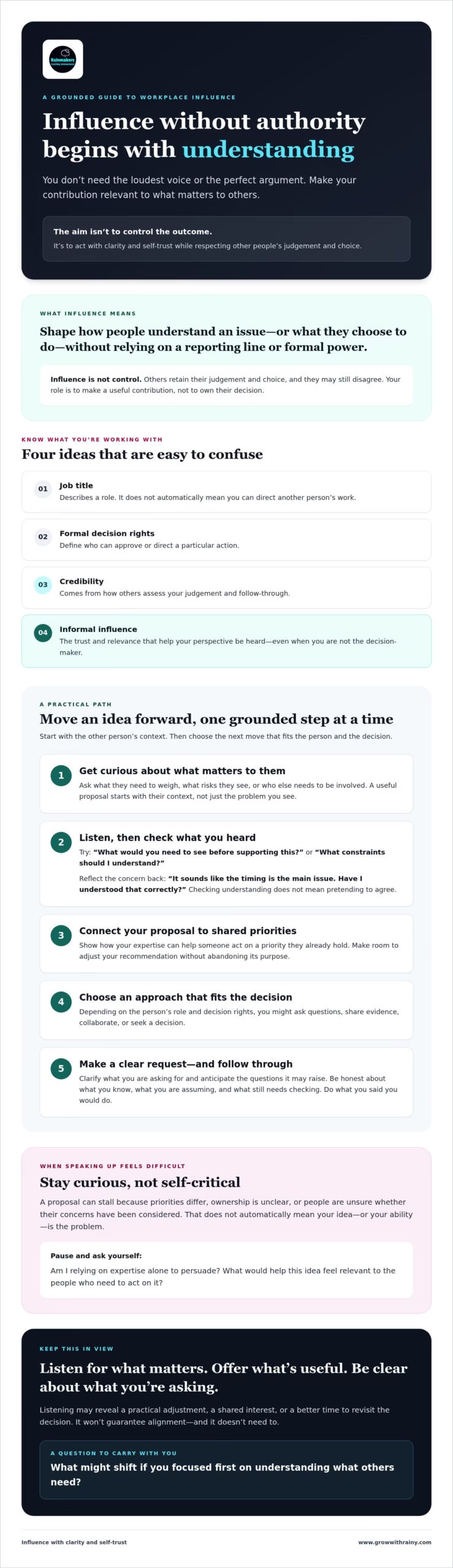
This guide will help you build credibility, connect proposals to shared priorities, and move work forward while respecting other people’s agency. You’ll learn when to ask questions, how to make your case without overreaching, and how to build support across working relationships. The aim isn’t to control the outcome. It’s to act with clarity and self-trust, even when agreement isn’t guaranteed. What might shift if you focused first on understanding what others need?
Key Takeaways
- Building influence without authority starts with understanding what matters to others, not relying on your title.
- Listen for a person’s concerns before shaping your proposal, so your case speaks to their priorities.
- Choose whether to ask, share evidence, collaborate, or seek a decision based on the person’s role and decision rights.
- Prepare for a constructive conversation by clarifying your request and anticipating the questions it may raise.
- If speaking up feels difficult, explore what’s getting in the way with curiosity rather than self-blame.
Building influence without authority starts with a different source of power
You bring a sound proposal to a meeting, explain your reasoning, and meet silence. A colleague raises a competing priority. The decision doesn’t move. It’s tempting to think you need a higher title or a sharper argument. But building influence without authority starts with a more useful question: what matters to the people whose support you need?
Influence without authority is the ability to shape how others understand an issue or what they choose to do, without relying on a reporting line or formal power. It isn’t control. Other people retain their judgement and choice, and they may still disagree. Your role is to make a useful contribution, not to take ownership of their decision.
What does influence without formal authority mean?
A job title describes a role. Formal decision rights define who can approve or direct a particular action. Credibility comes from how others assess your judgement and follow-through. Informal influence is the trust and relevance that help your perspective be heard, even when you aren’t the decision-maker.
Imagine a cross-functional project where one team proposes a new handover process and another team will need to use it. The person proposing the change may not manage the people affected or have authority to approve their workload. They can still clarify the problem, ask what would make the handover workable, and bring relevant information into the discussion. That may help the decision, but it doesn’t make them the decision-maker.
Persuasion can help people consider a view without removing their agency. For a broader overview of the art of persuasion, see how it relates to changing another person’s understanding or position. In practice, the grounded approach is simple: understand others, offer value that matters to them, communicate clearly, and follow through on what you say.
Why can capable professionals struggle to influence peers?
Sometimes the obstacle isn’t your confidence or the quality of your idea. People may be balancing different priorities, unsure who owns the next step, or uncertain whether a proposal accounts for their concerns. A clear case can still miss if it speaks only to the problem you see.
Pause and ask yourself: am I relying on expertise alone to persuade? If so, make space for the other person’s context before restating your recommendation. Ask what they need to weigh, what risks they see, or who else needs to be involved. Their answers can help you adjust the proposal without abandoning its purpose.
If you’re reflecting on the personal habits that shape how you speak up, this personal development coaching guide offers another lens. For now, consider: what would help your idea feel relevant to the people who need to act on it?
How trust, relevance, and listening make influence more credible
A proposal can be well reasoned and still miss the mark if it doesn’t address what colleagues are responsible for, concerned about, or trying to protect. Credible influence grows through a relationship: people see that you listen, offer useful contributions, and do what you said you would do. It takes consistent behaviour. One persuasive conversation rarely replaces that.
Follow-through gives your words weight and gives others a reason to trust your next contribution. That doesn’t mean you need to be certain about everything. Credibility comes from being clear about what you know, what you’re assuming, and what still needs checking. If you’re unsure, say so. Invite questions or scrutiny rather than presenting a tentative claim as settled fact.
How does active listening help you influence colleagues?
Before offering a solution, ask what matters to the other person. For example: “What would you need to see before supporting this?” or “What constraints should I understand?” Then reflect back the concern you heard: “It sounds like the timing is the main issue. Have I understood that correctly?” You’re checking your understanding, not pretending to agree.
That pause can surface information your first proposal missed. Perhaps a colleague is concerned about workload, a deadline, or how a change affects another team. Listening won’t guarantee alignment, but it may reveal a practical adjustment, a shared interest, or a better time to revisit the decision.
How can you make your expertise useful to others?
Expertise becomes more persuasive when it helps someone act on a priority they already hold. Connect your recommendation to the team’s stated goals, relevant risks, or day-to-day workload. Use evidence and examples that support your point, and label anything that needs verification. The aim isn’t to overwhelm people with information. It’s to make the next decision clearer.
Consider how you describe your contribution, too. A clear account of your leadership approach can help colleagues understand not just what you know, but how you work with others. This guide to describing leadership effectively offers further reflection.
For another perspective, Wharton’s discussion of a four-part formula for influence considers how relationships and authority can contribute to influence. Use any framework as a prompt, not a script. Building influence without authority calls for honest communication, not pressure disguised as collaboration.
If you’d value a space to reflect on what makes listening or speaking up difficult, you can explore that in a coaching conversation.
For now, ask yourself: whose concern would help you make your proposal more relevant?
Choose an influence approach that fits the person and the decision
There isn’t one best way to influence every colleague. A direct request can bring clarity when the decision and next step are understood. But if you make your case before learning what matters to someone, persuasion may feel like pressure and leave less room for an open conversation.
Before choosing your approach, map the situation. Note the decision to be made, who will be affected, known constraints, and unanswered questions. Then clarify each stakeholder’s role and actual decision rights. Ask what a successful outcome needs to protect or make possible for them. Separate confirmed priorities from assumptions, and check uncertain details directly.
How do you understand stakeholder priorities?
Try a simple preparation note:
Decision: What needs to be decided?
People: Who is affected or involved?
Constraints: What’s already known about timing, resources, or responsibilities?
Questions: What do you still need to learn? This helps you prepare without treating your first interpretation of someone’s priorities as fact.
Then choose a response that fits the person and the moment:
| Approach | Use it when |
|---|---|
| Ask | You need to clarify a concern, priority, or decision process. |
| Listen | You don’t yet understand the other person’s perspective or constraints. |
| Share evidence | A specific proposal needs to be assessed against relevant facts or risks. |
| Collaborate | Useful expertise or shared ownership is needed to shape a workable option. |
| Seek a decision | The decision-maker, choice, and next step are clear, and the discussion is ready to move forward. |
When should you collaborate, persuade, or make a clear request?
If the work depends on knowledge held by others, collaborate before presenting a finished answer. If there’s a defined proposal to evaluate, make a concise case supported by relevant evidence and invite questions. If the owner and decision are clear, state your request plainly: what you’re asking for, why it matters, and what response or next step would help.
Influence doesn’t require being louder. Clarity and timing often matter more. A strong argument delivered before someone feels heard may close the conversation; a well-timed question can reveal what the argument needs to address. Building influence without authority means adapting your approach without pretending to hold decision rights you don’t have.
If you want a broader structure for developing how you lead, explore this 2026 leadership development plan.
For your next conversation, ask yourself: what do I know about this person’s priorities, and what am I still assuming?
Use these practical steps to build support for an idea
A useful idea can still feel hard to raise. You may be weighing the proposal against the risk of sounding demanding or getting a no. A simple process can help you stay clear without turning the conversation into a pitch you have to win.
- 1. Clarify the outcome. What do you hope will change, and why does it matter? Separate the result you want from the solution you currently favour.
- 2. Map the stakeholders. Note who is affected, who has decision rights, and whose expertise or support may be needed. Stay curious about priorities you haven’t confirmed.
- 3. Listen first. Ask what the other person sees as important, difficult, or uncertain. Their response may reveal what your proposal needs to address.
- 4. Tailor the case. Connect your idea to shared goals and relevant evidence. Keep the explanation focused, and be open about what still needs checking.
- 5. Agree on next steps. Clarify who will do what, by when if a timeframe is agreed, and when you’ll revisit the discussion. Follow up with a concise summary.
How can you raise an idea without sounding pushy?
Begin with the shared issue or goal, not a verdict about what everyone should do. You could ask, “Would it be useful to explore another way to handle this?” or “Could I share an option and hear what concerns you?” Adapt the words to the person and context. These are prompts, not scripts.
Then make your request clear while leaving room for choice: “I’m proposing we test this approach. Would you be open to discussing what it would involve?” Clarity is not the same as pressure. The other person can ask questions, disagree, or decide they need more time.
What should you do when people disagree or do not respond?
Don’t simply repeat the pitch. Ask what is behind the hesitation. Is the concern about evidence, timing, resources, ownership, or something else? Respond to what they actually say. If the issue is unresolved, agree on a proportionate next step, such as checking one assumption or returning to the proposal when priorities are clearer. If there’s no response, a brief follow-up asking whether the matter is still relevant can bring clarity without escalating pressure.
Before you reach out, try this short preparation exercise: write your request in one sentence, then list the questions the other person is likely to ask. What can you answer with confidence, and what needs checking? Finally, notice what’s behind any hesitation of your own. Is information missing, are priorities unclear, or are you anticipating someone’s reaction? Building influence without authority includes preparing thoughtfully while staying open to what you learn.
When influence feels difficult, reconnect with self-trust and choose your next step
If speaking up or gaining support feels hard more than once, it doesn’t mean you’re failing at influence. The situation may need clearer context, more practice, honest feedback, or time to reflect. Start with what’s happening around you before turning the difficulty into a judgement about yourself.
How do you know whether the challenge is a skill or a deeper pattern?
Look closely at the moment your intended action becomes difficult. Do you lose your words when someone senior joins the conversation? Do you hold back because the decision owner is unclear? Are you missing information, or are priorities genuinely competing? Check these practical explanations first. If expectations are unclear, ask for them. If you need evidence, find out what would help.
If the facts are clear but you still notice yourself overthinking every phrase or seeking approval before making a reasonable request, approach that observation with curiosity. These responses can be learned strategies for handling uncertainty or relationships; they aren’t diagnoses or proof that something is wrong with you. Ask what the response may be trying to protect, and whether it still serves the situation. Reconnecting with self-trust can help you choose a next step without needing certainty about how others will react.
When might coaching help with influence at work?
Coaching may be useful if you want a dedicated space to examine recurring communication habits, prepare for a challenging conversation, or reflect on what makes it difficult to act on your own judgement. It can support your reflection and choices, but it can’t guarantee agreement, advancement, or a particular workplace result. Coaching is also not recruitment or job placement.
If you’d like a broader starting point for personal reflection, explore this personal development coaching guide. For a more structured conversation about your own patterns and choices, you can also consider coaching as an option.
Building influence without authority isn’t about becoming someone else. It’s about practising clear, respectful action while staying open to what you learn. What kind of influence would you like to practise next?
Practise influence with clarity and self-trust
Building influence without authority isn’t about finding the perfect argument or pushing harder. It’s about understanding what matters to others, choosing an approach that fits the decision, and following through on the next step you’ve agreed together.
If your idea meets hesitation, pause before blaming yourself. Check what’s unclear, listen for the concern beneath the response, and consider whether you need more context, practice, or feedback. You can be clear about what you’re asking for while still respecting another person’s choice.
If you’d like support reflecting on your workplace choices and communication habits, Rainmakers Coaching International offers Life Coaching, Career Coaching, and Executive / Leadership Coaching. Its Rainmakers Transformation System™ uses three stages: Release, Reprogram, and Recondition. Coaching can offer space to explore your next steps, without promising a particular response or outcome from others.
Explore a coaching conversation
Start with one grounded action. Your influence can grow through the way you listen, contribute, and reconnect with your own judgement. What would you like to practise in your next conversation?
Frequently Asked Questions
Can you build influence without authority?
Yes, building influence without authority is possible because a formal title isn’t the only way to shape how a decision is considered. You can offer relevant expertise, understand what matters to colleagues, communicate clearly, and follow through on commitments. These actions can build trust and shared understanding over time. Influence doesn’t mean controlling someone else’s choice, though. Others retain their decision rights and may still disagree with your perspective.
How do you influence people at work without being their manager?
Start by clarifying the decision and who will be affected by it. Ask colleagues what matters to them, then connect your proposal to a shared need using relevant evidence. Invite questions instead of pressing for immediate agreement. If you agree on a next step, follow through reliably. These behaviours can help others consider your idea, even when you don’t manage them or have authority over their work.
What is the difference between influence and authority?
Authority comes from a formal role or responsibility for making a decision. Influence is the ability to shape how people understand an issue or consider possible actions. A senior title doesn’t automatically mean others trust someone’s judgement, and a colleague without that title may still offer valuable expertise. Both can matter at work. Be clear about who owns the decision, and respect that accountability rather than assuming influence gives you the final say.
How can I influence a senior leader without sounding pushy?
Be concise about the issue, why it matters, and what you’d like the leader to consider. Link your reasoning to relevant priorities, and distinguish confirmed information from assumptions. You might ask, “Would you be open to considering this option?” Then leave room for questions or a different view. If the timing isn’t right, ask when or how the topic could be revisited instead of repeating the same request.
What should I do if colleagues resist my ideas?
Ask what’s behind the resistance before deciding it’s personal. The concern may involve evidence, timing, workload, risk, ownership, or another factor. Reflect back what you heard to check your understanding. Then decide whether to adapt the proposal, gather more information, or pause and revisit it later. Advocating for an idea doesn’t mean dismissing new information. Stay open to changing your view if the facts or circumstances call for it.
Is building influence without authority manipulation?
No, not if you’re honest about your reasoning and respect other people’s choices. Ethical influence means making a request clearly, listening to concerns, and sharing relevant information so others can make up their own minds. Manipulation works against informed choice by hiding important details or creating pressure. You can advocate strongly for an idea without trying to control the outcome. The distinction lies in whether people are free to question and decide.
How can I build influence if I lack confidence?
Begin with one manageable conversation. Prepare the point you want to make, why it matters, and a question that invites the other person’s perspective. Confidence doesn’t have to look forceful. If you feel hesitant, identify whether you need more information, a chance to practise, or feedback from someone you trust. Afterward, reflect on what you learned and how you showed up, rather than measuring the conversation only by whether others agreed. What would you like to practise in your next conversation?
For support exploring how you communicate and make decisions at work, explore a coaching conversation with Rainmakers Coaching International.

Article by
Rainy Rainmaker
Rainy Rainmaker is the founder of Rainmakers Coaching International and a transformational coach for confidence, self-trust, and authentic leadership. Based in Singapore, she helps high-achieving professionals, managers, and leaders who appear capable on the outside but feel quietly held back by self-doubt, overthinking, imposter feelings, burnout, or a loss of direction. Through her signature Rainmaker Transformation Journey™, Rainy helps clients uncover the insights already within them and turn inner clarity into aligned action that creates lasting change in how they work, lead and live.
