The best career coach for you is someone who helps you understand your strengths, clarify what you want from work, and decide on practical next steps. Career coaching can be useful when you feel stuck in your current role or are considering a change, but need a clearer sense of direction first. The right fit depends on your goals, the coach’s approach, and whether you feel able to speak openly with them.
It’s understandable to look for a clear answer when your career feels uncertain. But coaching won’t hand you a perfect job title or a ready-made plan. It gives you space to notice what matters, reconnect with your own judgement, and move forward with greater self-trust.
This guide explains what a career coach does, how coaching can build career clarity, and what to consider when choosing support in Singapore. You’ll also learn how coaching can help you explore a career change or pivot, so you can make your next move with greater intention.
Key Takeaways
- Look for a coach whose approach fits the decision you’re facing, whether you need career clarity, growth in your current role, or support with a pivot.
- Use coaching to identify your strengths and values, then connect them to the kind of work you want to do.
- Separate the inner work of making a career decision from practical job-search activities such as networking and applying for roles.
- Choose a coach who helps you think clearly and make your own decisions, rather than offering a one-size-fits-all path.
- Notice how self-trust and outdated protective patterns may shape the choices you make at work and the direction you want to take next.
1. What is a career coach?
A career coach helps you make clearer, more intentional decisions about work. You might explore a new direction, understand what feels unfulfilling, or identify strengths you want to use more often. Coaching is a focused conversation, not a promise of a particular job. Start by naming the decision in front of you, such as whether to pursue a leadership role or change industries.
Job-search coaching focuses on finding and pursuing roles. A coach may help you clarify the work you want, identify relevant contacts, and practise explaining your experience in an interview. This differs from recruitment, job placement, and CV-writing services. For example, a coach might help you describe a project’s impact, while you remain responsible for applying and following up.
Networking also matters. Paula Cohen states that 80% of jobs are obtained through networking, while 20% are obtained by answering job postings. Treat those figures as a reason to build genuine professional relationships, not as a guarantee that a particular introduction will lead to work. A practical step is to list people who understand your field, then consider what useful, specific conversation you could have with each.
How do Singapore career coaches compare by specialties, experience, and reviews? Compare the kind of work each coach focuses on, their relevant professional background, and the detail behind client feedback. A review describing clearer career direction offers different evidence from one describing interview practice. Choosing the best career coach means finding a fit for your actual decision, not relying on praise alone.
For job-search support, look for a coach whose work addresses career direction and professional conversations. For a career change, prioritise exploration of transferable strengths and what you want from the next chapter. Leadership coaching is more relevant when your question concerns how you lead; interview preparation is relevant when you need to practise communicating your experience. These are areas of focus, not a verified ranking of individual Singapore coaches.
What qualifications or certifications should a coach have? Look for relevant coach training and experience connected to your goal, then verify credentials with the issuing organisation. To assess results, seek specific client examples and clear descriptions of what coaching helped them do. Reviews offer context, but they are individual accounts, not proof of a guaranteed outcome.
Are fees eligible for SkillsFuture funding or other subsidies? Eligibility depends on the scheme’s requirements and whether the course and provider meet them. The label “career coaching” alone does not establish eligibility. Before choosing, ask what sessions focus on, how progress is reviewed, and what falls outside the coach’s role. Be cautious of promises of a job, promotion, or guaranteed result.
2. Benefits of career coaching
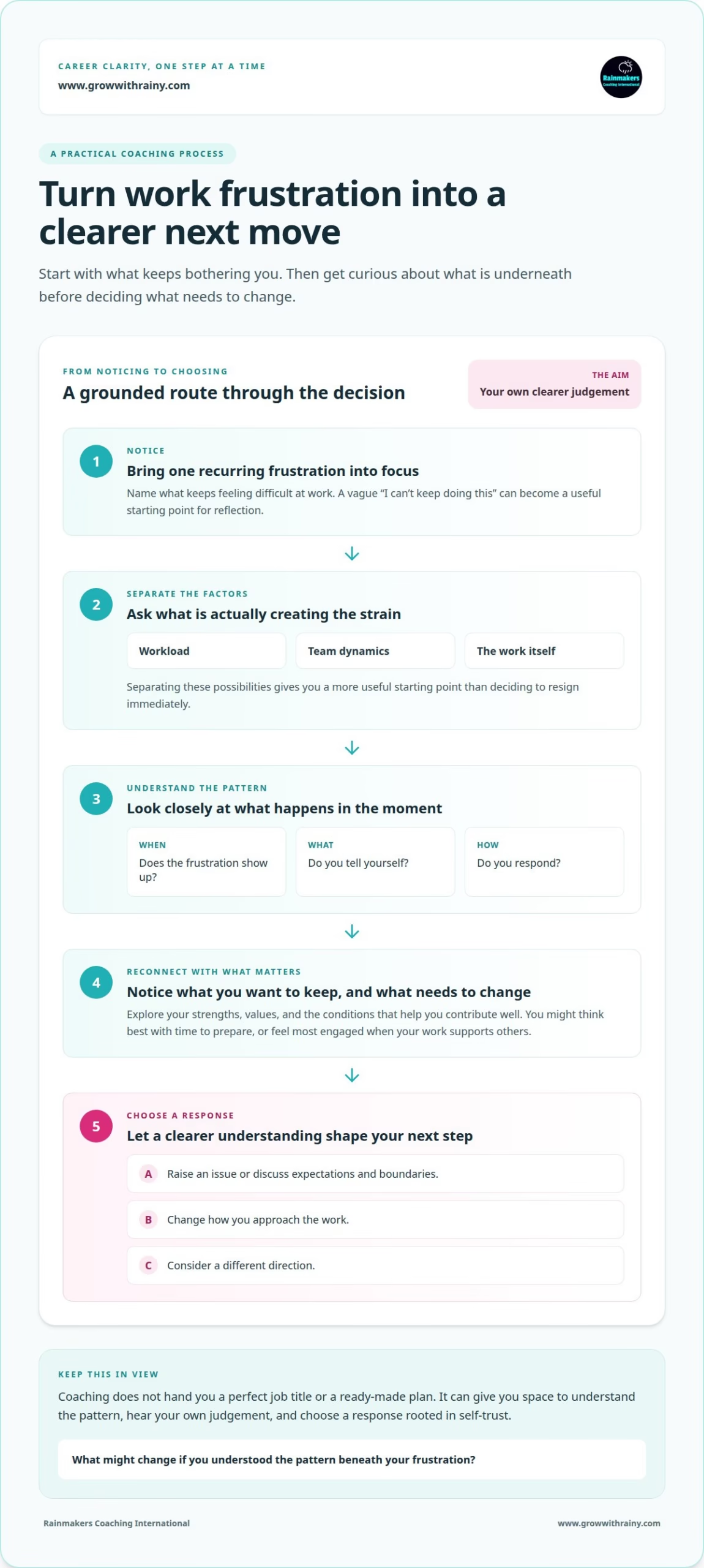
Career coaching can turn a vague sense of dissatisfaction into a clearer decision. Instead of repeatedly thinking, “I can’t keep doing this,” examine what feels misaligned, what you want to preserve, and what needs to change. If your role feels draining, for example, consider whether the strain comes from workload, team dynamics, or the work itself. Separating these factors gives you a more useful starting point than deciding to resign immediately.
Coaching can also give you space to hear your own judgement. A promotion, higher salary, or respected job title may look like progress from the outside, yet still feel wrong internally. You can explore what matters beneath that tension. Perhaps you enjoy mentoring colleagues but feel depleted by constant client presentations. Recognising the difference can shape how you approach future responsibilities and career choices.
Coaching can help you notice habits that influence your work. If you avoid speaking up in meetings, for instance, explore what you fear might happen and practise a response that feels more grounded. The aim isn’t to force confidence. It’s to understand the protective habit, recognise when it no longer serves you, and choose a different action in a real work situation.
These insights can change how you handle professional relationships. Understanding what you need from a manager may help you discuss expectations or boundaries. If you lead a team, noticing how your reactions shape conversations can help you respond with greater intention. A difficult exchange about priorities, for example, can become a chance to state what you can deliver and what needs to shift.
Work can affect how you feel before the day even begins. If Sunday evenings bring dread, use that reaction as a prompt to examine what feels heavy. Is it a specific task, a workplace relationship, or a deeper mismatch with your role? Naming the source can help you decide whether to raise an issue, change how you approach the work, or consider a different direction.
Coaching can also help you identify the conditions that let you contribute well. Perhaps you do your strongest thinking when you have time to prepare, or feel most engaged when your work supports others. Once you can name those conditions, you can consider how to communicate your needs or make choices more aligned with them. For senior professionals, a career misalignment framework can offer a lens for reflecting on fit.
For a practical start, bring one recurring work frustration to a coaching conversation. Describe when it happens, what you tell yourself, and how you respond. Then explore what a response rooted in self-trust could look like. What might change if you understood the pattern beneath your frustration?
3. Career change and career pivots
A career change can feel like a choice between staying unhappy and starting over. A pivot offers another possibility: carrying useful experience into a different role, field, or way of working. A project manager, for example, might move into operations, using planning and coordination skills in a new context. First, clarify what you want to leave behind and what you want to keep.
That distinction matters because dissatisfaction with one workplace doesn’t always mean you need a new profession. If constant deadlines drain you, consider whether the issue is the work itself, the environment, or the pace. If you enjoy solving problems but not your current industry, explore where that strength could transfer. Coaching can help you consider these possibilities before treating resignation as the only path forward.
Career transitions can also bring uncertainty about identity. Someone who has built a reputation in one field may worry that starting elsewhere erases years of effort. Yet experience can travel. A teacher who enjoys mentoring, for instance, might explore learning and development roles. Identify the specific responsibilities that energise you, then consider where similar work exists in another setting.
Research in the supplied market data reports that 47% of millennials in the workforce wish they had chosen a different career path. That figure signals a common tension, not a reason to make a rushed move. Instead, write down what feels misaligned, which strengths you use regularly, and what you want work to make possible. Concrete answers help separate a passing frustration from a deeper desire for change.
A coach can help you question protective patterns that make a familiar path feel safer than a more aligned one. You might dismiss a creative role because it seems less prestigious, even though the work fits your strengths. Exploring the belief beneath that reaction can help you make a more considered decision. Lindsay Mustain’s move from Amazon to starting her own coaching business illustrates one possible pivot, not a template for everyone.
Before making a major change, test your assumptions through conversations and small, relevant experiments. If a move into consulting interests you, talk with someone who does that work and notice which parts appeal to you. Coaching can help you turn those observations into a direction rooted in your values and abilities. A career direction coaching process can support that exploration. What would you want your next chapter to feel like?
4. Career clarity and identifying professional strengths
Career clarity begins with evidence, not a job title chosen under pressure. Look back at recent work and identify tasks that held your attention, such as resolving a client issue or guiding a colleague through a complex decision. Then notice which tasks left you depleted. These moments can reveal patterns in how you contribute and what kind of work feels meaningful.
Separate a strength from a skill you’ve learned to perform. Preparing detailed reports is a skill; spotting the key message in complex information may be a strength. You might be competent at presenting, yet feel most energised when shaping the story behind the numbers. A coach can help you explore that distinction and connect it to the work you want more of.
Use specific examples to test your assumptions. Choose a project, conversation, or challenge that felt satisfying. Describe what happened, what you did, and what others valued about your contribution. If colleagues often ask you to make sense of competing priorities, that may point to a strength in synthesis or decision-making. If you dismiss their feedback, explore why that ability is difficult for you to recognise.
Values add another layer of clarity. A role may use your strengths but conflict with what matters to you, such as autonomy, learning, or meaningful collaboration. Write down a work moment that felt aligned, then identify the conditions that made it so. This guide to personal values can help you name what should inform your career choices.
Protective patterns can blur your view, too. If you avoid taking credit because visibility feels uncomfortable, your strengths may remain hidden from you and others. Coaching can help you understand the belief behind that response and practise a more self-trusting action. For instance, you might describe your contribution clearly in a project review without diminishing the team’s work.
Turn these insights into a grounded direction by comparing what energises you, what you do well, and what you want work to support. A strength in mentoring, for example, could matter in a role that develops people, even if job titles differ across organisations. Treat your first conclusion as a hypothesis. Gather feedback, notice your energy in real tasks, and refine your view over time. What evidence from your own work might you be overlooking?
5. Who are the best career coaches in Singapore?
There isn’t one career coach who is the right fit for every person in Singapore. The best career coach for you depends on the question you’re bringing: changing direction, growing as a leader, or finding greater meaning in your current work. Start by matching your goal to the coach’s area of focus, then look for relevant experience and specific client feedback.
For a Singapore-based example, Sheila Eber has over 20 years of experience in senior HR, L&D, and Client Services positions. That background may be relevant if you want to explore workplace development or organisational experience. Still, professional experience alone doesn’t tell you how a coach works. Look for a clear explanation of their coaching approach and the people they support.
Specialty matters. If you’re considering a career change, look for experience helping people explore strengths, values, and direction. If leadership is your focus, seek someone whose work addresses how you lead, make decisions, and relate to your team. For job-search or interview support, clarify whether the coach works on confidence and communication rather than assuming they provide recruitment or application services.
Read reviews for detail, not just praise. A useful testimonial might describe the client’s starting point, the work they did, and what changed for them. “I felt clearer about my options and took steps toward a new role” offers more context than “excellent coach.” Treat client accounts as individual experiences, not promises of the same result for you.
Before choosing, compare each coach with your own goal. Write down the decision you want help with, then consider whether the coach’s stated focus connects to it. Notice whether their language feels clear and grounded. If you leave an initial conversation unsure what coaching involves, ask about its focus, how progress is discussed, and which outcomes are within your control.
Credentials and results need careful interpretation. Verify qualifications with the organisation that issued them, and look for examples that explain the coaching process rather than promise a guaranteed promotion or job. Be cautious if someone pressures you to commit, guarantees a specific career outcome, or makes sweeping claims without explaining their approach. What kind of support would help you feel clearer and more self-directed?
Singapore’s unemployment rate reached 2.9% during the Circuit Breaker period. That context may make it especially useful to discuss uncertainty, priorities, and practical next steps with a coach, without treating coaching as a guarantee of employment or a particular outcome. A good conversation can help you identify which decisions are yours to make and what support would help you make them.
An introductory discussion can also help you assess whether the coach listens carefully and understands the situation you want to address. Ask how they would help you think through options and whether their approach suits the support you need. You don’t need a finished career plan; describing what feels unclear can be a useful starting point. Take time to consider what you heard, compare it with your goals, and choose only if the proposed work feels relevant and comfortable.
6. Rainmakers Coaching International: Career Coaching
Rainmakers Coaching International offers Career Coaching for people seeking direction, professional growth, or a more grounded next step. The approach is inside-out: instead of adding another external framework, coaching helps you reconnect with your truth, recognise your innate gifts, and release outdated patterns that may be limiting your choices.
If career questions are closely tied to leadership or wider life decisions, Executive Coaching or Life Coaching may also be relevant. Working on your inner perspective can influence how you work, lead, and live, supporting change that begins with self-trust.
If you’re ready to explore what’s next, contact Rainmakers Coaching International to discuss your career direction.
Choose a next step that feels true to you
Your next career decision doesn’t need to begin with a perfect plan. It can begin with a more honest question: what do you want your working life to make room for? Give yourself space to notice the strengths you rely on, the patterns you’re ready to release, and the direction that feels more aligned.
The best career coach for you helps you reconnect with your own judgement, rather than deciding your future for you. Inside-out coaching starts with what’s happening within you. As your perspective shifts, you can make different choices in how you work, lead, and live. Change can become more sustainable when it grows from self-trust rather than pressure to follow someone else’s path.
If you’re ready to explore what comes next with Rainmakers Coaching International, you’re welcome to start a conversation.
You can take your next step at your own pace. What possibility feels worth exploring?
Frequently Asked Questions
What is a career coach?
A career coach helps you think through work-related choices and take considered action. If you’re deciding between a specialist role and managing a team, for example, a coach can help you examine what each path asks of you and what matters most. You remain responsible for the decision. The value lies in having focused space to explore options and choose with greater intention.

Article by
Rainy Rainmaker
Rainy Rainmaker is the founder of Rainmakers Coaching International and a transformational coach for confidence, self-trust, and authentic leadership. Based in Singapore, she helps high-achieving professionals, managers, and leaders who appear capable on the outside but feel quietly held back by self-doubt, overthinking, imposter feelings, burnout, or a loss of direction. Through her signature Rainmaker Transformation Journey™, Rainy helps clients uncover the insights already within them and turn inner clarity into aligned action that creates lasting change in how they work, lead and live.
