
You’re still performing, but you’re no longer progressing. You continue to deliver, take on responsibility and do what is expected of you. Yet the next opportunity never seems to come. Your role may feel increasingly familiar, your growth may have slowed, and you may be starting to wonder whether there is still a future for you where you are. If you are navigating career stagnation in middle management, the answer is not always to work harder or immediately look for another job. The first step is understanding what is actually keeping you stuck.
Sometimes the constraints are external – limited opportunities, organisational structure or a role that no longer offers enough room to grow. At other times, the way you have learned to succeed – staying focused on delivery, waiting to be recognised or taking on too much yourself may be limiting your progression without you realising it.
In this guide , we’ll explore how to identify what is behind your career plateau, separate what is within your control from what is not, and decide whether your next step is to grow where you are, reposition yourself for advancement, or begin looking elsewhere.
Key Takeaways
- Define what feels unchanged, whether it’s your learning, influence, recognition, or sense of direction.
- Separate limited opportunities in your organisation from a role that no longer fits or priorities that need clarifying.
- Use a manageable process to navigate career stagnation in middle management: gather evidence, name what matters, and test one practical next step.
- Prepare a grounded conversation about your role’s scope or development needs, and stay open to the response.
- Consider Career Coaching or Executive Coaching if recurring uncertainty makes it difficult to see your choices clearly. Coaching can support reflection, but it can’t promise a promotion or placement.
Navigating Career Stagnation in Middle Management: What Does Feeling Stuck Mean?
Your responsibilities keep growing. You’re coordinating more work, supporting your team, and translating senior leaders’ priorities. Yet your learning, influence, or sense of direction feels unchanged. You may be delivering consistently while wondering whether your role is still taking you somewhere you want to go.
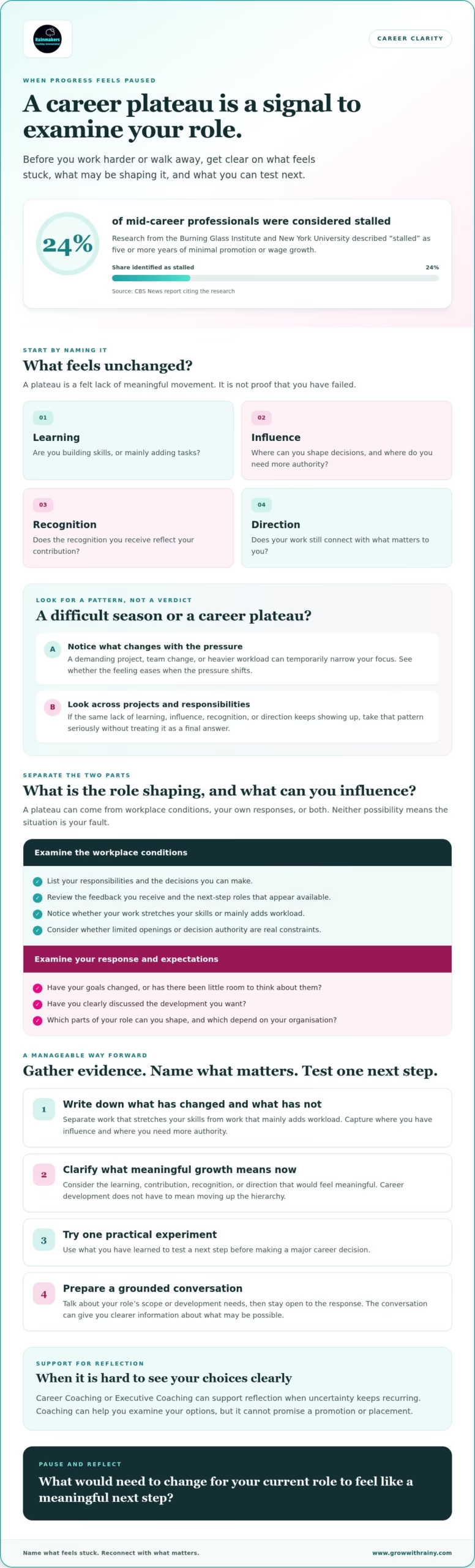
Career stagnation is a felt lack of meaningful movement in your work, growth, or direction. It isn’t proof that you’ve failed. Before deciding whether to seek a new role or leave, clarify what feels stuck. Is it the work itself, the opportunities around you, the recognition you receive, or your connection to what matters? Career development can take different forms, not only a move up the hierarchy, as the broader idea of career development suggests.
How can you tell a career plateau from a difficult season?
A demanding project, a team change, or a heavier workload can temporarily narrow your focus. That strain deserves attention, but it doesn’t automatically mean your career has stalled. Notice whether the feeling continues across different projects and responsibilities, or eases when the pressure shifts.
Look for a pattern, not a verdict. Are you repeatedly taking on delivery work without gaining new skills or influence? Have your goals changed, or have you simply had little space to think about them? Dissatisfaction isn’t a diagnosis, and it rarely has just one possible cause.
Why can middle management feel like a career bottleneck?
Middle managers often sit between competing demands. You may be expected to translate strategy into action, support your team, and keep operational work moving, all while having limited say over priorities. If responsibility has expanded but decision authority, recognition, or access to meaningful learning hasn’t, it’s understandable to question what progress looks like from here.
That tension doesn’t necessarily mean you chose the wrong path. It may help to distinguish the parts of your role you can shape from the parts that depend on your organisation. A clearer view of your contribution and next direction can also support conversations about leadership development plan.
To begin, write down what has changed and what hasn’t. Consider:
- Which responsibilities stretch your skills, and which mainly add workload?
- Where do you have influence, and where do you need more authority?
- What kind of learning or contribution would feel meaningful now?
Navigating career stagnation in middle management starts with naming the experience accurately. What feels genuinely stalled, and what might simply need a different kind of support or attention?
Why Middle-Management Career Stagnation Can Persist: Examine the Role and Your Response
A plateau can have more than one source. The role may offer limited room to grow, or a familiar way of working may be narrowing the choices you notice. Sometimes both are true. Before deciding what to change, look at each separately: assess your workplace conditions and your own responses as two distinct parts of the picture.
This distinction matters when you’re navigating career stagnation in middle management. If there are few next-step roles or decisions sit outside your authority, effort alone may not change those conditions. If expectations are unclear or you haven’t expressed what kind of development you want, a direct conversation may give you better information. Neither possibility means the plateau is your fault.
Which workplace conditions may be limiting your growth?
Review the evidence before settling on an explanation. List your responsibilities, the decisions you can make, the feedback you receive, and the next-step roles that appear available. Note whether your work is stretching your skills or mainly adding tasks. In an organisation with fewer advancement paths, a lack of openings may be real. In other cases, development expectations or your career aims may not yet have been discussed clearly.
Middle managers often translate strategy, support teams, and keep operations moving. That can make their contribution essential while leaving little time or autonomy for their own development. Navigating the Middle offers a perspective on stagnation among mid-level leaders. As you consider your situation, ask: What evidence points to a workplace constraint, and what information could I seek before drawing a conclusion?
When can a familiar success strategy start to feel limiting?
Some ways of working help you earn trust and deliver well. If you recognise yourself in any of these examples, ask whether the approach still serves your priorities. Overachievement might show up as perfecting every task before making space for more strategic work. Approval-Seeking might look like waiting for reassurance before sharing an idea or asking for broader scope. These are optional coaching lenses, not diagnoses or assumptions about your history.
You might also notice Over-Responsibility in taking on work that belongs elsewhere, or Overthinking in delaying a decision while searching for certainty. If one of these patterns feels familiar, pause before judging yourself. What has this response helped you manage, and what choice might it now be crowding out?
A practical first step is to separate your notes into two columns: conditions I can ask about and responses I can experiment with. A conversation about scope or development can clarify the first. A small change, such as delegating a task or sharing an idea before it feels perfect, can help you observe the second. If an outside perspective would help you sort through the evidence, you could explore a coaching conversation.
Is It a Career Plateau or a Poor Role Fit? Compare Your Evidence
Feeling stuck can point to different things: limited room to advance, a role that no longer fits, or uncertainty about what you want next. These possibilities can overlap. Use the comparison below to organise what you’ve observed, not to reach a final verdict.
| POSSIBILITY | OBSERVABLE EVIDENCE | QUESTION TO TEST IT |
|---|---|---|
| Limited opportunity | Your scope or decision authority has stayed the same, development access is limited, or no next-step roles are visible. | What concrete information do I have about available roles, development options, and how decisions are made? |
| Role misalignment | You can do the work, but its core demands no longer match what you value or want to contribute. | Which parts of this role still feel meaningful, and which consistently feel out of step with my priorities? |
| Unclear personal direction | You’re unsure what growth would look like, even if a new opportunity became available. | What would I want more of in my work, independent of title or promotion? |
What evidence suggests the role, rather than your capability, is the constraint?
Look at how your scope, authority, feedback, and access to development have changed over time. Record what you can verify: a decision that sits with another team, feedback that names a specific skill to develop, or a role requirement you’ve been told is unavailable. Separate those facts from predictions such as “my leaders don’t see me as ready.” Your capability matters, but it can’t guarantee a promotion or create a role that isn’t available.
If it’s hard to tell the difference between a poor fit and limited opportunity, the career misalignment and 4 Fit Model offers another way to reflect on what may be out of alignment.
What might your response to the role be telling you?
Notice when you feel absorbed, useful, or connected to your values. Which responsibilities give you energy, and which leave you feeling further from the contribution you want to make? If your priorities are hard to name, clarifying what matters can help you assess possible next steps.
Uncertainty can sometimes invite Overthinking, such as replaying every option without gathering new information. If that feels familiar, treat it as a possibility to explore, not a label. Ask what you know, what you’re assuming, and what small conversation or action could give you clearer evidence. Navigating career stagnation in middle management becomes more grounded when you distinguish what the role is showing you from what you’re still discovering about yourself.
Navigating Middle Management Career Stagnation
You don’t need to decide today whether to stay, seek promotion, or leave. First, create a clearer picture of what’s happening and test one next step. Navigating career stagnation in middle management can begin with a small, considered action rather than a major career decision.
What can you do before deciding to leave or seek promotion?
Try this sequence. Keep it brief and honest:
- Name the concern. What feels missing: learning, influence, recognition, autonomy, or direction?
- Gather evidence. Note what has changed in your responsibilities, feedback, opportunities, and workload. Separate what you know from what you’re assuming.
- Identify priorities. Write down what remains worthwhile in your role, what you want more of, and what you can influence.
- Choose one experiment. Ask to contribute to a project that matches an interest, or try a responsibility that would let you use a skill you want to develop.
- Review what you learn. Notice the response, the experience itself, and whether it gives you useful information about your next move.
Small experiments let you learn from real experience before committing to a larger career decision. They may clarify what fits and which constraints remain, though they can’t guarantee a particular opportunity or response.
If you’re considering a next step but aren’t sure how to make it concrete, this guide to setting career goals you’ll actually keep can help you translate a broad intention into a grounded goal.
How can you make a career conversation more useful?
Go in with a clear example of your current contribution and a genuine question about what could come next. For instance: “I’ve been leading the team through this process change. I’d like to develop my strategic planning skills. What opportunities or expectations should I understand if I want to contribute at a broader level?”
Then listen for specifics. Ask about scope, decision authority, development opportunities, and how readiness is assessed. Curiosity can help you learn what options exist without assuming hidden motives or expecting an immediate yes. If the answer is unclear, ask what further experience or conversation might help clarify the path.
Afterward, note what you learned and what remains uncertain. What would meaningful progress look like if your title were not the only measure?
Explore a coaching conversation about your career direction
When Career Coaching Can Help You Navigate Middle-Management Stagnation
You may have gathered evidence, tried a conversation, and still feel caught between competing choices. Perhaps you’re unsure whether to ask for broader scope, stay and reshape your role, or explore a different direction. If the same questions keep returning, an outside perspective can help you hear your own thinking more clearly.
What might career coaching help you examine?
Career Coaching can offer space to explore what you want from work, what feels aligned with your values, and how your responses shape professional choices. You might notice, for example, that you keep postponing a conversation until you feel completely certain, or that you’re saying yes to responsibilities that leave little room for the work you want to develop.
At Rainmakers Coaching International, the Rainmakers Transformation System™ describes its stages as Release, Reprogram, and Recondition, alongside 3R Integration. These are part of the coaching approach, not a promise of promotion or a substitute for workplace conversations and practical action.
Coaching isn’t recruitment or job placement, clinical care, or a guarantee of a particular career outcome. It can support reflection and development, while decisions about role scope, opportunities, and organisational change remain part of your working context.
How can you decide whether a coaching conversation is the right next step?
Ask yourself what kind of support you’re looking for. Do you want someone to choose between staying and leaving, or would it help more to have space to examine your options and make your own decision?
If you’re ready to clarify your direction, you can explore the career direction coaching program and consider whether its focus fits what you need.
A coaching conversation may be useful if uncertainty keeps resurfacing, your priorities feel in conflict, or you’re noticing a response that makes it hard to act on what matters. It doesn’t have to replace a grounded conversation with your manager or the small work experiments you’ve considered. It can sit alongside them, helping you reflect on what you’re learning and what choice feels honest. You don’t have to force clarity before you’re ready.
What’s your next honest step: more reflection, a conversation at work, or support as you consider your direction?
Choose Your Next Career Step With Greater Clarity
A career plateau doesn’t automatically mean you need to leave. It’s a reason to look more closely. Separate workplace conditions from your own responses, then consider whether the issue is limited opportunity, role fit, or a direction you haven’t yet defined.
Navigating career stagnation in middle management becomes more grounded when you move from broad uncertainty to one practical next step. Gather evidence, clarify what matters to you, and try a low-risk conversation or work experiment before making a larger decision. Small actions can help you learn what fits, even if they don’t control how your organisation responds.
If you’d value space to think through your options, Rainmakers Coaching International offers Career Coaching and Executive / Leadership Coaching. Its Rainmakers Transformation System™ includes Release, Reprogram, Recondition, and 3R Integration. Coaching supports reflection and development, not recruitment, job placement, clinical care, or a guaranteed promotion.
You don’t have to have the whole path mapped out. What feels like the next honest step for you?
Frequently Asked Questions
Is career stagnation in middle management normal?
Career stagnation can happen in middle management, and it doesn’t mean you’ve failed. A role may demand more responsibility without offering greater influence, new learning, or a clear next step. Workload or organisational changes can also make growth harder to see for a time. Rather than judging yourself for feeling stuck, notice what has changed and whether the feeling persists across different projects and responsibilities.
How do I know if I have reached a career plateau?
You may be experiencing a plateau if growth, learning, recognition, or direction has felt limited across different projects, not just during a demanding period. Look for observable signs: your scope hasn’t changed, you’re not developing skills you value, or you can’t identify a meaningful next step. Compare those facts with your assumptions. A plateau is a prompt to investigate, not a diagnosis or a verdict on your ability.
Can you grow your career while staying in middle management?
Yes. Career growth doesn’t have to mean moving into a more senior title. You might develop influence across teams, deepen a leadership skill, take on work that aligns with your interests, or gain greater responsibility within your current role. Start by identifying what kind of growth matters to you, then ask what opportunities or scope might support it. Your organisation’s options may shape what’s possible, so seek clarity rather than assuming.
Should I leave my job if I feel stuck?
Feeling stuck alone doesn’t tell you whether leaving is the right choice. First, clarify what’s missing and whether it relates to the role, available opportunities, or an unclear sense of direction. Gather evidence through a conversation, feedback, or a small work experiment. If the conditions remain misaligned with your priorities, exploring other options may make sense. You can take that possibility seriously without forcing yourself to decide before you’re ready.
What can I do when my manager offers no career growth?
Ask for clarity about what growth could look like, what skills or experience are expected, and whether there are opportunities beyond a promotion. Share a specific contribution and the kind of responsibility or learning you’re seeking. If your manager can’t offer a path, consider whether a project, cross-team collaboration, or development opportunity is available elsewhere in the organisation. Their response gives you information, but it can’t guarantee that an opportunity will emerge.
Can career coaching help with feeling stuck in middle management?
Career coaching may help if you’re repeatedly unsure what to choose, balancing conflicting priorities, or finding it hard to name what feels wrong. It offers space to examine career direction, self-trust, and the responses shaping your choices. It isn’t recruitment, job placement, clinical care, or a promise of promotion. Coaching can guide clarity and support development, while workplace conversations and decisions remain yours to make.
What should I do first when my career feels stagnant?
Start by naming what feels stuck. Is it your learning, influence, recognition, autonomy, or direction? Write down what you’ve observed, what you’re assuming, and what remains worthwhile in your role. Then choose one manageable next step, such as asking about development expectations or testing a responsibility that interests you. When navigating career stagnation in middle management, clarity about the concern can help you choose a response that fits.

Article by
Rainy Rainmaker
Rainy Rainmaker is the founder of Rainmakers Coaching International and a transformational coach for confidence, self-trust, and authentic leadership. Based in Singapore, she helps high-achieving professionals, managers, and leaders who appear capable on the outside but feel quietly held back by self-doubt, overthinking, imposter feelings, burnout, or a loss of direction. Through her signature Rainmaker Transformation Journey™, Rainy helps clients uncover the insights already within them and turn inner clarity into aligned action that creates lasting change in how they work, lead and live.
