

An urgent request arrives just as you’re about to leave work. Do you stay, take it home or explain that it can wait until tomorrow? Work life balance tips for busy professionals become useful in moments like these, when making room for one priority means adjusting another.
Setting priorities involves considering your workload alongside your health, relationships and personal commitments. Sometimes, the pressure comes from unrealistic demands or limited support. At other times, feeling responsible for everything or uncomfortable saying no may make it harder to protect your time. Recognising what’s contributing can help you decide what needs attention.
In this guide, you’ll find practical ways to prioritise tasks, limit distractions, set clearer boundaries and seek support. You’ll also consider what deserves space in your week, from focused work to dinner with family or time to rest.
Key Takeaways
- Turn large projects into manageable next steps, and make space for breaks, movement, sleep and small moments of recovery.
- Use calendars, time blocking and focused work sessions to protect attention, then create a clear boundary between work and personal time.
- Prioritise essential tasks and communicate with your manager when workload or schedule changes could support your well-being.
- Notice when ongoing work pressure is affecting your health or relationships, and seek appropriate support rather than carrying it alone.
- Inside-out coaching can help mid-career professionals reconnect with their values and strengths to make more sustainable changes in work and life.
Breaking large projects into smaller tasks
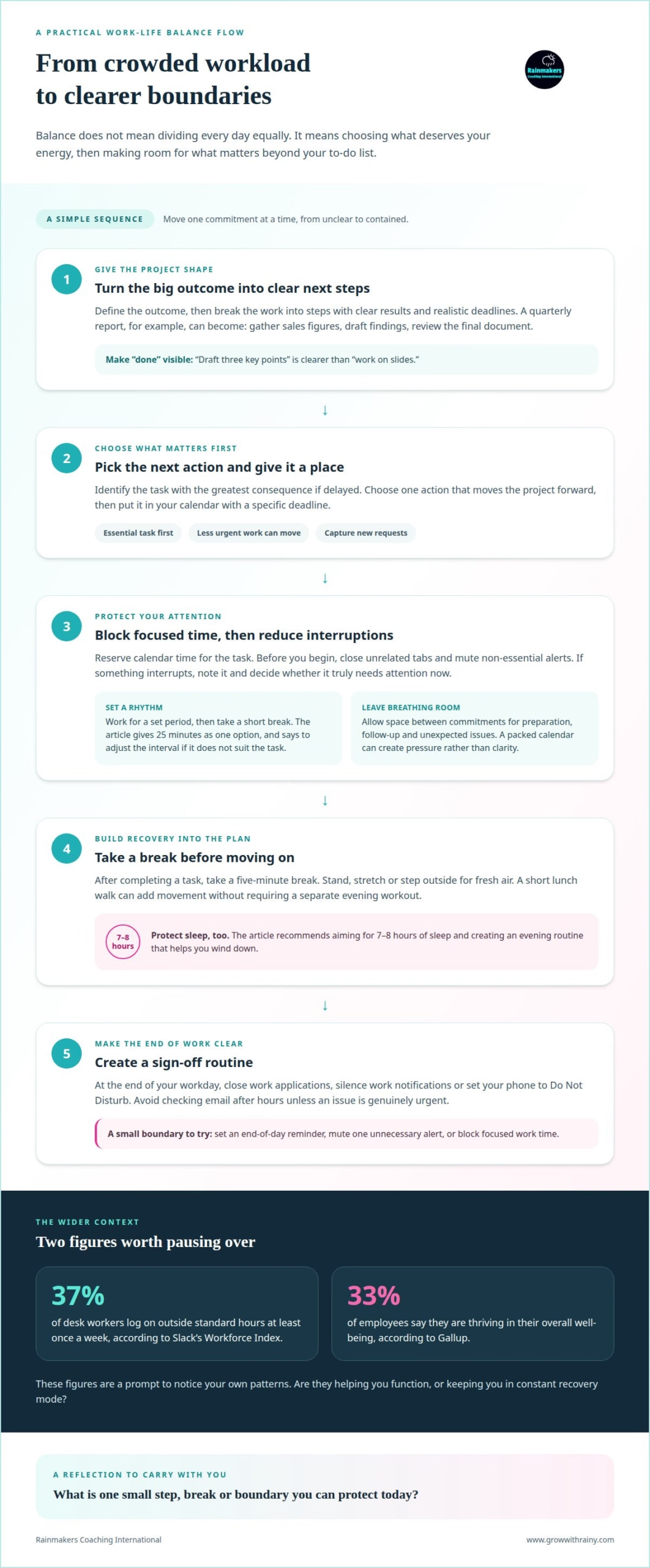
A project can feel heavier when the finish line is far away. Give it shape by defining the outcome, then identifying the next action. For example, “prepare the quarterly report” can become “gather sales figures,” “draft the findings” and “review the final document.”
Each step is easier to start, schedule and complete. Smaller milestones make deadlines visible, so you can spot a bottleneck before it becomes urgent. These work life balance tips for busy professionals start with clarifying the next step, rather than carrying the entire project in your head.
Choose one action that moves the project forward, then decide what “done” means. For a presentation, “draft three key points” is clearer than “work on slides.” Put that action in your calendar and give it a realistic deadline. Motivation can shift as work progresses, so connect each task to the reason the project matters.
This reflection on understanding motivation can help you notice what supports follow-through.
- Break the project into steps with clear outcomes and realistic deadlines.
- Choose the next action, then give it a specific place in your workday.
- After completing a task, take a five-minute break before moving on.
Recovery belongs in your plan, not just in whatever time remains. Schedule regular breaks during the day, and use one to stand, stretch or step outside for fresh air. A short lunch walk adds movement without requiring a separate evening workout. If exercise is hard to fit in, choose a manageable activity and protect time for it as you would a meeting. One of the most useful work life balance tips for busy professionals is treating self-care as a real commitment, not a reward for finishing everything.
Protect sleep as another commitment. One recommendation is to aim for 7-8 hours of sleep, then build an evening routine that helps you wind down. Music can also support a settled work rhythm. Studies dating back more than 30 years describe benefits of music in everyday life; try a familiar playlist during focused tasks and switch it off if it distracts you. Ask yourself: what is one small step, break or self-care choice you can protect today?
Using technology to organise work and limit distractions
Your calendar can make competing responsibilities visible instead of letting them crowd your attention. Add meetings, deadlines and focused work blocks, then leave space between commitments for follow-up. For example, schedule time to prepare a client presentation before accepting another meeting. A digital calendar also lets you adjust when priorities shift. Keep the plan realistic: a packed calendar can create pressure rather than clarity.
Time blocking sets aside a specific part of your day for a task or activity. Reserve a block for reviewing reports, then silence non-essential notifications while you work. If an urgent request interrupts, note it and decide whether it truly needs attention now. That pause can help you respond deliberately instead of switching tasks with every alert. Use a task management tool to capture new requests, so they don’t get lost in a crowded inbox.
A simple focus rhythm can help: work on one task for a set period, then take a short break. Choose one task before starting the timer, such as drafting a proposal or reviewing figures. During the work period, close unrelated tabs and mute alerts. When the timer ends, step away from the screen briefly. If 25 minutes doesn’t suit the task, adjust the interval while keeping a clear start and stopping point.
Technology can also blur the boundary between work and personal time. Using work devices 24/7 can contribute to burnout, so define when your workday ends. At that point, close work applications, silence work notifications or set your phone to Do Not Disturb. Avoid checking email after hours unless an issue is genuinely urgent. Slack’s Workforce Index found that 37% of desk workers log on outside standard hours at least once a week. A clear sign-off routine helps you notice when work is following you into personal time.
Choose one digital change today: block out focused work time, mute an unnecessary alert or set an end-of-day reminder. Which boundary would give your attention more room to settle?
Why Is Work-Life Balance So Important?
Workplace well-being affects how you think, respond and connect with people beyond the office. Gallup found that 33% of employees say they are thriving in their overall well-being. That figure invites a personal question: are your current work patterns helping you function, or keeping you in constant recovery mode? When stress stays high, even routine decisions can feel heavier. Balance creates room to notice pressure earlier and make clearer choices about work and personal activities.
Start with priorities, not an endless list. Each morning, identify the task with the greatest consequence if delayed, then choose a manageable goal for the day. For example, finish a client proposal before responding to lower-priority messages. Put the task and its deadline in your calendar, then group related work together. A task management tool can capture incoming requests without making every alert feel urgent.
Time management also means recognising your limits. If your calendar has no space for preparation, follow-up or unexpected issues, revise it before the day begins. Keep a short list of essential tasks and move less urgent work when priorities change. This isn’t a failure to achieve; it’s a deliberate way to protect your attention and reduce avoidable stress. Review your plan at the end of the day and note what needs to carry forward.
Caregiving responsibilities can make demanding work harder to plan because appointments and needs may change. Share recurring commitments with your manager, discuss which deadlines could move, and agree on how to handle urgent changes. For example, a calendar block for a regular care appointment makes that commitment visible when meetings are being arranged.
Manager support matters when workload and expectations feel misaligned. Bring a concrete example, such as two deadlines falling on the same day, and ask which deliverable should take priority. You can also discuss changes to meeting times or working arrangements. A specific conversation gives your manager something practical to respond to, rather than leaving them to guess what might help.
Use your calendar and task list as decision tools, not scoreboards. At the start of the week, mark deadlines, caregiving commitments and time for focused work. If a new request arrives, compare it with those priorities before agreeing. Then ask yourself: what change would reduce stress and make this week more manageable?
Declining additional tasks and seeking support
Saying yes to every request can leave too little attention for your existing priorities. Before accepting extra work, pause to assess its deadline, importance and likely impact on your current commitments. You might say, “I can take this on, but the report due today will need to move. Which should come first?” This is clear, respectful and focused on workload, not unwillingness. It gives your manager a decision to make.
If you need to decline, be direct and offer a realistic alternative only if one exists. For example: “I can’t lead the presentation this week, but I can review the draft next week.” Avoid agreeing to an undefined future task just to soften your no. Naming your current responsibilities helps colleagues understand the limit. A healthy boundary protects the quality of the work you’ve already committed to deliver.
Support can also mean asking for help before pressure becomes constant. Bring a specific example to a colleague or manager, such as overlapping deadlines or a task that needs someone else’s input. Explain what is at risk, then request a practical change: redistribute part of the work, clarify priorities or adjust a deadline. If your organisation has employee support resources, find out how they can help with stress or personal concerns.
Consider professional mental health support if persistent stress, low mood or anxiety is affecting your sleep, concentration, relationships or daily responsibilities. A counsellor or other mental health professional can help you explore these concerns and identify suitable support. If you’re unsure where to start, speaking with a healthcare professional can help you consider an appropriate next step. Coaching serves a different purpose: it can support reflection, goals and decisions around work or life, rather than provide mental health treatment.
Coaching may be useful if you feel stuck in a career decision, keep taking on work that conflicts with your priorities, or want to change how you lead. Exploring which type of coach fits your needs can help clarify the distinction between coaching and other forms of support. Choose the kind of help that matches the challenge you’re facing.
Try one conversation this week. State the pressure clearly, name the support you need and agree on a next step. What might change if you treated asking for help as part of caring for your mental well-being?
Effects of poor work-life balance on health and relationships
Poor work-life balance can show up in ordinary routines before you connect it to work. You might answer messages late, sleep poorly, skip lunch, then spend the evening too tired to exercise. Over time, inadequate sleep, unhealthy eating habits and a sedentary routine can become harder to shift. Working more than 55 hours a week is linked to a higher risk of stroke and increased rates of anxiety and depression. These signs deserve attention, not dismissal as the price of achieving more.
Exhaustion can affect how you work, too. Imagine reviewing a client report after a late night: details blur, concentration slips and a preventable mistake takes time to fix. You may find decisions harder, become less patient in meetings or struggle to focus on one task. These patterns don’t mean you lack commitment. They may signal that your current pace demands more recovery than your routine allows.
Relationships feel the pressure, too. If you repeatedly cancel dinner to finish work, a partner or friend may feel pushed aside, even when you care deeply. If you’re physically present but checking email throughout a family conversation, connection can fade. A practical first step is to name one protected activity, such as dinner without work notifications, and communicate that boundary clearly.
Healthy work leaves room to recover, connect and attend to life outside the office. Notice patterns without judging yourself: are you often fatigued, frequently unwell, struggling to sleep or losing time for activities you value? Write down one example and when it happens. That detail can help you see whether a deadline, meeting pattern or after-hours habit is contributing to the strain.
Then choose a grounded adjustment. If late messages interrupt your rest, set a sign-off time and silence work alerts. If a recurring deadline leaves no room for personal commitments, discuss priorities with your manager. If strain is affecting your health or relationships, consider appropriate professional support. Balance isn’t a perfect split between work and life; it’s noticing when one consistently crowds out the other. What have your energy, sleep or closest relationships been asking you to notice?
Career Coaching for Mid-Career Professionals
Rainmakers Coaching International offers an inside-out approach for mid-career professionals whose work no longer feels aligned with the life they want. You may be capable and accomplished, yet still feel drained, uncertain about your next move, or caught in patterns that keep you overcommitting. Coaching creates space to understand what is happening beneath those choices, not simply add another productivity framework.
Through Life Coaching , Career Coaching, Executive Coaching and Career development Coaching, the focus is on reconnecting with your truth and self-trust. Together, you can explore what matters to you, the strengths you may have overlooked, and the hidden resources you can draw on. As your internal perspective shifts, it can change how you work, lead and live. That insight can support decisions that feel more grounded and sustainable.
For example, a professional might notice they keep accepting responsibilities to prove their value, even when the workload is affecting their well-being. Coaching can help uncover the protective pattern behind that response and explore a different choice. An executive might consider how their values shape the way they lead, communicate boundaries and support their team. The work begins with understanding your experience, then bringing that awareness into everyday decisions.
Coaching may be worth considering if you’re at a career crossroads, questioning what success means to you or repeating habits that leave little room for life beyond work. It can also support you when a promotion or leadership role brings new pressure, or when you want professional growth without sacrificing what matters personally. Coaching doesn’t prescribe a perfect career path. It helps you reconnect with your own insight and make choices that fit who you’re becoming.
Rainmakers’ approach centres on lasting change, not a temporary burst of motivation. By recognising protective patterns and drawing on your innate strengths, you can begin to make different choices with greater self-trust. The shift may start internally, but it can influence how you manage work, relate to others and define achievement. What might become possible if your next career decision came from reconnecting with what matters to you?
Contact Rainmakers Coaching International to explore whether coaching fits what you’re navigating.
Frequently Asked Questions
What are practical work-life balance tips for busy professionals?
Choose one practical change that addresses your main source of strain. If meetings consume your mornings, protect time for focused work and ask whether you need to attend every meeting. If work conversations continue into dinner, agree with family on a device-free meal. Review the change after a week and notice what feels different. Small adjustments are easier to sustain when they respond to a specific pressure point.
How can busy professionals set boundaries between work and personal time?
Make a boundary clear with a specific action and a short explanation. For instance, tell colleagues, “I’m offline after work today; please send anything urgent before then.” Set a work status or calendar note that reflects your availability, and avoid responding to non-urgent messages during personal time. If a genuine exception arises, decide how to handle it without turning the exception into your everyday expectation.
What time-management methods help reduce work stress and prevent burnout?
Try grouping similar responsibilities, such as handling routine approvals together instead of switching between them all day. Before accepting a new deadline, check what it would displace and clarify the trade-off with the person requesting it. You can also add a buffer after demanding meetings to capture decisions and prepare for your next task. These methods reduce avoidable context switching and make competing expectations easier to discuss.
How can busy professionals make time for exercise, sleep, and healthy meals?
Attach healthy routines to activities already in your day. For example, walk part of your commute, prepare lunch while making dinner or set a wind-down reminder before bed. Keep a simple meal option available for days when work runs late, rather than relying on last-minute choices. If a routine repeatedly falls away, make it easier or shorter. A plan that fits your actual schedule is more useful than an ideal one.
What are signs of burnout, and when should someone seek professional help?
Persistent exhaustion, difficulty concentrating, disrupted sleep or growing detachment from work can signal that strain needs attention, especially when it affects daily functioning or relationships. Notice whether these changes are becoming more frequent rather than judging yourself for having them. If they persist or feel difficult to manage, consider speaking with a qualified mental health professional. Coaching can support work and life goals, but it isn’t a substitute for mental health care.
Which productivity tools and planning methods help busy professionals save time?
A shared calendar can make team commitments visible, while a task board can show who owns each action and what remains unresolved. Use recurring templates for routine work, such as weekly updates, and create email rules to separate information from requests that need a response. Keep commitments in one trusted place rather than scattering them across notes and inboxes. The most useful tool is the one you’ll maintain consistently. What’s one change you could try this week to make work feel more grounded?

Article by
Rainy Rainmaker
Rainy Rainmaker is the founder of Rainmakers Coaching International and a transformational coach for confidence, self-trust, and authentic leadership. Based in Singapore, she helps high-achieving professionals, managers, and leaders who appear capable on the outside but feel quietly held back by self-doubt, overthinking, imposter feelings, burnout, or a loss of direction. Through her signature Rainmaker Transformation Journey™, Rainy helps clients uncover the insights already within them and turn inner clarity into aligned action that creates lasting change in how they work, lead and live.
