
The best life coach in Singapore is not necessarily the one with the biggest profile or the boldest promises. It is the one whose experience, approach and way of working fit the change you want to make.
Perhaps you are looking for greater clarity, struggling with confidence, feeling stuck in a recurring pattern, or trying to decide what comes next in your life or career. With so many coaching styles and specialities available, knowing who is right for you can feel confusing.
A good coach should not tell you who to become or make decisions for you. They should help you understand yourself more deeply, recognise what may be getting in the way, and support you in making choices that feel more intentional and aligned.
In this guide, we’ll look at what to consider when searching for the best life coach in Singapore for you – including experience, coaching approach, credentials, specialisation and personal fit so you can choose with greater clarity and confidence.
Key Takeaways
- The best life coach singapore for you is a matter of fit. Start with the change you want, not a universal ranking.
- Look beyond the goal itself. Recurring hesitation or reactions may point to patterns worth exploring as you build self-trust.
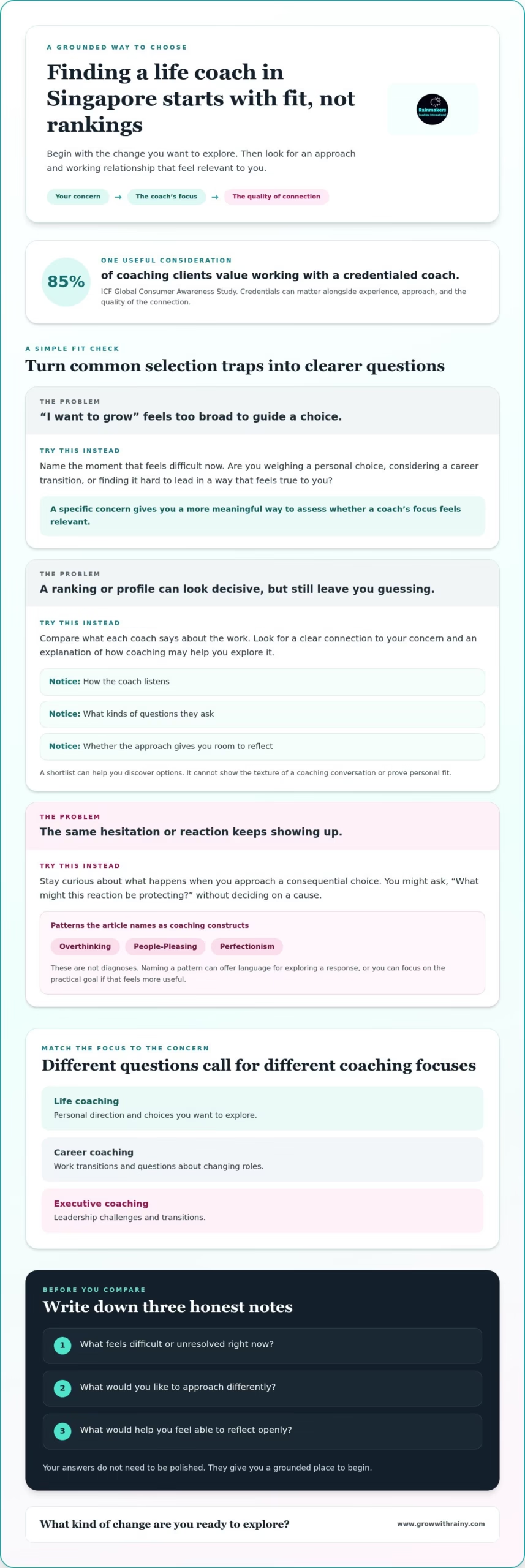
- Match the coaching focus to your concern: life coaching for personal direction, career coaching for work transitions, or executive coaching for leadership challenges.
- Before choosing, name what feels unclear, what you hope will change, and what kind of support would be useful.
- Rainmakers’ Release, Reprogram, and Recondition framework offers a way to explore patterns beneath recurring challenges without treating any approach as a guaranteed result.
What Does “Best Life Coach in Singapore” Mean for Your Situation?
Choosing the best life coach in Singapore for your situation isn’t about finding a coach who ranks first or promises the biggest change. It’s about finding an approach that speaks to the concern you’re carrying, and a working relationship where you can think honestly and feel understood.
It’s reasonable to choose carefully. Coaching involves personal reflection, and you may be bringing questions about a decision, a transition, or a pattern that keeps resurfacing. Start by naming the change you want to explore. Then consider how a coach’s focus and the relationship itself could support that work.
A well-matched life coach is someone whose way of working fits the change you want to explore and helps you move towards it with greater clarity and self-trust. That’s a question of fit, not a promise of a particular result.
Start with the change you want, not a coach’s label
“I want to grow” can be a real and important feeling, but it may not yet tell you what kind of support would be useful. Try naming the moment that feels difficult now. Are you weighing a personal choice, considering a career transition, or finding it hard to lead in a way that feels true to you?
Then ask what you hope to approach differently. You might want to make a decision with less second-guessing, understand what matters before changing roles, or feel more grounded in a leadership transition. These are possibilities, not assumptions about what you need. A specific concern gives you a more meaningful way to assess whether a coach’s focus feels relevant.
Why a shortlist cannot decide personal fit
Directories and rankings can help you discover names and broad areas of focus. But a profile can’t show the texture of a coaching conversation: how the coach listens, what kinds of questions they ask, or whether their approach gives you room to reflect. A “best for” label is a starting point for exploration, not proof that the coach is right for your circumstances.
For a general overview of What is Life Coaching?, you can look at how the practice is described more broadly. Then consider how a particular approach connects with the change you want. Different life coaching approaches can shape what conversations focus on, so the label alone may not tell you how the work will feel.
To make a shortlist more useful, compare what each coach says about the work rather than relying on a ranking alone. Notice whether the description speaks to your concern and explains how coaching might help you explore it. If it still feels too general, that’s useful information: you may need to clarify your own aim before deciding what kind of support fits.
Try writing down three brief notes before comparing approaches:
- What feels difficult or unresolved right now?
- What would you like to approach differently?
- What would help you feel able to reflect openly?
Your answers don’t need to be polished. They give you a grounded place to begin, so “best” becomes less about someone else’s ranking and more about what feels relevant to your next step. What change feels most important to explore?
How a Life Coach in Singapore Can Work with the Issue Beneath the Goal
A clear goal gives coaching somewhere to begin. But sometimes the harder question is why a familiar challenge keeps getting in the way. You may know you want to make a decision, take a new direction, or speak up at work, yet notice yourself hesitating at the same point. The goal still matters. So may the response that makes it difficult to move towards it.
This doesn’t mean there must be a hidden issue, or that every hesitation needs deeper exploration. It can simply be useful to notice what happens when you approach a consequential choice. For capable professionals and leaders, self-trust can be a meaningful lens: can you hear your own perspective amid competing expectations and act in a way that feels aligned with it?
When the same challenge keeps returning
Perhaps you revisit a decision after making it, or hold back in a meeting even though you have something to contribute. If a response feels familiar, you might gently ask, “What might this reaction be protecting?” Stay curious rather than deciding on a cause. It could be a learned strategy, or it may simply reflect the pressure of this particular situation.
Rainmakers treats patterns such as Overthinking, People-Pleasing, and Perfectionism as coaching constructs, not diagnoses. Naming one isn’t about finding a flaw to fix. It can give you language to explore how you respond and whether that response still serves the person you want to be. You can also focus on the practical goal if that feels more useful.
What the Rainmakers Transformation System™ involves
Rainmakers’ framework moves through three stages: Release, Reprogram, and Recondition. This is the sequence used within the Rainmakers Transformation System™, not a standard followed by every coach. It supports inner transformation, reconnecting with your truth, and bringing self-trust into the actions you take. As you explore what may be shaping a response, you can also make room for strengths that have been less visible.
The stages give the work a clear frame without promising a particular result. You might use reflection to notice an old response, question whether it fits your present values, and consider what a more grounded choice could look like. The pace and focus depend on what you’re ready to examine. The framework isn’t about correcting you or forcing change.
This kind of work may be relevant if your goal is clear but your way of approaching it feels tangled. If you’re curious about how transformational life coaching connects inner reflection with outward action, consider whether this approach fits the kind of support you want. The best life coach in Singapore for your needs is one whose way of working fits the change you’re ready to explore, not one who promises to remove every obstacle.
If a conversation would help you reflect on whether this approach fits, you can explore a conversation with Rainy. What would you like to trust yourself to do differently?
How to Compare Life Coaching Approaches in Singapore Without Chasing Rankings
A coach’s title tells you something about their focus. It doesn’t tell you exactly how the work unfolds. To compare approaches, look at three things: the concern the coaching addresses, how the conversations are structured, and what kind of change you hope to work towards. This gives you a more useful basis for comparison than a ranking or broad promise.
The categories can overlap, especially when a work decision is also a personal turning point. The table is a starting guide, not a set of rigid boundaries.
| Coaching focus | Concern it may address | Process to look for | Desired outcome |
|---|---|---|---|
| Life coaching | Personal growth, values, direction, or a life transition | Guided conversation to clarify on what matters and consider practical next steps | More clarity about how you want to move forward |
| Career coaching | Career direction, a professional transition, or development at work | Exploration of priorities alongside choices you can act on | A clearer sense of your professional direction |
| Executive or leadership coaching | Challenges in a leadership role, such as how you lead or make decisions | Reflection connected to your role and day-to-day leadership actions | A more intentional way to approach leadership responsibilities |
Life coaching, career coaching, or leadership coaching?
Start with the question that feels most present. If you’re seeking direction across different parts of life, life coaching may be relevant. If your concern centres on your professional path or development, career coaching may fit more closely. If the challenge is rooted in how you lead, leadership or executive coaching may offer a more focused lens. Explore life coaching approaches to see how different ways of working may connect with your aims.
Compare the process, not only the promise
Look for a plain explanation of what the coaching involves. Does it make room to reflect on your situation and connect that reflection to choices or actions? A process doesn’t need elaborate language to be meaningful. It should make sense in relation to your concern.
Broad claims about confidence, clarity, or transformation can sound appealing, but they don’t describe the work itself. Treat them as intentions rather than assured outcomes. Instead, consider whether the approach gives you a way to explore your concern and think through what you might do next.
Try this quick comparison exercise. For each approach you’re considering, write one sentence about its focus, one about how it describes the coaching process, and one about the change you hope to explore. If the process is hard to connect to your concern, pause before treating the promise as a reason to choose it.
For example, if you’re considering a new role but feel uncertain about what matters most, career coaching may help you explore professional direction. If the central question is how you want to lead through that transition, leadership coaching may be more relevant—with executive coaching providers such as simonleadllc.com focusing specifically on enhancing leadership capabilities. The distinction isn’t about which type is better. It’s about which conversation fits the question you’re ready to work with.
If you’d like to reflect on whether Rainmakers’ coaching approach fits your situation, you can explore a conversation with Rainy.
Which kind of change feels most important to explore now?
Questions to Ask Yourself Before Choosing a Life Coach in Singapore
You don’t need a perfect explanation of what’s going on before you explore coaching. A few honest notes can help you describe what you want support with and notice whether a coach’s way of working feels right. Choosing the best life coach in Singapore for your needs starts with understanding your own concern, not trying to present it neatly.
Clarify the situation you want to bring
Begin with one sentence about what’s happening, without judging yourself. For example: “I’m considering a career change, but I’m not clear on what I want from my next role.” Then name what you’d like to approach differently, such as weighing your priorities with more confidence. That isn’t a promise of a specific outcome. It gives the conversation a useful starting point.
Notice where the concern sits. Is it mainly about your personal direction, your career, or how you’re showing up in a leadership role? Some questions touch more than one area, and that’s fine. You’re not trying to fit yourself into a category. You’re finding language for what feels most important now.
Notice whether the coaching relationship feels grounded
As you consider a coach’s approach, ask yourself whether the language is clear and relevant to your situation. Is there room for your perspective, or does the explanation seem to prescribe what you should do? A grounded coaching relationship should leave you with agency. Pay attention to the process and to how you feel engaging with it as you consider what finding the right life coach means for your needs.
It may also help to look back at what you’ve already tried. Have you talked it through with someone you trust, made a decision, or given yourself time to reflect? Whatever your answer, it doesn’t mean you’ve failed or missed something. It helps you see what has been useful and what remains unclear.
Before taking a next step, consider these prompts:
- What is the situation I want to bring, described without blaming myself?
- What would I like to approach differently, even if I can’t yet define the outcome?
- What have I already tried, and what do I still want to understand?
- What kind of support would help me think honestly and retain ownership of my choices?
After reading about a coach’s approach or having a conversation, notice your response. Do you feel listened to? Can you speak honestly, including about uncertainty? Does the coach make space for your questions and perspective? You don’t need instant certainty. A sense of respect, clarity, and room to think can help you decide whether to continue exploring.
What is one small, practical step you could take to clarify the support you want?
Explore a conversation with Rainy
Explore Whether Rainmakers Life Coaching Fits Your Next Step
A coaching approach can sound compelling and still not be the right fit for you. What matters is whether its focus connects with the change you want to explore, and whether you feel ready for the kind of reflection it invites. Rainmakers Coaching International provides life coaching for high-achieving professionals and leaders exploring a meaningful life or career transition, or looking to reconnect with self-trust and direction.
Who may find Rainmakers Coaching International’s approach relevant
You might be carrying a clear decision, such as whether to make a career change, alongside a less clear question about why the choice feels difficult. Or perhaps a familiar way of responding keeps appearing in different situations. Curiosity about those patterns can be a starting point for exploration, not evidence that something is wrong with you or a diagnosis.
Rainmakers Coaching International’s work centres on inner transformation connected to external action. The Rainmakers Transformation System™ provides a framework for that work, with a focus on reconnecting with your truth and allowing hidden strengths to emerge. It doesn’t guarantee a particular outcome. The approach may suit you if you’re willing to reflect on what’s happening internally as well as consider what you want to do next.
There’s also an important distinction to hold: life coaching is not psychotherapy or clinical counselling, and it isn’t a replacement for mental health care. Coaching can support reflection on goals, choices, and personal direction. If what you need is clinical support, a life coach is not the appropriate substitute.
Choose a next step that matches your readiness
If you’re not ready to speak with a coach, start with a short written reflection. Complete these prompts in your own words:
- The situation I want to understand better is…
- The change I hope to explore is…
- What I’m unsure about, or still want to understand, is…
You don’t need polished answers. The notes are for you, and they can help you notice what feels clear and what you may want support to explore. If you want more context about transformational life coaching, consider how inner reflection might relate to the actions you’re ready to take. The approach should feel relevant to your priorities, not like a promise that every challenge will disappear.
If you’re ready to explore whether Rainmakers Coaching International’s approach fits your situation, you can schedule a call with Rainy. If not, your written reflection is a useful next step in its own right. What would help you feel more grounded in the decision ahead?
Take One Grounded Step Towards the Change You Want
You don’t need to have every answer before you move forward. Sometimes the next step is simply to name what feels important, notice what you’re ready to explore, and choose support that respects your pace and perspective. That’s a more personal way to think about the best life coach in Singapore for you: not as a perfect answer, but as a thoughtful fit for the question you’re carrying.
If you’re still unsure, write down what you want to understand better and what would help you feel comfortable exploring it. If you’re ready to talk, a conversation can help you consider whether Rainmakers’ approach feels aligned with your next step. Either way, let your choice begin with reconnecting with your truth, not pressure to decide before you’re ready.
Trust the clarity you’re building. One considered step is enough to begin.
Frequently Asked Questions
What does a life coach do?
A life coach helps you clarify what you want to work towards and think through choices that may move you closer to it. For example, if you’re weighing whether to take on a new responsibility, coaching may help you explore what matters, what concerns you, and what options you see. The coach supports your reflection and planning, while decisions and actions remain yours.
How do I know if I am ready to work with a life coach?
You may be ready if there’s a question you want to explore and you’re open to reflecting on your choices, even if you don’t yet know the answer. You don’t need a detailed plan. It can help to bring one situation, such as uncertainty about a transition, and a sense of what you’d like to understand. Readiness can mean curiosity, not certainty.
Can life coaching help with both personal and professional goals?
Yes. Personal and professional concerns can overlap, and coaching can make room to explore how one affects the other. For instance, a demanding role may prompt questions about boundaries, values, or what you want from your working life. You might focus on a personal goal in one conversation and a career decision in another. The best life coach in Singapore for you should suit the concern you want to bring.
What is the difference between a life coach and a therapist?
A life coach generally supports reflection on goals, choices, accountability and future outcome. Therapy or clinical counselling addresses mental health needs and may involve assessment or treatment. Coaching is not psychotherapy or clinical counselling, and it isn’t a substitute for mental health care. If you’re unsure what kind of support would be appropriate for your situation, consider speaking with a qualified mental health professional.
How long does life coaching take?
There isn’t one fixed timeframe that suits everyone. The length of coaching can depend on what you want to explore, how the work is structured, and whether your priorities change as you reflect. Before beginning, you can discuss what you hope to focus on and how you’ll review whether the conversations remain useful. A meaningful pace should leave room to consider your experience, not rush you towards a preset result.
Can a life coach guarantee a specific outcome?
No responsible coach can guarantee a specific personal or professional outcome. A coach can support reflection, help you consider options, and work with you as you decide what action to take. But choices, circumstances, and results are not fully within another person’s control. Be cautious of promises that claim coaching will secure a particular promotion, decision, or life change. Focus instead on whether the approach feels clear and relevant.
What should I expect from an initial conversation with a life coach?
Expect a chance to explain what’s on your mind, what you hope to explore, and what you’d like to understand about the coaching approach. You can share only what feels useful at that point. Notice whether the coach listens, responds clearly, and makes space for your questions. You might also ask how the work is shaped around your focus. You don’t need to make a commitment before deciding whether the fit feels right.

Article by
Rainy Rainmaker
Rainy Rainmaker is the founder of Rainmakers Coaching International and a transformational coach for confidence, self-trust, and authentic leadership. Based in Singapore, she helps high-achieving professionals, managers, and leaders who appear capable on the outside but feel quietly held back by self-doubt, overthinking, imposter feelings, burnout, or a loss of direction. Through her signature Rainmaker Transformation Journey™, Rainy helps clients uncover the insights already within them and turn inner clarity into aligned action that creates lasting change in how they work, lead and live.
