
What if the heavy weight you’re carrying after a professional failure isn’t the failure itself, but the armor you’ve put on to protect yourself from it? You’ve likely spent years building a reputation for excellence; yet, one missed target or a stalled project has you questioning every decision you’ve ever made. It’s exhausting to feel like an imposter in a room where you’ve already earned your seat.
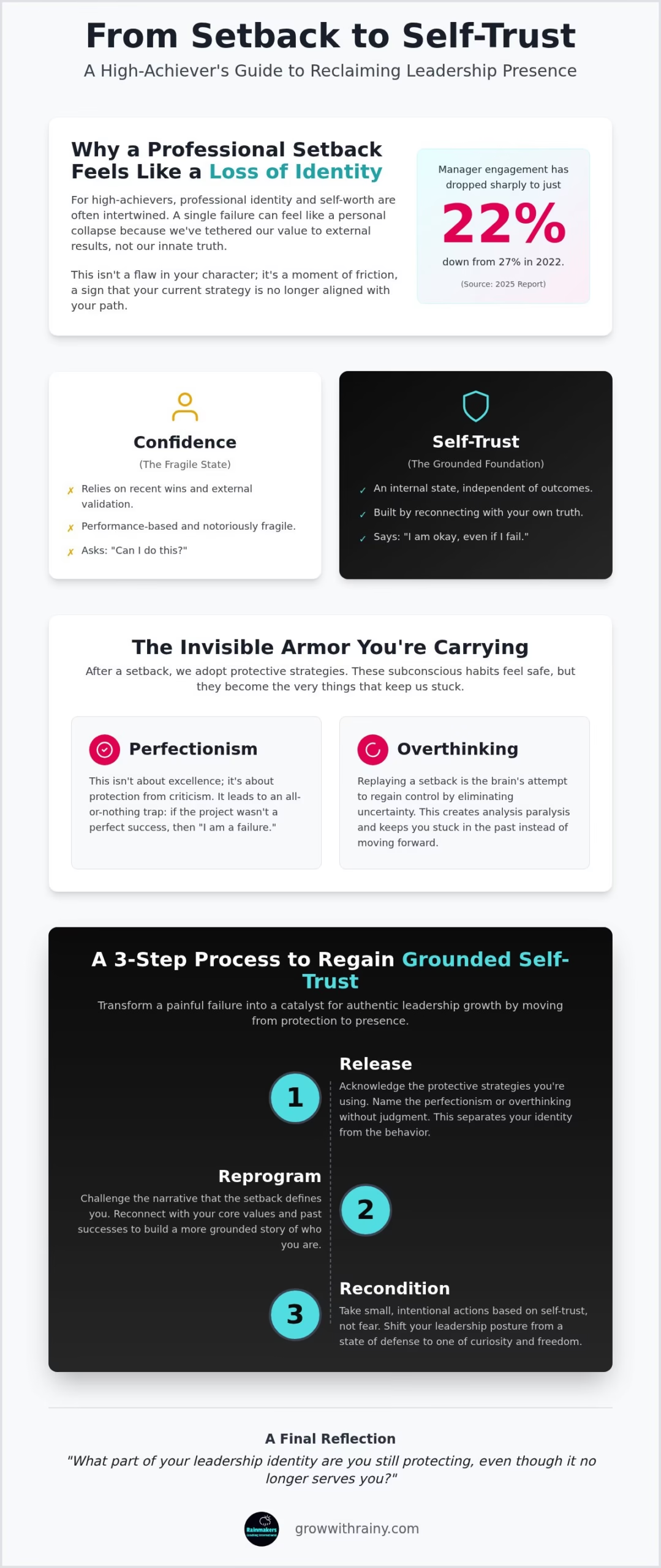
If you’re feeling stuck in a cycle of overthinking, you aren’t alone. A 2025 report shows that manager engagement has dropped sharply to just 22 percent, down from 27 percent in 2022. This widespread decline in morale makes it harder than ever to model resilience. However, learning how to regain confidence after setback isn’t about fixing a flaw in your character. It’s about releasing the protective strategies, like perfectionism or hesitation, that have become too heavy to carry.
This guide explores how to move beyond the sting of failure by reconnecting with your truth and reclaiming your leadership presence. You’ll discover how to release these patterns and move forward with a grounded sense of self-trust. As you begin this journey, ask yourself: what part of your leadership identity are you still protecting, even though it no longer serves you?
Key Takeaways
- Understand why high-achievers often tie their identity to external results and how to separate your innate value from professional outcomes.
- Discover how to regain confidence after setback by identifying the invisible protective strategies, like overthinking and perfectionism, that create internal friction.
- Learn why “faking it” often fuels imposter syndrome and how to cultivate a sense of grounded self-trust instead.
- Explore the 3R process—Release, Reprogram, and Recondition—to transform a painful failure into a catalyst for authentic leadership growth.
- Shift your leadership posture from a state of protection to a state of freedom, allowing you to lead with clarity and presence.
Why a Professional Setback Feels Like a Loss of Identity
When you’ve spent your career climbing, a single fall doesn’t just hurt; it disorients. For leaders in high-pressure hubs like Singapore or Hong Kong, success isn’t just a goal; it’s often the very foundation of who they are. This is the High-Achiever’s Paradox. Those with the most wins often feel the deepest sting from a single loss because they’ve tethered their worth to their last quarterly report or board meeting. You aren’t just losing a project; you feel like you’re losing yourself.
If you’re wondering how to regain confidence after setback, start by recognizing that your value isn’t a variable based on external results. It’s a constant. We often confuse our professional output with our internal truth. When that output falters, we feel a sense of identity collapse. According to 2025 research, manager engagement has dropped to 22 percent, suggesting that the professional landscape is becoming more volatile for everyone. A setback is merely a moment of friction, a sign that something in your current strategy is no longer aligned. It isn’t a permanent deficit in your character.
The Difference Between Confidence and Self-Trust
Confidence is often built on what we’ve done lately. It’s external, performance-based, and notoriously fragile. If you rely solely on a “confidence boost,” you’re at the mercy of your next win. Reconnecting with your truth is a far more sustainable path. This involves building self-trust, which is a grounded, internal state. While confidence asks “Can I do this?”, self-trust says “I am okay, even if I fail.” It’s the difference between a house built on shifting sand and one with a grounded foundation.
The Emotional Impact of Professional Friction
It’s natural to feel anger, shame, or a profound sense of confusion when things don’t go as planned. Your inner critic likely uses these moments to whisper old narratives that you aren’t good enough. However, understanding self-efficacy can help you see that your ability to produce results hasn’t vanished. A setback is a temporary misalignment rather than a permanent deficit.
When you stop fighting the friction and start listening to what it’s telling you, you begin the real work of reclaiming your leadership presence . You don’t need a louder voice; you need a more grounded one. This shift allows you to move from a place of defence to a place of genuine curiosity.
Reflection Question: If your current success was stripped away tomorrow, what parts of your innate self-trust would remain?
Identifying the Invisible Protective Strategies at Play
When a setback hits, your brain’s primary objective shifts from growth to survival. This is where the Rainmakers Pattern Library becomes a vital diagnostic tool. In my experience coaching leaders, I’ve seen that our greatest leadership strengths often become our heaviest barriers when they are over-used in response to pain. We call these “invisible protective strategies.” They are the subconscious habits you’ve developed to keep yourself safe from future failure, but they eventually become the very things that keep you stuck.
If you’re wondering how to regain confidence after setback, you must first see the armor you’re wearing. You might find yourself seeking constant validation from your peers because you no longer trust your own internal compass. This approval-seeking is a temporary bandage for a deeper wound. It creates a cycle where your sense of worth is entirely dependent on the next person’s nod of agreement. This isn’t leadership; it’s a defensive crouch.
Perfectionism: The Shield That Becomes a Cage
Perfectionism isn’t actually about excellence. It’s about protection. After a professional stumble, your drive for high standards often mutates into a paralyzing fear of any flaw. You fall into an all-or-nothing trap: if this project didn’t succeed, then I am a failure. You aren’t just managing a task; you’re defending your identity. Recognizing that your need for “perfect” is actually a protective strategy is the first step toward identifying a perfectionist mindset and releasing it.
Overthinking and the Illusion of Control
Why do we replay a setback 1,000 times in our heads? It’s the brain’s attempt to eliminate uncertainty. We mistakenly believe that if we can just figure out exactly what went wrong, we can prevent it from ever happening again. However, overthinking is just a drain on the energy you need for actual recovery. It moves you away from your truth and into a loop of “what-ifs.” According to research-backed approaches from Utah State University, resilience is built through purposeful action rather than staying in a state of hyper-analysis.
Moving from “Why did this happen?” to “What is my truth right now?” allows you to stop the mental leak. If you find yourself stuck in these loops, it might be time for a 90-minute coaching conversation to identify which patterns are holding you back. Reclaiming your presence requires you to step out of the replay and back into the present moment.
Reflection Question: Which of your strengths have you been over-using lately as a way to feel safe?
Reconnecting with Your Truth: Why “Faking It” Doesn’t Work
Popular culture often tells us to “fake it till we make it.” This advice suggests that if you just put on a brave face and project authority, the internal feeling of competence will follow. But for a leader who has just faced a major professional blow, this approach is exhausting. It creates internal friction. You end up playing a character while your internal self feels like it’s drowning in debris. This gap is exactly where imposter syndrome takes root.
If you want to know how to regain confidence after setback, you have to stop acting. True leadership presence isn’t a performance; it’s an expression of your internal self-trust. At Rainmakers, we use a specific lens to look at these moments. We see the setback as “debris” covering your innate treasures. The gem within you, your wisdom, your values, and your ability to solve complex problems, hasn’t changed. It’s just temporarily obscured. Reclaiming these treasures requires compassionate insight rather than self-blame.
Releasing the Need for External Validation
Many high-performers fall into an “Approval-Seeking” loop after a disappointment. They look to the board, their team, or their peers to tell them they are still valuable. This is a dangerous game. If your value is a variable controlled by others, you’ll always be one mistake away from an identity crisis. A 2026 report found that employee confidence has reached a record low, with only 43.8 percent of workers reporting a positive six-month business outlook. In such an unstable environment, relying on others for your sense of worth is a recipe for exhaustion.
Try this practical exercise: identify one “hidden treasure” that the setback cannot touch. Perhaps it’s your ability to remain calm under pressure or your deep technical expertise. This strength is part of your truth. It doesn’t disappear just because a specific project did. Reclaiming this part of yourself is the first step toward reconnecting with your truth.
The Role of Grounded Resilience
We often talk about resilience as “bouncing back.” But why would you want to bounce back to the version of yourself that was vulnerable to that specific protective pattern? Real growth involves grounded resilience. This means staying present with your current reality without being swept away by it. It’s about learning how to trust yourself again by making small, methodical decisions that align with your values.
When you move from a place of truth rather than a place of performance, you regain your authority without the weight of past mistakes. You don’t need a confidence boost. You need a grounded foundation. This shift allows you to lead with a sense of quiet strength that others can feel and respect.
Reflection Question: What is one truth about your leadership that remains true, even in the middle of this setback?
A 3-Step Template to Regain Grounded Self-Trust
Most traditional leadership advice suggests that if you fail, you should simply work harder at the skill you missed. This approach misses the internal friction that a setback creates. Real transformation isn’t about external skill-building; it’s about a personalized sequence that moves you from a state of fear to a state of self-trust. The Rainmakers Transformation System™ provides a structured path to help you do exactly that. This isn’t generic advice. It’s a method for how to regain confidence after setback by integrating your internal truth with your external actions.
Recent data underscores why this internal work is so critical. Mentions of “burnout ” in employee reviews were 2.5 times more frequent in the first quarter of 2026 than before the pandemic. When you are already operating near your limit, a setback feels like a catastrophic failure rather than a manageable hurdle. To recover, you must follow the 3R Integration process: Release, Reprogram, and Recondition.
Step 1: Release the Protective Pattern
The first step is identifying which invisible protective strategy is currently limiting your vision. Are you leaning into perfectionism? Are you trying to control every variable to avoid another surprise?
Practice “compassionate observation ” by noticing these patterns without judging yourself for having them. The Release phase is about letting go of the protective strategy, not the ambition that drives you. You can still be a high-achiever without the heavy armor of perfectionism.
Step 2: Reprogram the Narrative
Once you see the pattern, you can begin to shift the story you’re telling yourself. Many leaders struggle with an “invisible barrier” of over-responsibility, believing that they alone are to blame for every misalignment. Shift your narrative from “I failed” to “I am experiencing a moment of learning.” This isn’t just positive thinking; it’s a necessary step in Building Rock Solid Confidence. It allows you to see the facts of the situation without the weight of shame.
Step 3: Recondition for Self-Trust
The final step is to prove to your brain that you are safe and capable. This requires small, grounded actions that reinforce your new narrative. I often suggest creating an “Evidence Vault” where you document your past successes and current small wins. This helps make grounded self-trust a part of your daily identity rather than a fleeting feeling. By consistently choosing truth over protection, you recondition your nervous system to lead with presence again.
Reflection Question: What is one small, grounded action you can take today that would prove you trust your own judgment?
Moving Forward: From Protection to Freedom
Moving from a state of protection to a state of freedom is the ultimate goal of your recovery. When you operate from protection, every decision is filtered through the fear of another failure. You’re constantly adjusting your armor, making sure no one sees a crack.
In an environment where manager engagement has dropped to 22 percent as of 2025, this defensive posture is common. But true freedom is the ability to lead from a place of grounded self-trust. In this state, your value isn’t a variable tied to the outcome of a single project. It is a constant.
A professional setback is often the catalyst that forces this transition. It is the moment you realize your old protective patterns, such as perfectionism or overthinking, have become too heavy to carry. If you’re searching for how to regain confidence after setback, recognize that you aren’t trying to return to the person you were before. You’re evolving. You’re becoming a leader who is more aligned with their truth and less dependent on external applause.
Choosing Personalized Transformation
Generic, knowledge-based coaching often fails because it treats a setback as a skill deficit. It tells you to work harder or manage your time better. But for a senior leader, the friction is rarely about a lack of knowledge. It’s about an internal misalignment. This is why the Rainmakers Transformation System™ focuses on the internal shifts that lead to external results.
If you are navigating high-stakes environments, seeking Executive Coaching in Singapore can provide the psychological safety needed to release these deep-seated strategies.
Partnering with a “Heart-Centered Authority” or a seasoned mentor is vital during this time. You need someone who understands the complexities of high-level success but prioritizes your holistic well-being. This isn’t about loud, aggressive motivation. It’s about a quiet, steady reassurance that you are already worthy of the success you seek. You don’t need to find a new version of yourself; you simply need to clear the debris covering your innate treasures.
A Reflective Question for Your Journey
I invite you to sit with a deep, introspective question: “If you didn’t need this setback to define you, who would you choose to be today?”
Don’t rush to answer or “fix” the feelings that arise. Just listen. Reclaiming your presence is a methodical journey, and it begins with this internal honesty. When you stop using your mistakes as a measure of your worth, you find the freedom to lead with genuine clarity. To see where you are on this journey, take our Self-Confidence Quiz today.
Reflection Question: What would change in your leadership style if you completely trusted your internal truth over external results?
Step Into Your Authentic Leadership Presence
A professional setback doesn’t define your capacity; it simply highlights where your protective patterns have become too heavy. By moving through the 3R process, you shift from a defensive posture to a state of freedom. You’ve discovered that how to regain confidence after setback isn’t about chasing external validation. It’s about reconnecting with your truth and building a grounded sense of self-trust.
With over 10 years of experience coaching high-achieving leaders, I’ve seen how the Rainmakers Transformation System™ facilitates these deep internal shifts. As a coach recognized by BestLah as a top life coach in Singapore, I know your “hidden treasures” remain intact even after a disappointment. You don’t need to fake it. You simply need to reclaim the authority that’s already yours.
You’re already worthy of the success you seek. The path forward is waiting for you to walk it with clarity and presence.
Reflection Question: If you let go of the need to be perfect, what bold decision would you make today?
Frequently Asked Questions
How long does it typically take to regain confidence after a career setback?
The timeline for how to regain confidence after setback is deeply personal. It depends on your willingness to release protective strategies. While some leaders feel a shift in weeks; others take months to fully integrate their learning. A 2025 global study found that 40 percent of employees report significant ongoing stress. This can slow recovery. The goal isn’t to rush back to “normal” but to build a grounded foundation of self trust.
Is it normal to feel like an imposter after a major professional failure?
It is entirely normal. When you tie your identity to external results; a failure feels like a personal indictment. This creates a gap between your performing self and your internal reality. This is the definition of imposter syndrome. Instead of fighting the feeling; see it as a signal. You’ve been relying on fragile confidence rather than internal truth. Reconnecting with your truth allows you to bridge that gap and lead with authenticity again.
What is the first step I should take immediately after a setback?
The first step is to pause and practice compassionate observation. Before you try to “fix” the situation; notice the protective patterns trying to take over. Are you spiraling into overthinking or perfectionism? By simply observing these reactions without judgment; you lower your internal friction. This creates the psychological safety needed to begin the 3R process. Don’t rush into action. You must rush into alignment first.
Can a life coach help me rebuild my confidence more quickly than doing it alone?
Yes, a coach provides a mirror and a grounded system to navigate internal friction. While you can certainly recover on your own; a structured approach like the Rainmakers Transformation System™ provides a proven roadmap. We help you move through the debris of failure to find your hidden treasures. This partnership speeds up the transition from a state of protection to a state of freedom and leadership presence.
How do I know if my perfectionism is helping me or holding me back?
Perfectionism holds you back when it creates a fear of any flaw rather than a drive for excellence. If your high standards feel like a heavy cage or cause you to hesitate; it has become a protective strategy. True excellence is grounded and flexible. If you find yourself in an all-or-nothing trap where one mistake makes you feel like a failure; your perfectionism is likely an armour you no longer need.
What is the difference between a setback and a sign that I should change careers?
A setback is a moment of professional friction; whereas a career change sign is a persistent misalignment with your internal truth. If you still feel a pull toward the hidden treasures of your industry but feel blocked by recent failures; you’re likely facing a setback. If the work itself feels hollow even when you succeed; it may be time for a deeper career development conversation. Reconnecting with your truth clarifies this distinction.
How can I explain a professional setback to future employers without losing confidence?
Transparency is your greatest asset when explaining a setback to future employers. Explain the event not as a deficit; but as a moment of profound learning that strengthened your leadership. Use a grounded framework. Identify what you released and how you reconditioned your approach. When you speak from a place of self trust; employers see a leader who is resilient. They aren’t looking for a perfect record. They want wisdom.
Can overthinking actually prevent me from recovering from a failure?
Yes, overthinking acts as a drain on the mental energy you need for actual recovery. It is the brain’s attempt to eliminate uncertainty by replaying the event 1,000 times. This keeps you stuck in a loop of what-ifs. According to a 2026 ADP Research report; only 22 percent of global workers feel their jobs are safe. In this climate of anxiety; overthinking acts as a false shield. Real recovery requires moving into grounded action.
Reflection Question: Which of these questions resonated with your internal monologue today, and what is that telling you about your next step?

Article by
Rainy Rainmaker
Rainy Rainmaker is the founder of Rainmakers Coaching International and a transformational coach for confidence, self-trust, and authentic leadership.
Based in Singapore, she helps high-achieving professionals, managers, and leaders who appear capable on the outside but feel quietly held back by self-doubt, overthinking, imposter feelings, burnout, or a loss of direction. Through her signature Rainmaker Transformation Journey™: Release, Reprogram, Recondition – Rainy helps clients uncover the insights already within them and turn inner clarity into aligned action that creates lasting change in life, career, and leadership.
