

Table of Contents

When a New Role, New Boss, or Setback Makes You Doubt Yourself
If you have started doubting yourself after a new role, new boss, or career setback, you are not alone. You may have stepped into a new position. Your job scope may have expanded.
A new leader may have come in. You may have been given a bigger project. Your team may have changed. A restructure may have shifted the expectations around you. Or a setback may have shaken the confidence you once had.
On paper, nothing about your capability has disappeared. You still have experience, track record, and you still know how to think, lead, solve problems, and get things done. But internally, something begins to feel different.
You noticed that you are taking longer to make decisions. You replay conversations after meetings – you wonder if you said too much, too little, or the wrong thing.
Or you ask for more reassurance than usual. And at some point, you may begin to ask yourself:
“Can I still trust myself?”
For many senior professionals, self-doubt doesn’t appear because they are weak, it often appears during change.
- A new role can make you feel like a beginner again.
- A new boss can make you question what is valued.
- A larger scope can expose you to decisions with more ambiguity.
- A new team can make you wonder how much authority to assert.
- A difficult setback can make you question your self worth.
This is especially unsettling when you are used to being the capable one. The one people rely on, the one who holds things together or the one who usually knows what to do. So when your confidence starts to shake, it can feel personal.
But a dip in confidence during change does not always mean you are failing. Sometimes, it means you are being stretched beyond the environment where your confidence was first built.
You are not less capable. You may be adjusting to new expectations, new stakes, new relationships, and a new version of leadership that you have not fully grown into yet.
That is why self-trust matters.
When change shakes your self-confidence, self-trust helps you stay steady while confidence catches up. This article is not about forcing yourself to “be more confident.” It is about learning how to trust yourself again – especially when life, work, or leadership no longer feels as familiar as it used to.
What Does It Mean to Trust Yourself Again?
To trust yourself again doesn’t mean you must always feel certain. It doesn’t mean you must have the perfect answer, make the perfect decision, or know exactly how everything will turn out. That would not be self-trust. That would be control. Self-trust is different.
Self-confidence asks:
“Can I do this?”
Self-trust asks:
“Can I count on myself, even if this is hard, unfamiliar, or imperfect?”
This distinction matters, especially during change.
When you are in a familiar role, working with familiar people, solving familiar problems, your self-confidence may feel natural. You know what is expected. You understand the culture. You know how decisions are made. You know who to influence, when to speak, and how to get things done.
But when the environment changes, your confidence may fluctuate.
- A new boss may have a different definition of “good work.”
- A new role may require you to operate at a more strategic level.
- A bigger project may expose you to more visibility and scrutiny.
- A new team may require a different leadership approach.
- A setback may make you more cautious than before.
In those moments, you may not feel fully confident yet. But you can still practise self-trust.
Self-trust sounds like:
“I may not know everything yet, but I can learn.”
“I can ask for clarity without making it look like I am incapable.”
“I can make the best decision with the information I have now.”
“I can recover if I make a mistake.”
“I can listen to feedback taking it as a personal attack.”
“I can stay connected to my values, even when expectations are unclear.”
Self-trust is the deeper foundation beneath confidence. Confidence may rise and fall depending on your circumstances. Self-trust helps you stay steady while you are still finding your footing. It is not loud and it doesn’t require you to prove anything to anyone.
Self-trust is quiet inner alignment. It is choosing to stand by yourself, even when you are surrounded by uncertainty.
Why Change Can Shake Your Self-Confidence and Self-Trust
Change has a way of making a capable person question things they used to do with ease. You may have led teams before, but a new team brings new personalities, new expectations, and new levels of resistance.
You may have managed senior stakeholders before, but a new boss with a different communication style can make you wonder whether your usual way of working is still effective.
You may have delivered strong results in the past, but a bigger, unfamiliar project with more visibility can make every decision feel heavier.
You may have recovered from pressure before, but a painful setback can make you question your judgment, your self-worth, and whether you still have what it takes.
This is one of the reasons career transitions can feel so uncomfortable. They do not only change what you do. They can change how you see yourself.
A Senior Finance Manager who has always been trusted for accuracy, control, and clear answers may suddenly feel uncertain when promoted into a Finance Director role where the work requires more strategic judgment, stakeholder influence, and decisions without perfect information.
A Marketing Director who used to feel valued by her previous country leader may start second-guessing herself when a new regional CEO comes in with different priorities around revenue, brand visibility, and speed of execution.
A Regional Head who was once confident managing a familiar country team may feel less steady when asked to lead a newly formed regional team through restructuring, resistance, and low morale across different markets.
In these moments, the question underneath the surface is rarely just:
“Can I do the job?”
Often, it becomes:
“Can I still trust myself at this level?”
Psychologist Albert Bandura’s work on self-efficacy helps explain why this happens. Self-efficacy refers to a person’s belief in their ability to act effectively in specific situations. Bandura identified several sources that shape this belief, including past performance, observing others, encouragement from others, and emotional or physical states.
This means confidence is not fixed. It can be strengthened by experience, support, and repeated evidence that you can handle challenges. It can also be shaken when the environment changes, expectations become unclear, feedback feels uncertain, or pressure increases.
So when you start doubting yourself during a change, it may not mean you have lost your ability. It may mean your internal sense of confidence has not yet adjusted to the new context.
You may be learning new rules, reading new stakeholders or leading at a level where there is no perfect answer.
You may be recovering from feedback, disappointment, or a setback that triggered something deeper than performance.
This is where self-trust becomes important.
Self-confidence may say:
“I know I can do this because I have done it before.”
Self-trust says:
“I have not done this exact thing before, but I can stay present, learn, ask for clarity, make a decision, and recover if it is not perfect.”
That is the kind of trust that helps you keep moving through change. You don’t have to pretend you are unaffected or force yourself to feel ready before you are. You can choose to show up long enough for your confidence to rebuild.

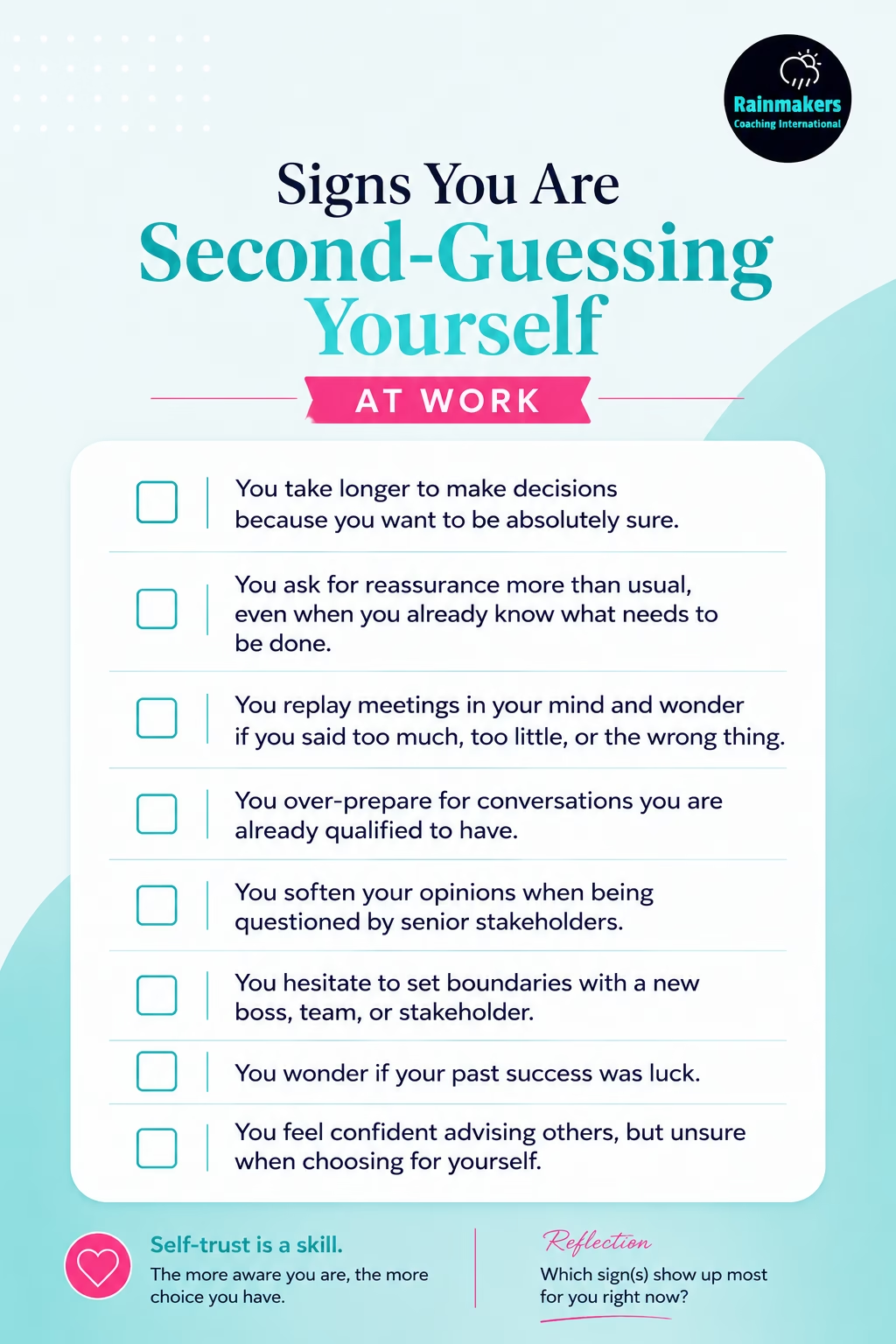
Signs You Are Second-Guessing Yourself at Work
Second-guessing yourself does not always look obvious from the outside.
You may still be attending meetings, making decisions, supporting your team, and delivering what is expected of you. People around you may still see you as capable. But internally, you may notice that simple things have started to feel harder than before.
You take longer to make decisions because you want to be absolutely sure.
You ask for reassurance more than usual, even when you already know what needs to be done.
You replay meetings in your mind and wonder if you said too much, too little, or the wrong thing.
You over-prepare for conversations you are already qualified to have.
You soften your opinions when being questioned by senior stakeholders.
You hesitate to set boundaries with a new boss, team, or stakeholder.
You wonder if your past success was luck.
You feel confident advising others, but unsure when choosing for yourself.
This can be especially confusing for senior professionals.
You may have years of experience behind you. You may have led projects, managed people, handled pressure, and delivered results. Yet in a new environment, after a setback, or under different leadership, you may find yourself questioning your own judgment repeatedly.
There is also a name for one part of this experience. Research on the impostor phenomenon has found that capable people can doubt their achievements and fear being exposed as less competent than others believe them to be.
A systematic review published in the Journal of General Internal Medicine found that reported prevalence rates of impostor syndrome ranged from 9% to 82%, depending on the population and how it was measured.
The exact number matters less than the pattern. Many capable professionals struggle to internalise their own competence, especially when they are stepping into more visible, ambiguous, or unfamiliar spaces.
So if you have been second-guessing yourself, it does not automatically mean you are not ready. It may mean you are in a stretch season. It may mean the expectations around you have changed, or that you are trying to protect yourself from repeating a past mistake, disappointment, or rejection.
The painful part is that you no longer feel safe trusting your own capability. So when that happens, instead of adding more pressure to perform, you can focus on rebuilding self-trust gently and intentionally, one honest step at a time.
A Coaching Story: When a New Role Made Her Doubt Herself
I once worked with a senior manager, let’s call her Elaine, who had recently moved from a country-level role into a regional role. On paper, it looked like a clear career progression.
She had led a team of twelve.
She had delivered several high-pressure launches.
She was known for being reliable, organised, and good with people.
Her previous Managing Director trusted her judgment and often asked her to lead sensitive cross-functional projects. But a few months into the new role, she started doubting herself.
Her new regional boss was much more direct than her previous manager. In meetings, he would challenge assumptions quickly and ask, “What’s the commercial impact?” before she had finished explaining the background.
The stakeholders were also more senior and older. Instead of presenting updates to country heads who already knew her work, she was now presenting to regional finance, legal, sales, and operations leaders who had different priorities and stronger opinions.
The decisions were more ambiguous too. She was no longer just managing execution. She had to recommend whether to delay a regional rollout, push back on an unrealistic timeline, and influence stakeholders who did not report to her.
At first, she thought she had lost her confidence because before a regional steering committee meeting, she would prepare five versions of the same update because she was worried someone would ask a question she could not answer.
When writing to her new boss, she would rewrite a three-paragraph email again and again, wondering if she sounded too defensive, too junior, or not strategic enough.
After a meeting, she would replay the moment when the Finance Director questioned her numbers and wonder whether everyone now thought she was not ready for the role.
When the Sales Lead pushed for a faster launch date, she softened her concern by saying, “Maybe we can try,” even though she knew the timeline would stretch her team beyond capacity.
What made it harder was that everyone around her still saw her as capable. So she judged herself for struggling. Like many capable professionals, she had very high expectations of herself – often unrealistic.
She told herself:
“I should be able to handle this easily.”
“I should be growing, so why am I still struggling?”
“I have led difficult projects before. Why does this feel so hard?”
“I wanted this opportunity, so I shouldn’t feel overwhelmed.”
“Maybe I am not ready for this level after all.”
What she did not realise was that these expectations were weighing her down more than the role itself. She wasn’t only adjusting to a bigger role. She was also judging herself for needing time to adjust.
As we explored what had changed, she began to see the situation differently. She realised that she had not lost her ability. She was learning to lead at a new level. Her role now required a different kind of confidence.
Not just the confidence to execute well, but the confidence to challenge timelines, influence without authority, hold her point under questioning, and make decisions when not everyone agreed.
So we began rebuilding her self-trust in small, practical ways.
First, she identified what had shaken her confidence:
“My confidence started to shake when I moved from being trusted in my country role to being questioned in a regional role.”
Then she separated newness from inadequacy:
“I am not incapable. I am learning how to operate with more senior stakeholders and less certainty.”
So she reconnected with her track record.
She had handled difficult launches before.
She had managed team conflict before.
She had recovered timelines before.
She had earned trust before.
She had made sound decisions under pressure before.
She also began to separate her inner voice from her inner noise.
Her inner noise said:
“Don’t challenge the Sales Lead. You will look difficult.”
Her inner voice said:
“The timeline is unrealistic. If I do not speak up now, my team will carry the cost later.”
Each week, she kept one small promise to herself. One week, the promise was to say clearly in the steering committee:
“Based on the current dependencies, I do not recommend launching in June. My recommendation is to move the launch to July so we can protect quality and team capacity.”
Another week, it was to send her update email after two reviews instead of rewriting it for an hour.
Another week, it was to tell a stakeholder:
“I can support this request, but not by Friday. If this is urgent, we need to reprioritise one of the existing deliverables.”
None of these actions looked dramatic from the outside. But internally, each one helped her rebuild the message:
“I can trust myself.”
Over time, she stopped needing constant reassurance.
She became clearer in meetings.
She made decisions faster.
She stopped softening every concern just to keep the room comfortable.
She learned that being challenged didn’t mean she was failing. It meant she was now sitting in rooms where leadership required more clarity, courage, and steadiness.
Most importantly, she began to feel like herself again. Not the old version of herself, but a more grounded version. A version who could grow into a bigger role without abandoning herself in the process.
Now let’s move into the main practical section.

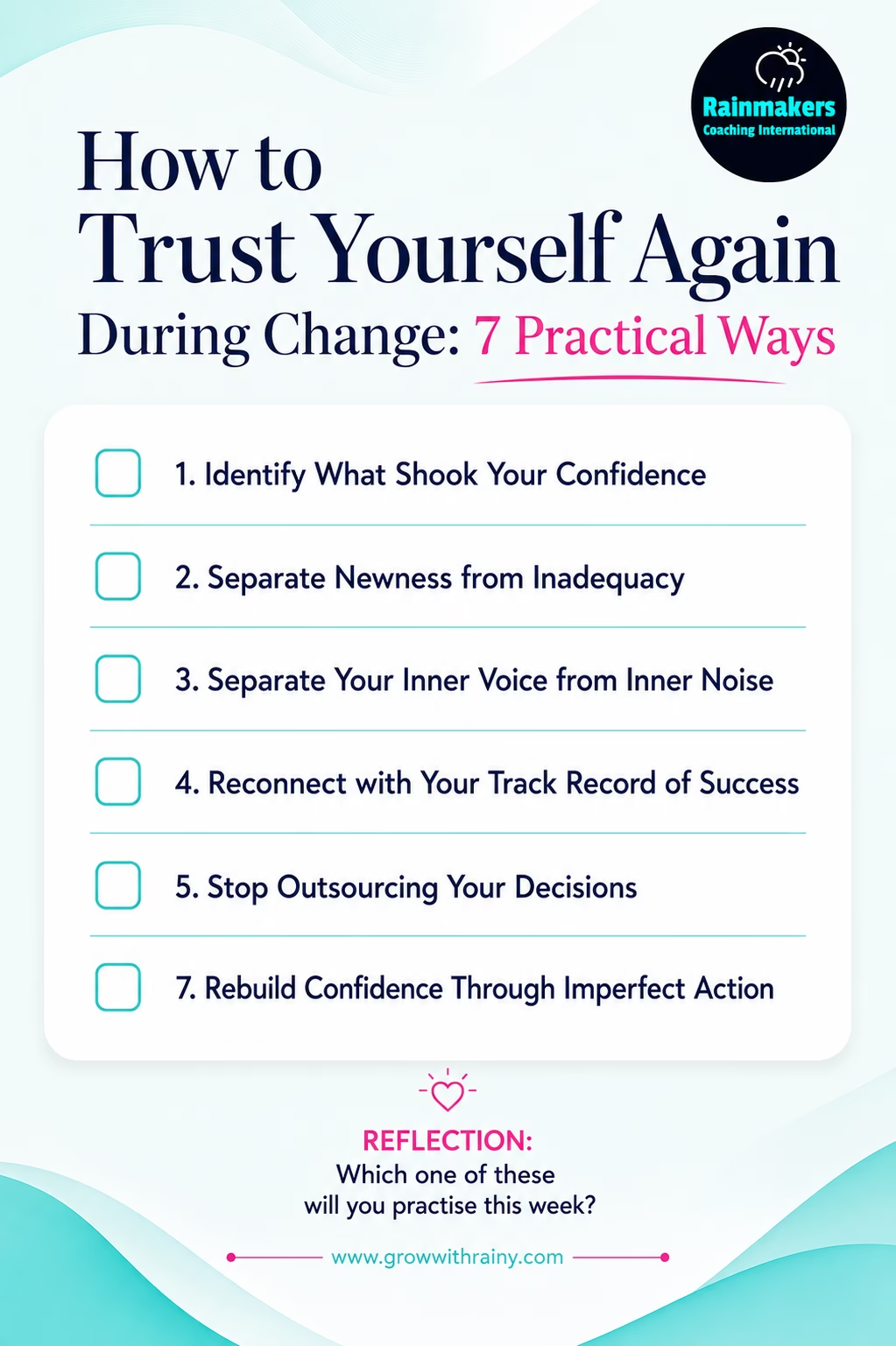
How to Trust Yourself Again During Change: 7 Practical Ways
1. Identify What Shook Your Confidence
Before you try to rebuild your confidence, it helps to understand what shook it. Many professionals go straight into self-blame and say:
“Why am I so affected?”
“Why can’t I just move on?”
“Why am I overthinking so much?”
“Why do I feel less confident when I should be more experienced by now?”
But self-trust doesn’t rebuild well under self-criticism. A more useful place to begin is with curiosity.
Ask yourself: What changed?
Was it a new role?
A new boss?
An expanded job scope?
A bigger project?
A new team?
A restructure?
A difficult performance review?
A missed promotion?
A stakeholder who challenged you harshly?
Sometimes confidence drops because the environment that once made you feel secure has changed.
The expectations may be less clear.
The people may be harder to read.
The decisions may carry more weight.
The feedback may feel more personal.
The role may require a version of you that you are still growing into.
For example, a finance director who used to feel confident with her previous leadership team may suddenly feel unsure under a new CFO. The work may not have changed dramatically. But the communication style, decision-making rhythm, political landscape, and definition of “good leadership” may now feel different.
So instead of asking:
“What is wrong with me?”
Try asking:
“What changed before I started doubting myself?”
This question helps you separate the facts from the self-judgment. It gives you a clearer starting point. You may realise:
“My confidence started to shake when my new boss questioned my recommendation in front of the team.”
Or:
“My confidence started to shake after that project didn’t go as planned, and I started questioning whether my judgment could be trusted.”
Once you can identify what shook your confidence, you stop treating your self-doubt like a personal flaw. You begin to see it as a response to something that happened. And when you can identify it clearly, you can work with it more wisely.
Pause and Reflect:
What changed before I started doubting myself?
2. Separate Newness from Inadequacy
When you are stepping into something unfamiliar, it is easy to misread discomfort as incompetence. You may tell yourself:
“I should know how to handle this by now.”
“I have been working for more than twenty years. Why does this still feel so hard?”
“Other leaders seem to adapt faster than me.”
“Maybe I am not as capable as people think.”
But newness can feel uncomfortable even when you are capable.
A new role may require a higher level of judgment.
A new boss may expect a different communication style.
A new project may expose you to new risks.
A new team may respond differently from the people you used to lead.
A new leadership table may require you to speak with more clarity and less explanation.
None of this means you are inadequate. It means you are learning how to operate in a new context. For example, you may have been excellent at execution in your previous role. You knew how to get things moving, solve problems quickly, and support your team through pressure.
But in a more senior role, your value may no longer come only from how much you do. It may come from how clearly you think and plan.
How well you influence and impact.
How calmly you challenge assumptions.
How wisely you make decisions without complete information.
How firmly you stand by your view when faced with disagreement.
That shift can feel uncomfortable, simply because the level has changed. So when you feel uncertain, ask yourself:
“Is this hard because I am incapable, or because it is new?”
This question can soften the self-judgment. It reminds you that growth often feels awkward before it feels natural.
Think about the first time you managed people.
The first time you presented to senior leadership.
The first time you handled a difficult stakeholder.
The first time you had to make a decision that affected other people’s careers.
Those moments may have felt uncomfortable too. But over time, you learned. You adjusted. You became steadier. This season may be asking the same of you.
Remember this – you are not starting from zero. You are starting from experience, but applying that experience in a new environment, that requires a higher level of competency and judgement. That is the difference.
Pause and Reflect:
Where am I mistaking unfamiliarity for failure?

3. Separate Your Inner Voice from Inner Noise
When your confidence is shaken, your mind can become very loud.
It may keep replaying what happened.
It may keep predicting what could go wrong.
It may keep reminding you of the one sentence your boss said – the one question you couldn’t answer at the board meeting, or the one moment you wish you had handled it differently.
That is inner noise. Inner noise is often urgent, repetitive, and fear-based.
It can sound like:
“What if I fail?”
“What if they realise I’m not good enough?”
“What if my new boss doesn’t trust me?”
“What if I make the wrong decision?”
“What if I cannot handle this level?”
Inner noise makes everything feel immediate and threatening. It pushes you to overthink, over-prepare, over-explain, or stay silent when you actually have something important to say.
Your inner voice is different. Your inner voice is usually quieter, steadier, and more truthful. It may sound like:
“This is new, but I can learn.”
“I need more clarity before I commit.”
“This timeline is unrealistic.”
“I need to speak up before this blow up.”
“I may be afraid, but I am not powerless.”
For example, before a leadership meeting, your inner noise may say:
“Don’t challenge this. You may look difficult.”
But your inner voice may say:
“This decision has risks. I need to raise them respectfully.”
Or before responding to a new stakeholder request, your inner noise may say:
“Say yes quickly. You don’t want them to think you are not supportive.”
But your inner voice may say:
“I need to check my team’s capacity before I commit.”
This is where self-trust begins to rebuild. Not by silencing every fear, but by learning not to let fear become the only voice you follow. The next time you feel yourself spiralling, pause and ask:
“Is this my wisdom speaking, or my fear protecting me?”
Fear is not always wrong. Sometimes it is trying to protect you from risk, rejection, or failure. But fear should not be the only one leading your decisions. When you learn to separate your inner voice from your inner noise, you give yourself space to respond with more clarity.
You may still feel uncertain.
You may still feel nervous.
You may still need more information.
But you are no longer letting fear speak on behalf of your truth.
Pause and Reflect:
Which voice have I been letting lead my decisions?
4. Reconnect with Your Track Record of Success
When change shakes your confidence, you may start questioning yourself as if your past courage and capability no longer count. As if there is no evidence that you can handle pressure.
No evidence that you can make sound decisions.
No evidence that you can lead through uncertainty.
No evidence that you can recover from difficult moments.
But that is rarely true. By this stage of your career, you have already handled many things that once felt difficult.
You may have led projects with tight timelines.
You may have managed difficult stakeholders.
You may have supported your team through pressure.
You may have made decisions without perfect information.
You may have recovered after mistakes.
You may have grown through seasons you once thought would break you.
But when you are in the middle of a new challenge, your mind forget the evidence and focus only on what feels uncertain now. That is why it is important to consciously reconnect with your track record of success, to remind yourself of what is true:
You have handled hard things before.
This matters because self-doubt often becomes louder when evidence becomes invisible. So make your evidence visible again. Create a Self-Trust Evidence List.
Write down ten moments where you handled something difficult, even if you did not handle it perfectly.
You can ask yourself:
What difficult situations have I handled before?
What decisions have I made well without perfect information?
What challenges have I survived?
What have others trusted me with?
What positive feedback have I received but dismissed?
What have I learned through experience that I am not giving myself credit for?
This is not about living in the past. It is about borrowing strength from the truth of your own journey. Sometimes, the confidence you need is already hidden in the evidence you keep dismissing.
Pause and Reflect:
What evidence of my capability have I been overlooking?
5. Stop Outsourcing Your Decisions
Advice from mentors can be helpful.
Feedback from peers can be helpful.
Affirmations from a trusted sounding board can be helpful.
But when you ask too many people before asking yourself, you may end up more confused than clear. This often happens when your confidence has been shaken.
You may want reassurance that you are making the right choice.
You may want someone else to confirm that your thinking makes sense.
You may want to reduce the risk of regret, rejection, or being wrong.
So you ask your boss, your mentor, your peers, your spouse, or another friend who knows the industry.
One person tells you to stay in the job because stability matters.
Another tells you to leave because growth matters.
Your mentor tells you to wait because timing matters.
Your partner tells you to be bold because opportunity matters.
None of them may be wrong because they give you advices from their own values, fears, experiences, and priorities. But their advice may still make you feel more disconnected from yourself. Because self-trust weakens when everyone else’s voice becomes louder than your own.
This doesn’t mean you should stop seeking advice. Wise leaders seek input. They listen. They learn from others. They consider multiple perspectives. But before you ask everyone else what they think, pause and ask yourself what you already know.
Ask:
“What do I already know about this situation?”
“What matters most to me here?”
“What would I choose if I trusted myself?”
“What is the most aligned next step?”
I once worked with a finance director who was deciding whether to stay in her current role, move internally, or explore opportunities outside the organisation. By the time she came for the career direction coaching, she had already asked four people for advice.
One person told her to stay because the company was stable.
Another told her to leave because she deserved more growth.
Another told her to wait because the market was uncertain.
Another told her to speak to her boss first because there might be internal options.
All the advice sounded reasonable. But instead of feeling clearer, she felt more torn. In our coaching conversation, instead of getting another advice, I got her to listen to her inner voice instead.
As we slowed down and explored what she truly wanted and what aligns with her values, she began to realise something important. She said:
“I am not only tired. I am no longer growing.”
Then she paused and added:
“I think I have been asking everyone because I’m afraid to admit that I already know the answer.”
That was the light-bulb moment. The issue was not that she lacked options. The issue was that she had been outsourcing her decision because she didn’t trust herself to choose. From there, we explored what was fear, what was loyalty, what was obligation, what was avoidance, and what was her truth.
Eventually, she became clear that she did not want to resign immediately. What she needed first was an honest conversation with her boss about scope, expectations, and future growth.
That conversation didn’t solve everything overnight. But it helped her move from confusion to ownership – and that is how coaching rebuild self-trust. It doesn’t remove every uncertainty. It helps you stop handing your inner authority to everyone else.
When you ask yourself first, advice becomes input instead of instruction. You can still receive wisdom from others, but you stop handing over the responsibility for your life, career, and leadership decisions.
Self-trust grows when you learn to honour your own knowing before collecting everyone else’s opinion.
Pause and Reflect:
What do I already know, but have been afraid to admit?
6. Keep Small Promises to Yourself
Self-trust grows when your actions tell your mind:
“I can trust myself.”
This doesn’t usually happen through one big breakthrough. It happens through small promises kept consistently. Especially during change, you may feel tempted to abandon yourself in small ways.
You say yes before checking your capacity.
You stay silent when you know you need to speak.
You keep working late even though your body is exhausted.
You delay a difficult conversation because you do not want to disappoint someone.
You tell yourself, “I will think about what I really want later,” but later never comes.
Each moment may seem small. But over time, they teach you whether you can honour your own needs, values, and boundaries. This is why keeping small promises to yourself matters. A promise does not have to be dramatic. It can be:
“I will pause before saying yes.”
“I will speak once in the leadership meeting.”
“I will stop checking emails after 10pm tonight.”
“I will have the difficult conversation this week.”
For example, a senior manager who feels overwhelmed by an expanded scope may keep telling herself, “I need to set better boundaries.” But that can feel too big and vague. So she starts with one small promise:
“When someone gives me a new urgent request, I will not answer immediately. I will say, ‘Let me review my priorities and come back to you.”
That one pause matters, because it gives her space to think. It helps her stop agreeing out of pressure. It teaches her that her workload and energy matter too.
A regional director I worked with once made a promise to herself:
“Before I criticise myself after a difficult conversation, I will first ask, ‘What did I do well?’”
That promise may look small from the outside. But internally, it rebuilds trust. Because every time you keep a promise to yourself, you strengthen the relationship you have with yourself. You begin to believe:
“I didn’t abandon myself under pressure.”
“I do what I said I would do.”
“I can trust myself”
You rebuild self-trust when you consistently keep your agreement with yourself.
Pause and Reflect:
What is one small promise I can keep to myself this week?

7. Rebuild Confidence Through Imperfect Action
You may not feel confident immediately. That is normal. When you are in a new role, working with a new leader, managing a larger scope, or recovering from a setback, your confidence may need time to rebuild.
Many professionals wait to feel fully ready before they act.
They wait until they have more clarity.
They wait until they know exactly what to say.
They wait until they are sure no one will challenge them.
But confidence does not always come before action. Very often, confidence comes after action.
After you speak up and realise you can survive being questioned.
After you make a decision and realise you can handle the outcome.
After you set a boundary and realise the relationship can still remain respectful.
This is why imperfect action matters. It gives your mind new evidence.
A newly promoted executive may not feel fully ready to lead strategic conversations at first. She may worry that her points are not sharp enough, or that her older peers will challenge her. But each time she prepares, contributes, listens, adjusts, and speaks again, something begins to shift.
She learns that she doesn’t need to dominate the room to have presence.
She learns that she can pause, think, and respond without having every answer immediately.
She learns that confidence can be built through practice.
Self-trust says:
“Even if I am uncertain, I can move.”
“Even if I make a mistake, I can learn.”
“Even if this is new, I can grow into it.”
This doesn’t mean taking reckless action. It means taking the next honest step with the clarity you have now.
Maybe that step is asking for clearer expectations.
Maybe it is sharing your recommendation in the meeting.
Maybe it is telling a stakeholder the timeline is unrealistic.
Maybe it is updating your CV after months of avoiding it.
Maybe it is having a conversation about your future instead of waiting for someone to notice your unhappiness.
The action doesn’t need to be perfect. It needs to be aligned. Every aligned action gives you evidence that you can trust yourself. And evidence repeated over time becomes confidence.
Pause and Reflect:
What imperfect but aligned action would help me rebuild trust in myself?
A Simple Self-Trust Exercise to Stop Second-Guessing Yourself
Now that you understand the seven ways to rebuild self-trust, let’s bring this closer to your life. Think of one situation where you are currently second-guessing yourself.
It may be a new role.
A new boss.
A bigger project.
A difficult stakeholder.
A missed promotion.
A conversation you have been avoiding.
Or a decision about your next career move.
Instead of trying to solve everything in your head, take ten minutes to write your answers to these questions.
The Self-Trust Reset:
1. What changed recently that may have shaken my confidence?
Identify the situation clearly. Was it the role, the people, the expectations, the feedback, the pressure, or the setback?
2. What story am I telling myself about this change?
Are you telling yourself you are not good enough?
That you are falling behind?
That you are not ready?
That other people are adapting faster than you?
3. Is this truly inadequacy, or is it newness?
You may be learning a new level of leadership, communication, influence, or decision-making.
4. What does my inner voice know beneath the noise?
Go beyond the fear. What is the truth underneath the overthinking?
5. What evidence do I have that I can handle hard things?
Reflect at your track record. What have you already survived, learned, led, repaired, or grown through?
6. What is one small promise I can keep to myself this week?
Choose something realistic. A promise so small and honest that you can follow through.
7. What is one imperfect but aligned action I can take next?
Maybe it’s asking for clarity when in doubt.
Maybe it’s speaking up when you feel afraid.
Maybe it’s setting one boundary with an assertive stakeholder.
Maybe it’s making the decision you have been delaying.
Maybe it’s admitting what you already know.
You do not need to solve the whole situation today.
You only need to take one step at a time.
Final Reflection: Rebuilding Self-Trust Takes One Honest Step
When change shakes your confidence, it can feel as though you are starting all over again. But remember, you are not starting from zero. You are bringing years of experience, wisdom, resilience, mistakes, growth, judgment, and courage with you.
Self-confidence may take time to catch up in a new environment. But self-trust can begin now.
With one honest decision.
One kept promise.
One aligned action.
One moment of not abandoning yourself under pressure.
You don’t have to feel fully ready before you begin. You don’t have to have perfect certainty before you move. You don’t have to become someone else to lead through this season.
You can start by standing by yourself.
Gently.
Honestly.
One step at a time.

Need Support Rebuilding Your Confidence During Change?
If you are going through a new role, new boss, expanded responsibility, career setback, or a season where you keep doubting yourself, you don’t have to figure this out alone. Sometimes, it helps to have a safe and strategic space to pause, look at what is really going on, and understand why you keep second-guessing yourself.
If this is where you are right now, you can apply for a free 90-minute Executive Clarity & Fit Call.
This call is not a “quick pep talk.” It’s a a guided mental space to:
Clarify your situation and desired outcome – what’s happening now, what you’ve tried, and what “better” would look like in real life.
Identify the loop – we name what keeps repeating: triggers → thoughts → behaviours → consequences (especially in senior rooms).
Recommend the next step – you’ll get a personalised roadmap and grounded recommendation for what to do next based on your situation.
👉 Schedule Your Free 90 Minutes Session Here

FAQ:
For readers who want a clearer summary, here are a few common questions about rebuilding self-trust and confidence during change.
1) Why do I keep second-guessing myself at work?
2) How do I trust myself again after losing confidence?
3) What is the difference between self-confidence and self-trust?
4) Is it normal to lose confidence in a new role?
5) How can I stop doubting my decisions?
6) Can coaching help me rebuild self-trust?
What’s Next?
Find out if your confidence level is undermining your success here.
Wondering if you are ready for coaching? Take this coaching readiness questionnaire
For more insights on personal growth and coaching, explore our blog articles.
