
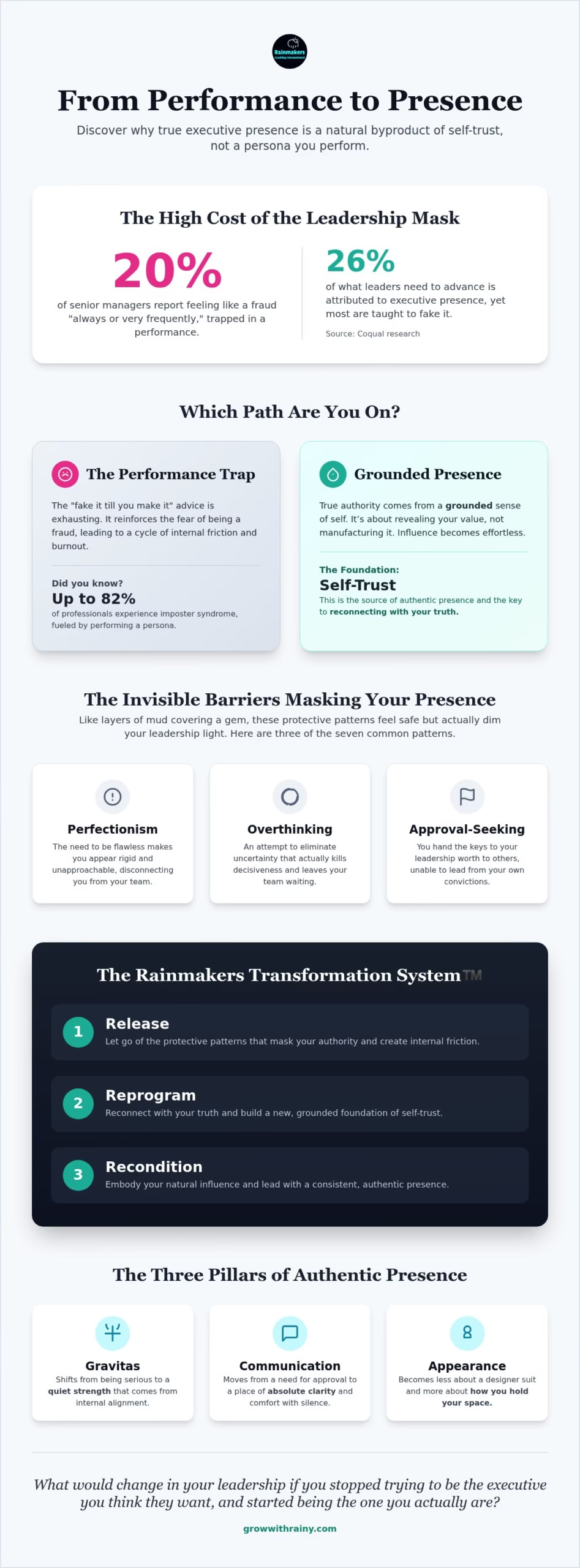
Did you know that one in five senior managers report feeling like a fraud always or very frequently? If you have ever finished a high-stakes meeting feeling physically exhausted from performing a persona, you aren’t alone. You have likely been told that executive presence is a performance you must master to be taken seriously. It’s a common belief, but it’s often the very thing that creates a gap between your talent and your influence.
Research by Coqual indicates that executive presence accounts for 26% of what senior leaders need to advance. However, true authority doesn’t come from louder voices or more polished slides. It comes from reconnecting with your truth and finding a grounded sense of self-trust. When you release protective patterns like Perfectionism or Over-Responsibility, you move from performing leadership to actually leading with ease.
We’ll explore how to uncover the natural authority that’s already within you by using the Rainmakers Transformation System™️. You will discover how to command a room with quiet strength and make decisive moves without the weight of internal friction.
What would change in your leadership if you stopped trying to be the executive you think they want, and started being the one you actually are?
Key Takeaways
- Learn why executive presence is a natural byproduct of self-trust rather than a performance you put on to impress others.
- Identify the seven protective patterns, such as Perfectionism and Overthinking, that act as “mud” masking your natural authority.
- Understand why external success often fails to bridge the internal confidence gap, as research shows 20% of senior managers feel like frauds frequently.
- Discover the 3-R Framework to move beyond performing a persona and begin leading with a grounded, authentic presence.
- Explore how reclaiming your internal authority shifts the energy in the boardroom; what would change if you led from your truth instead of your tactics?
Redefining the Mystique: What is Executive Presence Really?
We often treat executive presence like a secret code only a lucky few can crack. It’s spoken about in hushed tones as a shrouded mystique that you either have or you don’t. But this definition is hollow. Real presence isn’t about the volume of your voice or the sharpness of your suit.
It’s about a grounded sense of self that others can feel when you walk into a room. While various Leadership theories focus on external traits or behavioural styles, the Rainmakers Principle suggests that your foundation is internal. Reconnecting with your truth is the only way to create a lasting external impact.
If you’re constantly monitoring your own performance, you aren’t actually present. You’re just a spectator of your own life. Presence is measured by who you become in the heat of a high-stakes moment, not just what you do. It’s the difference between performing authority and embodying influence.
When you embody influence, you don’t have to convince people to listen. They simply do, because they sense the consistency between your words and your inner state.
The Three Pillars of Authentic Presence
To move beyond the performance, we have to look at the traditional pillars of executive presence through a new lens. Gravitas isn’t about being the most serious person in the room; it’s the quiet strength that emerges from internal alignment.
Communication shifts from a need for approval to a place of absolute clarity. You aren’t afraid of silence because you don’t need to fill it with nervous energy. Finally, your appearance is dictated by how you hold your space. A grounded presence makes you visible in a way that no designer wardrobe ever could.
Why Traditional "Fake It Till You Make It" Advice Fails
The common advice to "fake it" is actually quite dangerous for high achievers. It forces you to maintain a leadership mask that is heavy and exhausting. Research shows that up to 82% of professionals experience imposter syndrome at some point. When you perform authority rather than embodying it, you reinforce the fear that you’re a fraud. This creates a cycle of internal friction that leads straight to burnout.
If you want to know how to describe leadership effectively, look at the leaders who don’t seem to be trying so hard. They have bridged the gap between their external success and their internal impostor syndrome in senior leaders by choosing self-trust over performance. They understand that their value isn’t something they have to manufacture; it’s something they have to reveal.
If you stripped away the "performance" of your role today, what would be left of your authority?
The Invisible Barriers: How Protective Patterns Mask Your Presence
Your leadership isn’t broken. It’s just hidden. Imagine your natural authority is a gem, bright and solid. Over time, the pressures of high-stakes environments have covered that gem in layers of mud. These layers are what we call protective patterns.
They feel like safety, but they actually act as a barrier to your true executive presence. As noted by Training Magazine on executive presence, these traits are often perceived as essential for high-level advancement, yet we often bury them under a performance of who we think we should be.
High achievers often use this performance as proof of their value. If you’re working harder than everyone else, you feel safe. If you’re the one with all the answers, you feel secure. But this is a false safety. Real transformation isn’t about adding new skills to your toolkit. It’s about removing the "mud" that prevents you from reconnecting with your truth. When you stop performing, your natural influence finally has room to breathe.
The Seven Patterns That Dim Your Leadership Light
We often lean on specific behaviours to navigate the boardroom, unaware that they are actually dimming our light. Perfectionism is a primary culprit. When you feel the need to be flawless, you appear rigid and unapproachable. You become so focused on not making a mistake that you lose your ability to connect.
Overthinking is another common trap. In the Rainmakers Principle, Overthinking is often an attempt to create safety by eliminating uncertainty. It doesn’t work. It just kills your decisiveness and leaves your team waiting for a signal that never comes.
If you’re stuck in Approval-Seeking, you’ve handed the keys to your leadership worth to everyone else in the room. You can’t lead a team if you’re constantly looking for their permission to exist.
The Trap of Over-Responsibility and Control
Many senior leaders struggle with Over-Responsibility. You take on every problem because you don’t trust the outcome if you don’t touch it. This prevents you from delegating and, more importantly, from appearing visionary.
You’re too busy in the weeds to see the horizon. This often ties directly into Control. While it might feel like executive strength, controlling behaviour is actually a sign of internal fear. It’s an attempt to manage the environment because you don’t yet have a grounded sense of self trust. Releasing the need to "keep everyone okay" allows you to find your true voice.
Research indicates that these behaviours aren’t just annoying; they’re costly. Imposter syndrome and its related protective patterns can lead to a loss of up to 10 full workdays per year per employee due to over-preparing.
If you’re ready to peel back these layers, a coaching conversation can help you identify which patterns are currently masking your truth.
Which of these protective patterns feels like your "safest" hiding spot right now?
The Self-Trust Gap: Why High Achievers Struggle with Presence
You have the title. You have the track record. Yet, when you sit at the head of the table, there is a nagging sense that you are merely a guest in your own success. This is the High-Achiever Self-Trust Gap.
It is the distance between how the world sees you and how you see yourself. For many leaders, external success does not automatically lead to internal confidence. In fact, the higher you climb, the more you might feel that executive presence is something you have to manufacture to keep up with your new surroundings.
If you believe that you need "more" to be enough, you will always be chasing a moving target. More certifications, more data, or more "soft skills" won’t bridge this gap. Real authority is a byproduct of self trust.
When you don’t trust your own judgment, you look for external validation. This search creates an internal friction that others can sense, even if they can’t quite name it. They don’t see a lack of talent; they see a lack of grounded presence.
Research Spotlight: The Psychology of Leadership Perception
Behavioural research suggests that leadership isn’t just about what you say. It’s about the physiological state you bring into the room. A study published in the Journal of Management highlights that "leader mindfulness" and emotional regulation are key drivers of how teams perceive authority.
When you are grounded, your nervous system sends a signal of safety to everyone else. If you are anxious or performing, your team’s nervous systems pick up on that dissonance. This is why emotional regulation is directly linked to perceived executive composure.
You cannot fake a regulated state; you have to embody it through reconnecting with your truth.
The Bonsai Metaphor: Removing the Constraints
Think of your leadership growth like a bonsai tree. A bonsai is not small because it’s a "small" species. It’s small because of the wires and constraints placed upon it. Many leaders spend years trying to force the tree to grow bigger while the wires are still tight.
Transformation is about removing the wire, not forcing the growth. When you stop the cycle of overcoming imposter syndrome for senior leaders, you finally remove the constraints of Perfectionism and Approval-Seeking.
Self-trust allows your innate wisdom and courage to emerge naturally. You don’t have to learn how to be a leader. You have to unlearn the patterns that keep you small. When the constraints are gone, you don’t have to try to have executive presence. You simply have it.
If you stopped trying to "fix" your leadership style today, what natural strengths would finally have room to grow?
Cultivating Presence through the Rainmakers Transformation System™
Most advice on executive presence suggests watching videos of yourself or adjusting your posture. That is like trimming the branches of a tree without tending to its roots. The surface may look different, but the deeper patterns remain unchanged. Lasting change requires an inside-out approach.
This is why we use The Rainmakers Transformation System™. It is a methodical journey through three phases: Release, Reprogram, and Recondition. Transformation is not about adding more skills. It is about who you become when the internal friction is gone.
Step 1: Release the Protective Strategies
You likely have a primary "shield" you use when the pressure rises. For some, it is Perfectionism. For others, it is Over-Responsibility. During your next high-stakes meeting, try a "Pattern Audit." Notice when you feel the urge to over-explain or control the outcome.
These patterns were once strategies for safety. Now, they are obstacles. When you notice the friction, stop. Take one breath. This small pause creates the space needed to choose a different response rather than reacting from fear. Releasing these shields is the first step toward a grounded sense of self.
Step 2: Reprogram the Leadership Mindset
We must shift from "performance as proof" to "presence as truth." This means building neural pathways that prioritise self trust. If you are constantly seeking external approval, you are training your brain to ignore your own wisdom. Think of this as a software update for your internal guidance system.
Developing a leadership mindset is about choosing to trust your internal compass over the noise of the room. This isn’t a one-time decision. It is a series of small, intentional shifts that move you from tactical management to visionary leadership.
Step 3: Recondition Your Grounded Response
Transformation is measured by who you become in the boardroom. To make this permanent, you need daily habits that keep you grounded. Research by Coqual found that Gravitas makes up 67% of what defines executive presence.
Gravitas isn’t something you "do." It is the result of 3R Integration. It is the steady, methodical rhythm of a leader who has finished reconnecting with your truth. When you are no longer performing, you have the mental capacity to communicate with absolute clarity and lead with authentic influence.
Book your 90-minute coaching conversation here
Which of the three "Rs" – Release, Reprogram, or Recondition feels like the most urgent step for your leadership right now?
From Performance to Presence: Leading with Reclaimed Truth
When you finally choose reconnecting with your truth over the safety of a leadership mask, the shift is palpable. It isn’t just about how you feel internally. It’s about the tangible change in how your executive presence is received by everyone around you. When you lead from a place of self trust, you stop being a source of stress for your team and start becoming a source of stability.
The Rainmakers Principle reminds us that every person carries hidden treasures within them. But those treasures remain buried as long as you’re busy managing your own internal friction. If you’re no longer performing a persona, you have the bandwidth to actually see the people you lead. You move from a state of constant defence to a state of open influence.
This is where the real work of leadership begins. It’s the transition from being a manager who gets things done to a visionary who inspires others to grow.
The Ripple Effect of Authentic Presence
If you’re grounded, then your team feels safe enough to be grounded too. This is the foundation of true psychological safety. You no longer need formal authority to drive results because you possess a "Heart-Centered Authority." People follow you because they trust the person, not just the title.
Research by Coqual suggests that while presence accounts for 26% of what senior leaders need to advance, its real value lies in the culture it creates. This level of presence leads to deeper career fulfilment because you aren’t exhausted by the end of the day. You’ve been yourself all along.
Taking the First Step Toward Transformation
Transformation isn’t about fixing what’s broken. It’s about becoming who you were meant to be before the "mud" of corporate expectations covered your natural light. An executive coach acts as a mirror for your hidden strengths, helping you see the authority you’ve been carrying all along.
If you’re ready to stop performing and start leading with a grounded sense of self, building rock solid confidence is the bridge to that new reality.
Moving beyond "faking it" requires courage, but the results are more sustainable. You find that your influence grows as your effort decreases. You don’t have to shout to command a room. You just have to be there, fully and authentically. When you reclaim your truth, you don’t just change your career; you change the way you experience your life.
What would your leadership look like if you no longer needed to protect your worth?
Reclaiming Your Natural Authority
You’ve spent years building a career, yet the internal friction of performing a persona often lingers. True executive presence isn’t about adding more tactics. It’s about peeling back the mud of Perfectionism and Overthinking to reveal the gem that’s already there. By reconnecting with your truth, you stop performing and start leading with a grounded sense of influence.
With more than a decade of experience coaching high-achieving professionals, I’ve seen that the most powerful leaders are those who have mastered the Rainmaker Transformation System™. They don’t just manage teams; they transform boardrooms by being exactly who they are. You don’t have to fix yourself to be a great leader. You just have to trust yourself enough to be seen.
Moving beyond "faking it" is the bravest step you’ll take in your career. If you stopped trying to be the leader you think they want, who would you finally become?
Frequently Asked Questions
Is executive presence an innate trait or can it be learned?
Executive presence is not a fixed trait you’re born with; it’s a state of being you cultivate by removing the internal friction that masks your authority. While some seem naturally charismatic, true presence is actually a byproduct of self trust. You don’t need to learn how to perform. You need to learn how to stop performing and start reconnecting with your truth. It’s about revealing the gem already within you.
How does imposter syndrome affect executive presence?
Imposter syndrome creates a "performance mask" that others can sense as dissonance. When you feel like a fraud, you tend to use Approval-Seeking, which directly undermines your gravitas. Research shows that 75% of female executives have experienced these feelings. This internal fear prevents you from staying grounded. By identifying these thoughts as protective strategies rather than facts, you can return to a state of self trust where your influence emerges.
Can introverts develop a strong executive presence?
Absolutely. Executive presence is often mistakenly equated with being loud or extroverted, but real influence comes from a place of quiet, grounded strength. Introverts often have a natural advantage in listening and observing, which are key to effective communication. When you speak from a place of clarity and self trust, your words carry significant weight. You don’t have to shout to command a room. You just have to be fully and authentically present.
What are the most common barriers to executive presence for high achievers?
The most common barriers are protective patterns like Perfectionism, Overthinking, and Over-Responsibility. High achievers often use these as safety strategies to manage uncertainty or avoid criticism. However, these patterns create a rigid persona that feels inauthentic to others. To lead effectively, you must release the need to be "flawless" and instead focus on reconnecting with your truth. Transformation begins when you stop using your success as proof of your worth.
How does the Rainmakers Transformation System™ differ from traditional leadership training?
Traditional training often focuses on external "masking" like body language or vocal tone. The Rainmakers Transformation System™ is different because it addresses the internal root causes of friction. Using the 3-R Framework, we help you identify protective patterns like Over-Responsibility or Control that dim your light. This process isn’t about "fixing" people; it’s about reconnecting with your truth so that your executive presence becomes a natural, effortless byproduct of your self trust.
How long does it take to see changes in my executive presence?
You can feel an internal shift almost immediately once you identify a primary protective pattern like Approval-Seeking or People-Pleasing. However, lasting transformation is a steady, methodical process of reconditioning your response to pressure. Most leaders notice a significant change in how their team responds to them within a few months of consistent practice. It’s about who you become in the boardroom, not just a temporary change in your behaviour.
What is the "High-Achiever Self-Trust Gap"?
The High-Achiever Self-Trust Gap is the distance between your external accolades and your internal sense of confidence. Many leaders feel that their success is a result of "faking it" or working harder than everyone else. This gap exists because they haven’t yet built a grounded foundation of self trust. Bridging this gap requires moving away from seeking external validation and instead focusing on the internal authority you already possess through reconnecting with your truth.
How can I stop overthinking during important board meetings?
Start by recognizing that Overthinking is just your brain’s attempt to create safety by eliminating uncertainty. During a meeting, notice when you’re spinning in your head and take one breath to return to a grounded state. This small pause allows you to speak from clarity rather than a need for approval. What would change in your leadership if you trusted your first instinct instead of second-guessing every word?

Article by
Rainy Rainmaker
Rainy Rainmaker is the founder of Rainmakers Coaching International and a transformational coach for confidence, self-trust, and authentic leadership.
Based in Singapore, she helps high-achieving professionals, managers, and leaders who appear capable on the outside but feel quietly held back by self-doubt, overthinking, imposter feelings, burnout, or a loss of direction. Through her signature Rainmaker Transformation Journey™: Release, Reprogram, Recondition – Rainy helps clients uncover the insights already within them and turn inner clarity into aligned action that creates lasting change in life, career, and leadership.
