
The Chartered Management Institute found that 82% of managers had been promoted without adequate training. If you’re leading former peers, balancing delivery with people’s needs, or feeling pressure to have every answer, the lack of preparation can feel personal. It isn’t. A leadership coach for new managers can help you build self-trust and find your footing, not just hand you a set of scripts.
You may already know how to deliver excellent work. Leading people asks something different: setting expectations, delegating clearly, and responding thoughtfully when things feel uncertain. It’s understandable to wonder whether you’re getting it right. You don’t need to feel fully ready before you begin to lead with intention.
Coaching can help you examine real leadership situations, notice the learned patterns shaping your responses, and practise practical ways to communicate and make decisions. The aim isn’t to become someone else. It’s to build a management approach that feels clear, grounded, and true to you, one everyday choice at a time.
Where would a little more self-trust change the way you lead this week?
Key Takeaways
- Treat the move into management as a shift in how you contribute, not proof that you lack capability.
- A leadership coach for new managers can help you examine real situations, test your assumptions, and consider a grounded response.
- Choose support according to what you need: coaching for reflection, mentoring for perspective, or training to learn a defined skill.
- Make a current challenge practical by naming what happened, how you responded, and what you want to try next.
- Rainmakers connects inner reflection with deliberate leadership practice through the Rainmakers Transformation System™.
Why the move into management can feel harder than expected
You’re in a meeting with colleagues who used to be your peers. Now you’re expected to set direction, address a missed deadline, or decide who takes on the next piece of work. You may know the work well and still pause before speaking. The role has changed, but your relationships haven’t changed overnight.
That hesitation doesn’t mean you lack leadership ability. You’re learning a different way to contribute. Your value used to come largely from what you could deliver yourself. As a manager, more of your contribution comes through the clarity, decisions, and support that help others do their work.
A role transition brings new demands. It isn’t a verdict on your leadership potential.
What changes when you become a manager?
As an individual contributor, you might solve a problem by doing the task yourself. As a manager, you need to make the goal clear, agree on ownership, and give the team room to deliver. That shift can feel slower at first, especially when you can see a quick fix and are tempted to take the work back.
Delegation brings practical questions. How much context is enough? When should you step in, and when should someone find their own way? With former peers, setting boundaries can feel awkward. You may want to stay approachable while still having a necessary conversation and avoiding the habit of taking on every request.
Decisions can feel exposed, too. You won’t always have complete information, yet your team still needs a direction and an explanation of what happens next. If delegation feels hardest, notice what you’re worried might go wrong. If leading former peers feels more difficult, ask what needs to be clearer between you now. Naming the tension gives you a place to begin.
When capability meets uncertainty
A capable professional can feel unsettled in unfamiliar situations: giving difficult feedback, prioritising competing requests, or deciding how much autonomy to offer. These moments call for practice, not proof that you should already know exactly what to do. Your uncertainty may centre on speaking with authority, protecting focus, or trusting others to deliver.
Self-trust can be a useful lens. It means taking your judgement seriously while staying open to information and feedback. Rather than waiting for certainty, ask yourself: What do I know? What am I assuming? What would be a clear and respectful next step? A leadership coach for new managers can help you examine these questions against real situations, connecting reflection to how you lead day to day.
Development becomes more intentional when you identify the skills and behaviours you want to practise. A leadership development plan can help turn that intention into focused next steps. What part of the shift feels most unfamiliar right now, and what might help you meet it with more self-trust?
What a leadership coach for new managers can help you work through
A leadership coach for new managers offers tailored support for the situations you’re facing at work and the kind of leader you want to become. Rather than handing you a universal answer, coaching gives you space to examine what’s happening, understand your options, and choose a response that fits the situation and your values.
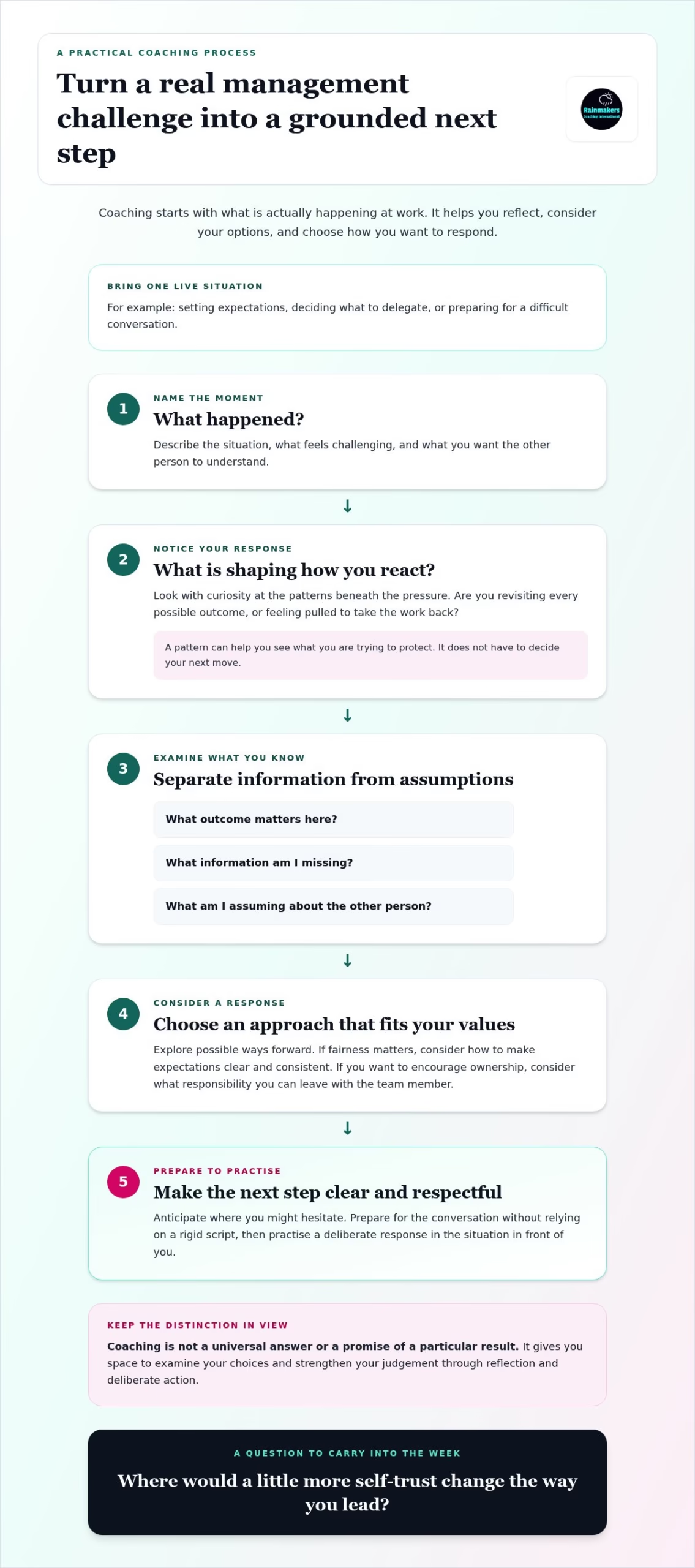
A script may help you find words for a conversation, but it can’t decide what the conversation needs to achieve or how you want to show up. Coaching questions can help you think more clearly: What outcome matters here? What information am I missing? What am I assuming about the other person? What response would be both honest and respectful?
Coaching helps you examine your choices and practise new responses. It doesn’t promise a promotion or a particular performance result. The focus is on strengthening your judgement through reflection and deliberate action.
Bring real management situations into coaching
Start with a current situation, not an abstract goal to “be a better manager.” You might be setting expectations for a piece of work, deciding what to delegate, or preparing for a difficult conversation. Describe what happened, what feels challenging, and what you want the other person to understand. This gives the conversation something practical to work with.
From there, coaching can help connect your intended behaviour with what matters to you. If fairness is important, how can you make expectations consistent and clear? If you want to encourage ownership, what responsibility can you leave with the team member? You can consider possible approaches, anticipate where you might hesitate, and prepare without relying on a rigid script.
Notice the pattern beneath the pressure
Sometimes the challenge isn’t only the decision in front of you. You might notice Overthinking as you revisit every possible outcome, or Over-Responsibility as you feel compelled to take work back from someone else. These are learned strategies, or coaching constructs, not clinical diagnoses. They won’t explain every manager’s experience.
The Rainmakers approach is to meet a response with curiosity rather than judgement. What might this strategy be trying to protect? Perhaps Overthinking is helping you avoid a mistake, or Over-Responsibility is helping you protect a deadline. That doesn’t mean the pattern has to determine your next move. Noticing it can give you a pause to consider another response, such as clarifying the risk, agreeing on a check-in, or letting a colleague own the task.
A coaching conversation can move from “What should I say?” to “What do I want this interaction to make possible?” If you’re ready to explore a current leadership challenge, you can schedule a conversation with Rainy and consider what support would be useful.
Coaching, mentoring, or management training: which support fits?
The right support depends on what you need next. Are you looking for a practical skill, insight from someone with relevant experience, or space to think through a situation that has no obvious answer? Coaching, mentoring, and training serve different purposes, and they can complement one another.
Choose training to learn a skill, mentoring to gain perspective, and coaching to examine your choices in context.
Coaching
Purpose: Reflect on a specific challenge and your development.
Format: Tailored conversations shaped around your work and goals.
Question it serves: “What options do I have, and what response fits my values and this situation?”
Mentoring
Purpose: Draw on another person’s experience and perspective.
Format: Guidance and discussion with someone familiar with a relevant role or context.
Question it serves: “What have you learned from facing something similar?”
Management training
Purpose: Learn or practise a defined skill or area of knowledge.
Format: Structured teaching, exercises, or practice focused on a topic.
Question it serves: “What are the steps or techniques I need to learn?”
This isn’t a ranking. A manager might learn a feedback model in training, ask a mentor how they adapted it to a particular team, then use coaching to reflect on their own response to an upcoming conversation. Each form of support contributes something different. Coaching doesn’t replace skill instruction; it can help you consider how to apply a skill in your circumstances.
When mentoring or training may be the right first step
If you’re new to a defined task, such as structuring a performance conversation, training may provide a useful starting point and a chance to practise. If you want perspective on the realities of a particular role, a mentor with relevant experience may offer lessons and context. You can then decide what advice fits your situation rather than assuming another person’s approach will work unchanged for you.
When one-to-one coaching may be useful
A leadership coach for new managers may be useful when you have a live situation and want tailored reflection rather than a general answer. Consider what you need most: direct answers, practice, perspective, or room to clarify your own response. Coaching can help you examine the context and your choices, without claiming to settle every decision for you.
For practical ideas on the skills involved in leading, explore leadership skills that support your team. If you’re considering one-to-one support for your development, Rainmakers’ Executive Coaching offers a place to explore your leadership context. Which would help most right now: learning a skill, hearing an experienced perspective, or making space to clarify your next move?
How to make leadership coaching practical from the start
Coaching becomes useful when you bring a real moment from your working week, not a vague instruction to “be more confident.” Choose something specific that needs your attention: a team member is unclear about a deliverable, a decision is waiting on you, or you’re unsure how to set a boundary around competing priorities. The aim isn’t to find a perfect management style. It’s to understand the situation and choose a response that fits your responsibilities and values.
Choose one live leadership situation
Before a coaching conversation, jot down what happened in plain language. Separate what you observed from what you’re interpreting. “The report arrived after the agreed date” is observable. “They don’t respect my authority” is an assumption that may or may not be accurate. Keeping the two separate gives you more room to consider what’s really needed.
Then describe your response. Did you take over, delay a conversation, or leave an expectation unstated? Notice what mattered to you in that moment, such as accountability, trust, or fairness. If you want to make your next step more specific, explore how to describe leadership behaviours. Naming the behaviour you want to practise is more useful than judging yourself as a “good” or “bad” manager.
Turn reflection into a grounded next action
Choose one behaviour and a realistic opportunity to use it. For instance, if expectations have been unclear, state the outcome, the deadline, and how you’ll check progress when you delegate a task. That’s a small workplace experiment, not a guarantee that everything will go smoothly. Your responsibility is to communicate clearly and follow through. The other person’s response gives you information to consider.
Afterward, take a few minutes to reflect:
- What did I say or do, specifically?
- What felt aligned with the kind of manager I want to be?
- What felt difficult, and what might I adjust next time?
- What did I learn about the situation that I hadn’t considered before?
This sequence keeps development grounded: describe the situation, notice your response, identify what matters, and decide what to try next. A leadership coach for new managers can help you examine those moments without prescribing one right way to lead. Context matters, as do your responsibilities, your team’s needs, and your willingness to learn from what happens.
What is one conversation or expectation you could approach more clearly this week? If you’d like support thinking it through, you can discuss what support could fit your leadership transition.
How Rainmakers approaches leadership coaching for new managers
Stepping into management can bring questions that don’t have a neat answer. How do you set direction while staying open to your team? How do you respond when pressure brings up doubt or an urge to take everything on yourself? Rainmakers’ Leadership or Executive Coaching offers tailored support for professional leadership development, connecting reflection on your inner responses with deliberate choices in your day-to-day work.
This inside-out approach doesn’t ask you to adopt someone else’s personality or a fixed management style. It invites you to notice what may be shaping your response, then consider how you want to act. If you recognise Overthinking, for example, you might explore what you’re trying to account for and decide what information is enough to take a thoughtful next step. If you notice Over-Responsibility, you might reflect on how to support a colleague while leaving them room to own their work.
A coaching approach grounded in self-trust
Rainmaker coach has more than a decade of experience coaching leaders, professionals, and individuals. Its coaching explores learned protective patterns as coaching constructs, not clinical diagnoses. The intention is compassionate curiosity, not judgement: what might this response be trying to protect, and does it still serve the leader you want to be? From there, reflection can connect to observable choices, such as listening before deciding, clarifying expectations, or delegating with a clear check-in.
The Rainmakers Transformation System™ follows Release, Reprogram, and Recondition. For a new manager, reflection might begin with noticing an urge to take over a task, then considering the assumptions behind that response and practising a more deliberate way to act. For example, you might clarify the expected outcome and agree on a check-in instead. The value lies in bringing greater intention to the next interaction, then learning from what happens. Your context matters, and your actions remain your responsibility.
Decide whether a coaching conversation feels timely
You might consider tailored reflection if a current leadership challenge keeps returning, or if you want to respond differently but aren’t sure where to begin. A conversation can focus on your situation and the support you’re seeking. You can share what feels difficult, what matters to you, and what you hope to develop. There’s no need to arrive with a perfect explanation.
What kind of leader do you want your team to experience, especially in the moments that test your self-trust?
Take your next step with greater self-trust
You don’t need to have your whole leadership style figured out before you begin. Choose one moment ahead of you, a conversation, decision, or expectation you want to handle with more intention. Ask yourself what matters in that moment and what kind of leader you want to be as you respond.
A leadership coach for new managers can offer space to explore those questions and decide what feels like a grounded next step. You remain the person making the choices. The value is in meeting them with greater clarity and reconnecting with your own judgement as you learn.
If you’re ready to explore whether coaching fits your leadership development, start a conversation with Rainy about what’s on your mind.
Let your next step be a small, considered one. You can grow into leadership while staying true to yourself.
Frequently Asked Questions
What does a leadership coach do for a new manager?
A leadership coach helps a new manager think through work situations and choose how to respond. You might explore how to prioritise two urgent requests, communicate a change in direction, or address a missed handover. The coach supports your thinking rather than making the decision for you. The value is in examining your options and deciding what action fits your role and the people affected, without promising a particular result.
Is leadership coaching worth it for a first-time manager?
It may be useful if you have a recurring management challenge and want focused space to understand your choices. For example, you might be unsure how to address uneven contributions across a team. Training can teach a defined skill, while mentoring can offer perspective from someone’s experience. Coaching centres on your particular situation. Consider what kind of support you need and whether reflection on your own context would help.
Can a leadership coach help me manage former peers?
Yes. Coaching can give you space to consider role clarity, communication, and boundaries with colleagues who are now part of your team. You might reflect on how to make decision-making responsibilities clear or how to respond when a former peer challenges a call. The aim isn’t to find one script that works for every relationship. It’s to choose language and actions that are respectful, clear, and appropriate to your working context.
How is leadership coaching different from mentoring?
Leadership coaching focuses on your situation, questions, and possible responses. Mentoring draws more directly on another person’s experience, such as how they approached a similar responsibility in their own career. A mentor may share a perspective; a coach may help you examine what that perspective means for your circumstances. You can use both: learn from someone’s experience, then reflect on how you want to apply or adapt it.
What should I bring to a leadership coaching session?
Bring one situation you want to understand better, along with any observations that help explain what happened. You could note what was said, what decision is pending, and what feels unresolved. It may also help to name a question or behaviour you want to explore, such as how to make a request more clearly. There’s no special preparation required. Start with what’s on your mind.
When should a new manager consider working with a leadership coach?
Consider coaching when a real leadership challenge or development question would benefit from dedicated reflection. You might be preparing for a team change, noticing that you avoid giving direct feedback, or wanting to understand how you make decisions under pressure. You don’t have to wait until a problem becomes serious, and you don’t need to feel completely ready. It’s a personal choice based on what support would be useful now.
If you’d like to explore coaching for your leadership development, schedule a conversation with Rainy and bring the leadership question you’re working through.

Article by
Rainy Rainmaker
Rainy Rainmaker is the founder of Rainmakers Coaching International and a transformational coach for confidence, self-trust, and authentic leadership. Based in Singapore, she helps high-achieving professionals, managers, and leaders who appear capable on the outside but feel quietly held back by self-doubt, overthinking, imposter feelings, burnout, or a loss of direction. Through her signature Rainmaker Transformation Journey™, Rainy helps clients uncover the insights already within them and turn inner clarity into aligned action that creates lasting change in how they work, lead and live.
