What if the persistent weight you feel at the end of the day isn’t a sign that you’re failing, but a signal that your current way of leading is simply costing you too much? You’ve likely sat in your car after a long shift wondering: is executive coaching worth it for managers who are already meeting their targets? It’s a valid concern when you’re successful on paper but still feel like a “fraud” or find yourself paralysed by the heavy emotional weight of managing a team. You deserve a path to leadership that feels authentic, not forced.
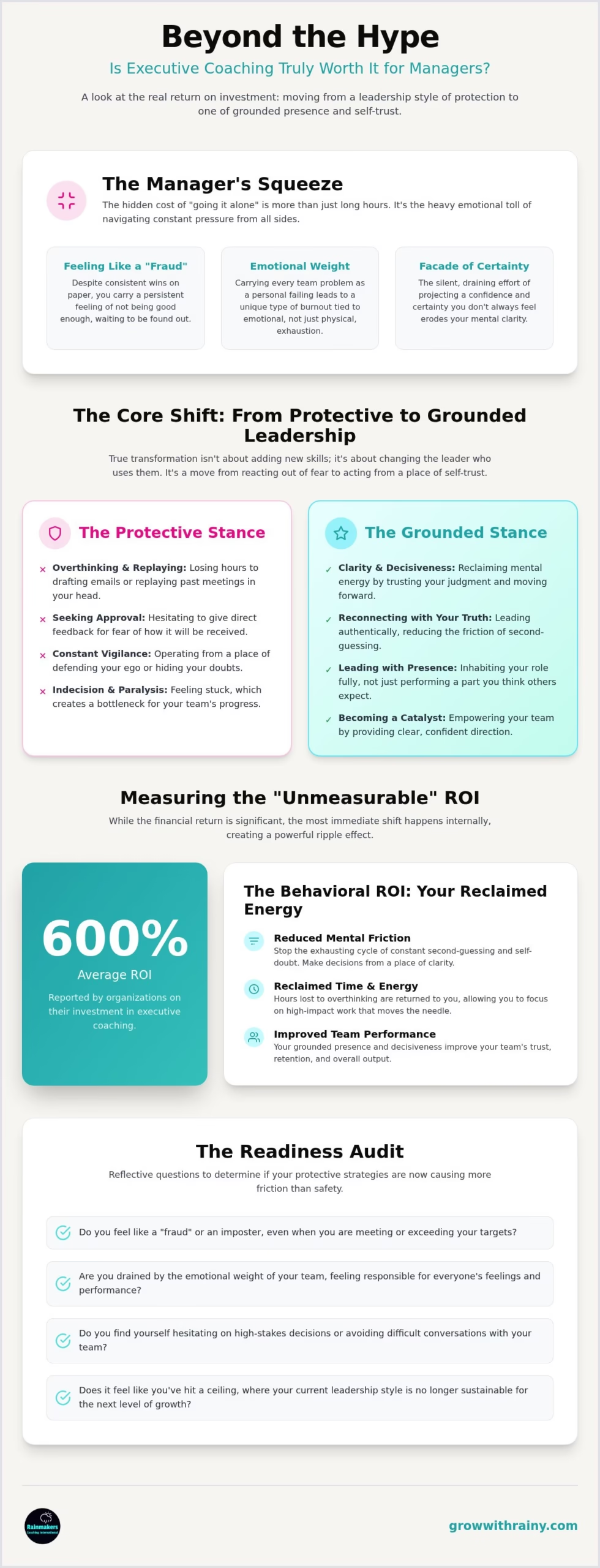
We agree that you don’t need more corporate jargon or another manual on productivity. This article moves beyond the surface to explore how executive coaching delivers measurable shifts in clarity and leadership impact. We will examine how organizations report an average ROI of 600% and how releasing protective patterns like overthinking can reclaim your mental energy. By the end, you’ll see a clear path to leading from a place of grounded self-trust rather than constant vigilance.
If you could strip away the need to prove yourself for just one day, what kind of leader would actually show up?
Key Takeaways
- Discover how reconnecting with your truth and building grounded self-trust creates a ripple effect that improves team performance.
- Evaluate the core question, is executive coaching worth it for managers, by looking at the invisible patterns that currently drain your daily energy.
- Learn why coaching is a strategic investment in how you lead rather than just another training session focused on what you know.
- Audit your current leadership state to see if your protective strategies are now causing more friction than safety during high-stakes transitions.
- Explore how the Rainmakers Transformation System™ moves you beyond corporate jargon to deliver measurable shifts in clarity and impact.
Beyond the Corporate Hype: Why Managers Question the Value of Coaching
Skepticism isn’t a barrier to growth; it’s a sign of a discerning mind. If you’ve ever sat through a corporate workshop feeling like the advice was written for a robot rather than a human, your hesitation is understandable.
Many leaders quietly wonder, is executive coaching worth it for managers, or is it just another layer of expensive noise? This doubt usually stems from the “Manager’s Squeeze.” You’re caught in the middle, balancing the high-level expectations of leadership with the very real, often messy emotional needs of your team.
Business coaching is frequently presented as a set of tools to fix performance, but true transformation isn’t about adding more tasks to your already overflowing list. It’s about changing the person who uses those tools. Learning a new feedback model is useless if you’re too paralyzed by a need for approval to actually deliver it. The difference lies in moving beyond generic performance metrics toward a state of grounded self-trust.
The “Expensive Conversation” Myth
Traditional coaching can feel disconnected from the daily fire drills you face. If the dialogue stays at thirty thousand feet, it remains a luxury rather than a necessity. The failure of most leadership frameworks is that they ignore your unique internal friction.
Real coaching isn’t just “expensive talking”; it’s a diagnostic process to identify why you feel like a “fraud” despite your consistent wins. It bridges the gap between knowing what to do and having the self-trust to do it effectively.
When was the last time you felt truly heard without being judged?
The Hidden Cost of “Going It Alone”
There is a heavy price for silence in a leadership role. Many managers fall into the trap of over-responsibility, believing they must carry every team problem as a personal failing. This leads to a specific type of burnout that isn’t just about the hours you work; it’s about the emotional toll of maintaining a facade.
The invisible weight managers carry is the silent, exhausting accumulation of every unmade decision and the constant pressure to project a certainty they don’t yet feel. In a high-stakes environment, the cost of indecision and overthinking is often much higher than the investment in professional support.
Is executive coaching worth it for managers? If it prevents the slow erosion of your mental clarity and team’s trust, then we all know the answer.
If you keep leading from a place of protection rather than presence, what will your team look like a year from now?
Measuring the “Unmeasurable”: The Real ROI of Reconnecting with Your Truth
If you’re looking for a simple spreadsheet to justify the cost, you might miss the most valuable data point: your own mental capacity. When people ask, is executive coaching worth it for managers, they’re often looking for a return on investment that goes beyond bottom-line numbers.
While organizations report an average ROI of 600% from their investments in coaching, the most immediate shift happens internally. It’s the transition from a “protective” stance, where you’re constantly defending your ego or hiding your doubts, to a “grounded” leadership style rooted in presence and clarity.
Reconnecting with your truth reduces the friction of constant second-guessing. When you lead from a place of self-trust, you aren’t just performing a role; you’re inhabiting it. This internal alignment has a ripple effect that improves team retention and performance.
Research consistently shows that managers who increase their emotional intelligence and decisiveness through coaching see a direct improvement in their team’s output. You stop being the bottleneck and start being the catalyst.
Behavioural ROI: From Overthinking to Decisiveness
Releasing the “Overthinking” pattern is like clearing a cluttered desk; suddenly, you have space to actually work. High-performers often lose hours every week to drafting and redrafting emails or replaying past meetings in their heads. This mental friction is a hidden cost to the business.
The question of whether is executive coaching worth it for managers is ultimately answered by the hours of mental energy you reclaim when you stop hesitating. When you’re decisive, you move the needle faster. You can learn how to build rock-solid confidence by identifying these specific protective habits and replacing them with grounded action.
Cultural ROI: The Impact on Your Team
Your internal state is contagious. If you lead from a place of people-pleasing, your team will feel that instability and lack of clear direction. A grounded manager creates a psychologically safe environment where others feel empowered to take risks and speak up.
Reconnecting with your truth allows you to set clearer, healthier boundaries without the guilt that usually accompanies them. This shift reduces team turnover and boosts engagement because people trust a leader who trusts themselves.
If you’re curious about how this shift might look in your specific role, consider a complimentary 90-minute coaching conversation to explore your current leadership patterns.
How would your team’s energy change if you showed up with absolute self-trust?
Strategic Investment: How Executive Coaching Differs from Training
Many managers find themselves in a peculiar position: they have the technical skills and the title, yet they feel “promoted but not good enough.” This internal gap is where the question of whether is executive coaching worth it for managers becomes most relevant.
Training provides the “what” and “how-to,” essentially adding more data to your mental hard drive. Coaching, however, is about the processor itself. It doesn’t just give you more information; it facilitates the release of the internal barriers that stop you from using the knowledge you already possess.
Coaching is about “how you will lead.” We use the Rainmakers Lens to see the “hidden treasures” within your leadership style that a standard training program misses. It’s a shift from mimicking someone else’s success to owning your own.
Knowledge vs. Embodiment
You can’t simply read your way out of the internal friction that stops you from speaking up in a board meeting. Knowledge is intellectual, but leadership is felt. You can’t “logic” your way out of overcoming Imposter Syndrome after a promotion because that feeling is rooted in a protective pattern, not a lack of information.
The Rainmaker’s Transformation System™ focuses on creating lasting identity shifts through a process of Release, Reprogram, and Recondition. This moves you from understanding a concept to embodying a new way of being.
Personalized Transformation vs. Generic Frameworks
Generic leadership programs often fail because they treat every manager as a blank slate. They offer “off-the-shelf” frameworks that ignore the specific protective patterns, like perfectionism or approval-seeking, that cause you mental clutter.
This is why willpower often fails; you’re trying to force a new behaviour over an old, unexamined fear. By identifying these patterns, we create a path to leadership that feels authentic rather than forced. Is executive coaching worth it for managers? It is when it replaces the exhaustion of “trying harder” with the ease of being yourself.
Are you trying to fix your flaws, or are you ready to uncover your strengths?
The Readiness Audit: Signs You’ll Get a High Return on Coaching
Readiness for coaching isn’t about reaching a point of failure; it’s about realizing you’ve outgrown the protective strategies that once served you. In the early stages of your career, traits like perfectionism or a hyper-focus on detail might have been your superpowers.
Now, as a manager, those same patterns likely create more internal friction than safety. When you reach this threshold, the question of whether is executive coaching worth it for managers shifts from a financial calculation to a personal necessity.
You are ready when you feel the weight of a high-stakes transition, such as a new role or a team expansion, and realize your old toolkit is no longer sufficient.
Identifying the Need for Change
Many leaders experience the “High-Achiever’s Paradox,” where external success feels increasingly hollow. You hit your targets and receive the accolades, yet the wins no longer feel like wins. This “meaningless success” is a loud signal that your leadership has become a performance rather than an expression of your true self.
You might also notice a pattern of over-responsibility, where your daily task list is filled with items you should have delegated but couldn’t because of a need for control or a fear of letting the team down. Thriving begins the moment you stop managing your reputation and start leading from a place of grounded self-trust.
- Your wins feel like a relief rather than a celebration.
- Decisions that should be simple are keeping you awake at 2:00 AM.
- You feel like you’re playing a character of a manager rather than being one.
- You are willing to look at the hidden treasures within your personality rather than just seeking external tactics.
Choosing the Right Partner
The return on your investment depends heavily on the quality of the relationship you build with your coach. Because transformational coaching requires you to look at the internal patterns that drive your behavior, rapport and psychological safety are the bedrock of the engagement.
If you don’t feel safe enough to be vulnerable, the work stays on the surface. When exploring executive coaching services, look for a partner who challenges your assumptions while offering deep, empathetic support. Is executive coaching worth it for managers? It is when the partnership allows you to release the patterns that block your genuine impact.
Book a 90-minute coaching conversation to audit your leadership readiness
What is the one thing you are most afraid to admit about your leadership right now?
Releasing the Patterns: The Rainmakers Approach to Managerial Success
Real leadership doesn’t emerge from a manual or a set of clever tactics. It begins with the quiet realization that your internal landscape dictates your external impact. If you find yourself wondering, is executive coaching worth it for managers, the answer lies in the quality of your daily experience.
Are you leading from a place of constant vigilance, or are you leading from a place of presence? The Rainmaker’s Transformation System™ is designed to move you from protection to freedom by addressing the root causes of mental friction through three phases: Release, Reprogram, and Recondition.
This process starts by identifying and quieting the “Inner Critic ,” that persistent voice that fuels overthinking and second-guessing. By quieting this noise, we make room for authentic leadership to emerge.
The ultimate outcome of this grounded journey is a profound sense of self-trust. When you trust yourself, you no longer need to perform; you can simply lead. This isn’t a temporary boost in motivation but a fundamental shift in how you inhabit your role.
From Protection to Freedom
One of the most common patterns we address is “Approval-Seeking.” While it may look like being a “team player,” it often masks a fear of conflict that prevents you from making courageous decisions.
Releasing this pattern allows you to set the firm boundaries and clear expectations your team actually needs to succeed. We utilize the Rainmakers Pattern Library to help you gain rapid self-awareness of these behaviors. Through the 3R Integration, we ensure that these shifts aren’t just intellectual concepts but become a permanent part of your identity.
You stop trying to “act” like a leader and start being one.
Your Next Step Toward Clarity
The transition from a state of hesitation to one of decisiveness often begins with a single breakthrough. We’ve seen career trajectories change in a single session when a leader finally sees the hidden treasures they’ve been suppressing.
If you’re ready to stop the cycle of overthinking, the first step is reconnecting with your truth. When you align your actions with your internal values, the “invisible weight” of leadership begins to lift. Is executive coaching worth it for managers? It is when it provides the clarity you need to lead with impact and authenticity.
If you weren’t afraid of being found out, how would you lead today?
Step Into Your Authentic Leadership
Leadership is an internal journey that manifests in external results. We’ve explored how moving beyond corporate jargon allows you to release the protective patterns that drain your mental energy.
By choosing a path of grounded self-trust over generic training, you shift from simply managing tasks to truly leading people. It’s about moving from a state of constant vigilance to a state of clear, intentional presence.
When you weigh the heavy cost of overthinking and burnout against the clarity of the signature 3R Transformation process, the question of whether is executive coaching worth it for managers finds its answer in your own readiness for change.
With over a decade of experience guiding high-achievers, we use compassionate, non-judgmental insight to help you work on your leadership development . You don’t have to carry the invisible weight of leadership alone.
Discover the Rainmaker’s Transformation System™ and lead with grounded confidence.
If you could trade your hesitation for absolute clarity, what’s the first decision you’d make? You have the capacity to lead with a quiet strength that inspires everyone around you. It’s time to trust the leader you’ve already become.
Frequently Asked Questions
How is executive coaching different from therapy for managers?
Therapy often focuses on healing past wounds and clinical diagnosis. Executive coaching is forward-facing and action-oriented. It specifically addresses how your internal leadership patterns and protective strategies impact your current professional results. We focus on moving you from a state of mental friction to one of grounded self-trust within your specific career context.
How long does it take to see a return on investment from coaching?
You will often experience an immediate shift in clarity after a single breakthrough conversation. However, lasting identity shifts typically require six to twelve months of consistent work. This timeframe allows us to move through the Release, Reprogram, and Recondition phases. Is executive coaching worth it for managers when looking at this timeline? Most find the permanent release of overthinking patterns pays for itself within the first few months.
Can I justify the cost of executive coaching to my company?
Yes, by focusing on the measurable ripple effect of your leadership. Organizations report an average ROI of 600% because a grounded manager directly improves team retention and reduces the cost of indecision. When you stop being the bottleneck in your department, the financial benefit to the company is clear. You are investing in the speed and quality of every decision you make.
What happens during a typical executive coaching session?
Each session is a deep, non-judgmental dialogue focused on your current leadership challenges. We don’t just talk about “what” happened; we explore “why” you responded the way you did. We identify the specific protective patterns at play and use the Rainmaker’s Transformation System™ to create a clear, grounded path forward. You leave with a sense of inner strength and a practical plan.
How do I know if I need a career coach or an executive coach?
Career coaching is typically for those seeking a new direction or a different role entirely. Executive coaching is for managers who want to lead with more impact and authenticity in their current high-stakes environment. If you feel successful but are struggling with the emotional weight of managing others or feeling like a “fraud,” executive coaching is the right path for you.
Is executive coaching confidential?
Absolute confidentiality is the foundation of our work together. For you to explore the “hidden treasures” within your leadership, you must feel psychologically safe. Even if your organization is funding the engagement, the specific details of our conversations remain private. This safety allows you to be honest about your fears so we can actually transform them.
What if I am too busy for coaching right now?
Which of your daily fire drills are actually caused by a hesitation to trust your own voice?

Article by
Rainy Rainmaker
Rainy Rainmaker is the founder of Rainmakers Coaching International and a transformational coach for confidence, self-trust, and authentic leadership. Based in Singapore, she helps high-achieving professionals, managers, and leaders who appear capable on the outside but feel quietly held back by self-doubt, overthinking, imposter feelings, burnout, or a loss of direction.
Through her signature Rainmaker Transformation Journey™: Release, Reprogram, Recondition – Rainy helps clients uncover the insights already within them and turn inner clarity into aligned action that creates lasting change in life, career, and leadership.
