
The more you achieve, the more you feel you have to prove that you deserve to be there.
That is one of the paradoxes of imposter syndrome. A promotion, greater visibility or more responsibility can bring success on the outside while intensifying doubts on the inside. You may over-prepare, dismiss your achievements as luck, or feel pressure to maintain a flawless image so no one questions your capability.
Over time, this can turn success into a cycle of proving rather than confidence. In this article, we’ll explore why imposter syndrome can persist even among accomplished professionals, how patters like perfectionism may reinforce it, and practical ways to build a more grounded sense of self-trust.
Key Takeaways
- Understand why imposter syndrome can persist even when your professional achievements offer clear evidence of your capability.
- Recognize how protective patterns such as perfectionism may be attempts to preserve a sense of safety, love, or belonging.
- Explore why “faking it until you make it” can deepen self-doubt, and how learning to trust the evidence you already have can shift your perspective.
- Discover how the Rainmakers Transformation System™ uses Release, Reprogram, and Recondition to support more grounded confidence.
- See how coaching, including the Building Rock Solid Confidence Program, can help you move beyond insight and reconnect with your own perspective.
What is Imposter Syndrome? Re-examining the Fraudulent Feeling
You can be capable, prepared, and respected, yet still wonder whether you’ve earned your place. Imposter syndrome describes an experience of intellectual phoniness despite objective success. You may explain away a strong result as luck, timing, or someone else’s help, while treating every mistake as proof that you’re not good enough.
Here’s the paradox: success doesn’t always settle the doubt. A promotion, a bigger team, or a high-stakes project can raise the pressure to prove yourself, making the inner critic louder. The more visible your work becomes, the more exposed you may feel. For an overview of the term’s history and common experiences, see Impostor syndrome.
At Rainmakers, the starting point is different: your capability isn’t necessarily the problem. The pattern underneath may be. These patterns are coaching constructs, not clinical diagnoses. They can help you notice how you respond to pressure and begin reconnecting with your own perspective, rather than treating self-doubt as evidence that something is wrong with you.
The Internal Dialogue of a High-Performer
If you prepare carefully for a meeting but still feel you’re one difficult question away from being exposed, you may know the “waiting for the other shoe to drop” sensation. If a colleague praises your work and your first instinct is to explain why it wasn’t really yours, recognition can start to feel like a responsibility to keep performing perfectly. The praise becomes a burden: now you have to keep proving the version of yourself others see.
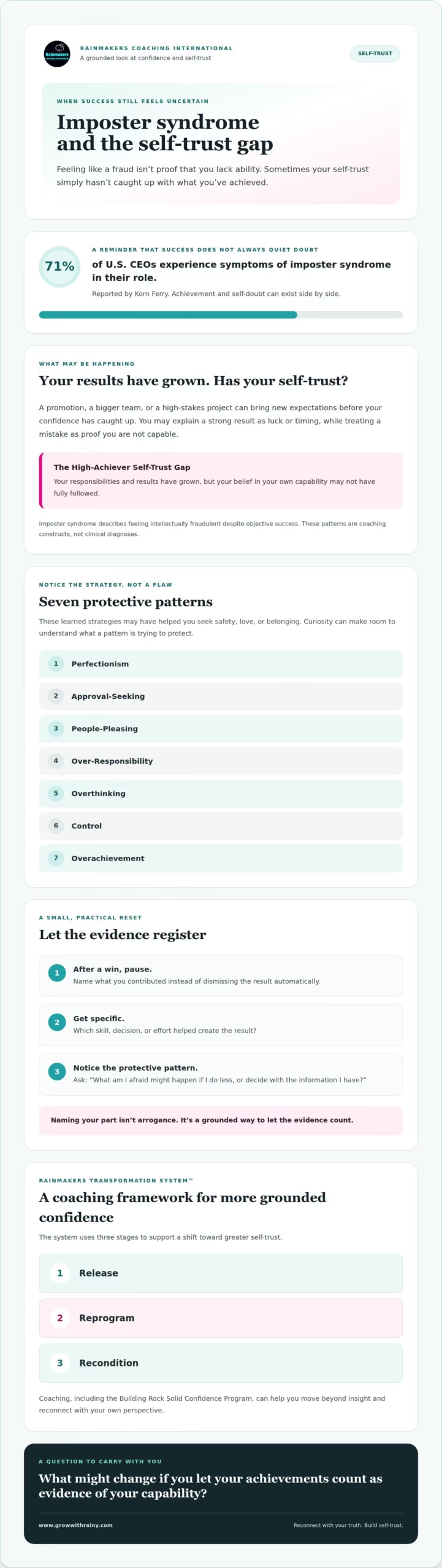
After a win, pause and name what you contributed. Which skill, decision, or effort helped create the result? Naming your part isn’t arrogance. It’s a grounded way to let the evidence register instead of dismissing it automatically.
Why Success Triggers the Inner Critic
A new role or promotion can bring unfamiliar expectations before your confidence has caught up. You might be doing the work well and still feel uncertain because the role asks you to lead in ways you haven’t practiced yet. This can create what Rainmakers calls the High-Achiever Self-Trust Gap: your responsibilities and results have grown, but your belief in your own capability hasn’t fully followed.
If a promotion has made you question whether you belong, explore how senior leaders experience self-doubt after promotion. What would it mean to meet this new chapter with curiosity, rather than expecting yourself to feel completely certain from day one?
The Seven Protective Patterns: Why Success Feels Like a Fluke
What if the habits you’re hard on yourself for once helped you feel safe? In Rainmakers’ coaching approach, imposter syndrome can be explored alongside learned strategies for protecting love, safety, and belonging. These strategies may help you meet expectations or avoid criticism. Over time, though, they can also make it harder to trust your abilities and take up space as yourself.
The seven patterns are Perfectionism, Approval-Seeking, People-Pleasing, Over-Responsibility, Overthinking, Control, and Overachievement. They aren’t character flaws or clinical diagnoses. They’re coaching constructs that invite curiosity: what might this pattern be trying to protect?
Think of your purpose and creativity as a diamond covered in mud. The diamond isn’t broken or missing. The work is to gently clear what’s obscuring it, not to remake who you are.
Overachievement and Overthinking as Safety Shields
Overachievement can begin when performance becomes proof of value. If doing more earns recognition or helps you feel secure, slowing down may feel risky, even after you’ve succeeded. Overthinking can serve a similar purpose: examining every possibility may feel like a way to prevent uncertainty or criticism. Both strategies may have helped you navigate earlier demands.
But what once felt protective can start limiting your next stage of growth. You may keep working past what’s needed or delay decisions while searching for certainty. Notice when the strategy appears, then ask: “What am I afraid might happen if I do less, or decide with the information I have?”
Reconnecting with Your Truth Amidst the Noise
Imagine a bonsai tree carefully shaped to fit its surroundings. The protective self can be like that tree, adapting to what it believes will keep it accepted. Your authentic self isn’t a better version that needs to be built. It’s the part of you that can emerge when there’s room to grow beyond old expectations.
Perfectionism may try to protect your sense of worth by preventing mistakes. Yet if you only let others see the polished version, genuine connection can become harder. Try sharing a considered view before it feels flawless, or acknowledging a contribution without minimizing it. For another perspective on moving beyond limiting beliefs, explore how self-doubt can shape the way you see your own potential.
If you’d like support exploring which patterns are shaping your choices, you could consider a coaching conversation with Rainy
What might become possible if you treated these patterns with curiosity instead of criticism?
The High-Achiever Self-Trust Gap: Why Evidence Isn’t Enough
You may have substantial experience, positive feedback, and results you can point to. Yet when doubt rises, that evidence can feel strangely distant. The Rainmakers perspective is simple: you don’t always need more proof. You may need to build trust in the evidence you already have.
“Faking it until you make it” can widen the gap. If you hide uncertainty behind a flawless performance, success may feel like something you achieved by acting rather than by using your real strengths. The performance can earn approval, but it doesn’t necessarily help you feel more secure in who you are.
And the strain rarely stays at work. If you’re constantly monitoring how you sound in meetings or replaying decisions after hours, it can be harder to be present with family, friends, or yourself. For high-performing professionals managing complex households, seeking specialized support—such as educational consultancy through Royal Family Concierge—can be an important step in delegating pressure rather than carrying every demand alone. The question isn’t only, “How do I perform better?” It’s also, “What is this pressure asking me to believe about my worth?”
The Failure of Logic in the Face of Feeling
Rational reminders can help, but they may not quiet an emotional inner critic on their own. You can list your qualifications and still feel unprepared, because the feeling isn’t always asking for more information. It may be asking for reassurance, safety, or permission to be imperfect. Engaging in experiential learning outside of work, such as the adult improv workshops hosted by Lila Joy Seminars, can provide a supportive space to practice letting go of rigid expectations and trusting yourself in the moment.
In high-achieving circles, the goalpost can keep moving. You reach one target, then decide the next promotion, project, or milestone will finally make you feel legitimate. But if the underlying doubt travels with you, a new title may bring new expectations without creating lasting self-trust. Notice when you dismiss an achievement by immediately raising the standard. What would it look like to let this success count before reaching for the next one?
Reclaiming Self Trust in High-Stakes Environments
Self-trust is a bridge between capability and action. It helps you draw on what you know, make a considered decision, and stay present even when the outcome isn’t certain. Grounded leadership doesn’t require you to eliminate every doubt. It asks you to lead while reconnecting with your own perspective, including your values, experience, and limits.
Transformation isn’t measured only by what you know about yourself. It’s also measured by who you become as you practise responding differently: less driven by proving, more able to act with honesty and confidence. If you want support strengthening that practice, explore the Building Rock Solid Confidence Program.
Where might trusting what you already know change the way you show up?
Reclaiming Your Truth: A Practical Guide to Moving Beyond the Inner Critic
Knowing the name for imposter syndrome doesn’t automatically change how you respond when doubt appears. The Rainmakers Transformation System™ offers a framework for that work: Release, Reprogram, Recondition. The aim isn’t to erase your personality or turn you into a more polished performer. It’s to become more fully yourself, with less energy spent protecting your worth.
The 3R Roadmap for Lasting Change
- Release: Notice and release the protective strategy at work, such as overpreparing before a presentation or staying silent to avoid being challenged.
- Reprogram: Question the story beneath it. Instead of “I’m a fraud,” try, “I’m learning in a visible role, and I can bring the experience I already have.” Choose language that’s honest, not artificially positive.
- Recondition: Practise a different response in daily moments. Receive feedback without immediately dismissing it. In a meeting, pause before apologizing for a considered point.
Change develops through repeated choices. Each time you notice a pattern and respond with more honesty, you have a chance to act from your values rather than from fear.
Authority Through Evidence: The Research on Imposter Syndrome
In their 1978 study, psychologists Pauline Clance and Suzanne Imes explored the experience of intellectual phoniness among high-achieving women. Their work helped name a struggle that can remain private even when someone appears accomplished from the outside. If you recognize that disconnect, it doesn’t mean you’re alone, or that your success is false.
The Dunning-Kruger effect is sometimes described as a simple inverse relationship, with less-skilled people feeling confident and highly skilled people doubting themselves. That shorthand isn’t a personal diagnostic tool. You don’t need a label to take your feelings seriously or to recognize that expertise can coexist with uncertainty.
Daily Reflections to Ground Your Leadership
When self-doubt surfaces in a high-stakes meeting, take a breath and separate the feeling from the facts. What do you know? What’s still uncertain? What is the next useful contribution you can make? You might also keep a brief record after meetings of a decision you made, a question you asked, or feedback you received. The purpose isn’t to build a case for your worth. It’s to practise noticing evidence in real time instead of letting the inner critic dismiss it.
- What am I assuming about myself right now?
- What specific experience or knowledge can I bring to this moment?
- What would I say or do if I didn’t need to prove I belong?
If you weren’t trying to protect your worth, how would you lead today?
Reconnecting with Your Truth: How Coaching Facilitates Transformation
Recognizing imposter syndrome can bring relief. But insight alone may not change what happens when you receive praise, speak in a high-stakes meeting, or make a decision without complete certainty. Transformation shows up in those moments, when you begin responding differently instead of automatically reaching for an old protective pattern.
Executive coaching can offer leaders a grounded space to examine those patterns without reducing their identity to them. The Rainmakers Transformation System™ supports internal change through Release, Reprogram, and Recondition. The aim isn’t to fix a flaw. It’s to loosen what keeps you from reconnecting with your own perspective and leading as more fully yourself.
Beyond Fixing Flaws: The Rainmakers Philosophy
Think of your innate strengths as a diamond covered in mud. The diamond hasn’t disappeared; it’s simply harder to see beneath habits such as perfectionism or overachievement. Coaching helps you notice what those patterns may be protecting, then explore whether they still serve the leader you want to be. As self-trust grows, your value can feel less dependent on flawless performance and more connected to who you are.
This work isn’t about becoming someone else. It’s about making room for your purpose, creativity, and experience to come through without requiring constant proof of your worth.
Your Next Step Toward Self-Mastery
Begin with a gentle check-in. Which pattern feels most familiar right now: Perfectionism , Approval-Seeking, People-Pleasing, Over-Responsibility, Overthinking, Control, or Overachievement? You might write down when it appears, what it seems to protect, and what response would feel more honest. Treat this as a reflection, not a diagnosis. A self-confidence check-in can help you notice where you’d like to build greater self-trust.
If you’re ready to explore these patterns with support, learn more about coaching with Rainy. What might shift if your value didn’t depend on how perfectly you performed today?
Lead with More Trust in Yourself
Imposter syndrome doesn’t mean your achievements are a fluke. It can point to a gap between what you’ve accomplished and what you allow yourself to believe. Protective patterns such as perfectionism and overachievement may have helped you feel secure, but they don’t have to define how you lead next.
You can begin by noticing the pattern, questioning the story behind it, and letting your real contributions count. The goal isn’t to perform confidence perfectly. It’s to build self-trust and lead more fully as yourself.
Rainy brings more than a decade of experience coaching leaders, professionals, and individuals. The Rainmakers Transformation System™ uses Release, Reprogram, and Recondition to support inner transformation. The Building Rock Solid Confidence Program is one way to explore this work.
You don’t need to become someone else to lead with confidence. Keep reconnecting with your own perspective, one decision at a time.
Frequently Asked Questions
What is the main cause of imposter syndrome in high achievers?
There isn’t one cause that explains everyone’s experience of imposter syndrome. For some high achievers, learned strategies such as perfectionism or overachievement may have helped them seek approval, safety, or belonging. These patterns can persist even after circumstances change. Rather than asking what’s wrong with you, try asking what the pattern is trying to protect, and whether it still supports the way you want to work and lead.
Can imposter syndrome ever be a good thing for my career?
Self-doubt can sometimes prompt useful reflection, such as identifying a skill you want to strengthen or preparing thoughtfully for a challenge. But persistent fear of being exposed can also lead you to overwork, dismiss achievements, or avoid opportunities. The feeling itself isn’t proof that you’re growing or that you lack ability. Notice whether it’s helping you take a considered next step or keeping you stuck in proving yourself.
How do I tell the difference between imposter syndrome and actual lack of skill?
Look for specific, observable feedback rather than relying only on a feeling. Is there a clear task you haven’t learned yet, or are you discounting your work despite positive results and relevant experience? If there’s a real skills gap, identify what you need to learn and seek appropriate feedback or practice. If the concern stays vague and shifts whenever you succeed, it may be useful to examine the self-doubt behind it.
Is imposter syndrome a clinical mental health diagnosis?
No. Imposter syndrome, also called the imposter phenomenon, is not a formal mental health diagnosis. In Rainmakers Coaching International’s coaching approach, protective patterns linked to self-doubt are coaching constructs, not clinical diagnoses. They can offer a way to reflect on habits such as perfectionism or overthinking without treating them as disorders. If emotional distress is affecting your wellbeing, consider speaking with a qualified health professional about appropriate support.
How long does it take to overcome the feeling of being a fraud?
There’s no fixed timeline for changing this experience. It can depend on the patterns involved, your circumstances, and how consistently you practise responding differently. Rather than measuring progress by whether doubt disappears, notice small shifts: receiving feedback without dismissing it, making a decision without endless checking, or acknowledging your contribution. Change is less about reaching a perfect state of confidence and more about building self-trust over time.
Why does my imposter syndrome get worse after a promotion?
A promotion often brings new responsibilities, greater visibility, and expectations you may not have encountered before. Your role can change faster than your sense of confidence, so familiar doubts may become louder even when you earned the opportunity. Give yourself room to learn the demands of the position. Ask for clear expectations, notice the experience you already bring, and seek feedback on specific work rather than judging your whole capability.
How can executive coaching help with imposter syndrome specifically?
Executive coaching can provide a grounded space to examine the patterns and beliefs that shape how you lead under pressure. With a coach, you might explore what happens when you receive praise, make a decision, or face uncertainty, then practise responses that feel more authentic. Rainmakers Coaching International uses the Rainmakers Transformation System™: Release, Reprogram, Recondition. Coaching is focused on growth and self-trust, not diagnosing or treating a mental health condition.
What are the 7 protective patterns mentioned in the Rainmakers Transformation System™?
The seven patterns are Perfectionism, Approval-Seeking, People-Pleasing, Over-Responsibility, Overthinking, Control, and Overachievement. In the Rainmakers Coaching International approach, they’re coaching constructs, not clinical diagnoses or fixed labels. You may recognise one more strongly in a particular situation, or not identify with all of them. Use the names as prompts for reflection: what might this response be trying to protect, and does it still help you lead in a way that feels true to you?

Article by
Rainy Rainmaker
Rainy Rainmaker is the founder of Rainmakers Coaching International and a transformational coach for confidence, self-trust, and authentic leadership. Based in Singapore, she helps high-achieving professionals, managers, and leaders who appear capable on the outside but feel quietly held back by self-doubt, overthinking, imposter feelings, burnout, or a loss of direction. Through her signature Rainmaker Transformation Journey™, Rainy helps clients uncover the insights already within them and turn inner clarity into aligned action that creates lasting change in how they work, lead and live.
