
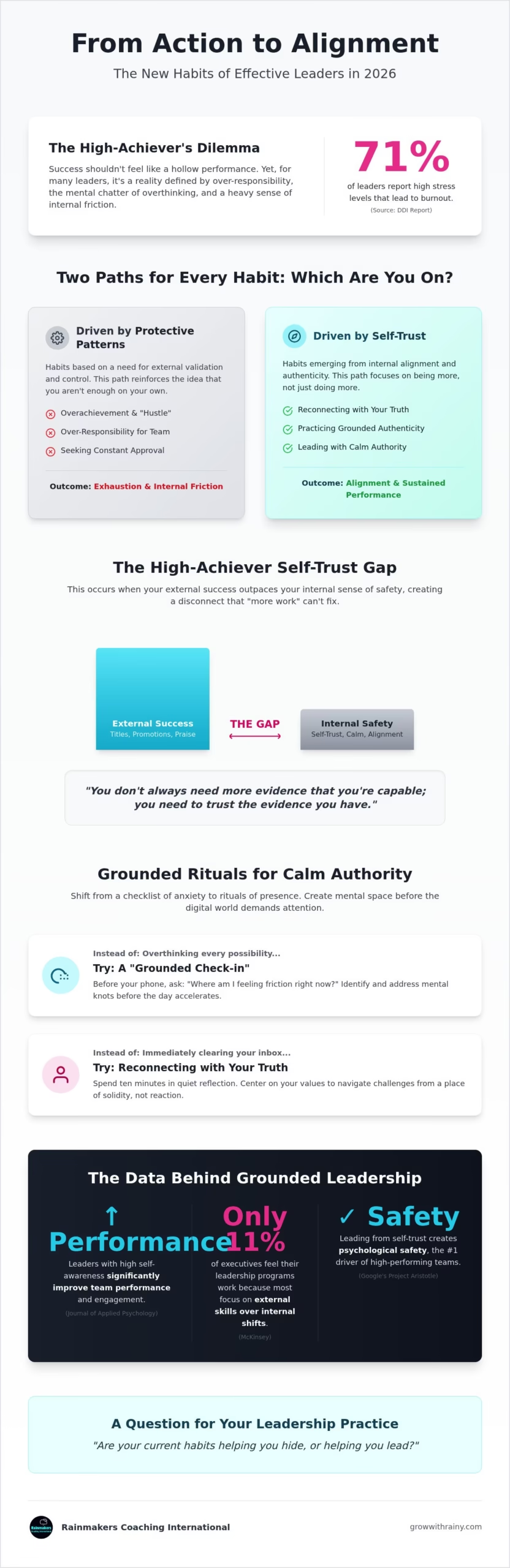
What if the most impactful part of your morning isn’t the inbox you clear, but the silence you protect? When you consider the daily habits of effective leaders, you might think of productivity hacks, yet the reality for many high-achievers is a heavy sense of over-responsibility. You likely feel the weight of every team decision on your shoulders, and the mental chatter of overthinking often follows you home. Success shouldn’t feel like a hollow performance for validation. According to a report from DDI, high stress levels affect 71% of leaders, often leading to this exact sense of internal friction.
In this guide, we’ll explore how leadership in 2026 is moving toward grounded self trust and internal alignment. You’ll discover the internal shifts that move you beyond the need for constant approval and into a state of calm authority. We’ll look at the specific practices that help you stop overthinking and start reconnecting with your truth. By focusing on these human-centric rhythms, you can sustain high performance without sacrificing your well-being.
Before we dive in, ask yourself: is your current leadership style built on what others expect, or on what you know to be true?
Key Takeaways
- Learn how the daily habits of effective leaders are rooted in internal responses rather than just external productivity.
- Identify when overthinking or over-responsibility is hijacking your morning rituals and creating unnecessary internal friction.
- Shift your leadership style from controlling outcomes to coaching others, allowing you to lead with a sense of calm authority.
- Discover how strategic pauses can help you move past the need for constant validation and toward grounded self trust.
- Explore how releasing protective patterns through the Rainmaker Transformation System™ allows you to lead while reconnecting with your truth.
What Defines the Daily Habits of Effective Leaders?
Habits are often sold as a checklist of external behaviours. Wake up early. Cold plunge. Clear the inbox. But the daily habits of effective leaders aren’t just about what you do; they’re about how you respond to the world around you. At Rainmakers, we define habits as consistent internal and external responses that shape your leadership identity. If your 4 am wake-up call is driven by a hidden pattern of Overachievement, it’s not a habit of effectiveness. It’s a habit of exhaustion.
We see two paths for any routine. Habits are either driven by self trust or by protective patterns. Mimicking a famous CEO’s morning won’t work if the underlying driver is a need for validation. You don’t need “more” habits to be a better leader. You need the right ones for you. High-level leadership in 2026 requires a shift from doing more to being more aligned.
The Difference Between Action and Alignment
Many accomplished leaders fall into the High-Achiever Self-Trust Gap. This happens when your external success outpaces your internal sense of safety. You might have read The 7 Habits of Highly Effective People and tried to implement every principle, yet you still feel like you’re carrying the weight of the entire team. This is often because habits driven by protective patterns, like Over-Responsibility, only reinforce the idea that you aren’t enough on your own.
A Rainmakers Principle we often share is this: You don’t always need more evidence that you’re capable; you need to trust the evidence you have. Reconnecting with your truth means moving away from the “hustle” and toward alignment. If you want to lead with impact, you must first learn how to trust yourself again.
Reflection: Are your current habits helping you hide, or helping you lead?
Moving Toward Grounded Leadership
Grounded leadership is about leading from a place of authenticity. It’s the transition from hesitation to decisiveness. When you lead from a place of self trust, you create psychological safety for your team. Research published in the Journal of Applied Psychology indicates that leaders with higher levels of self-awareness significantly improve team performance and engagement.
Despite this, a report from McKinsey found that only about 11% of executives believe their leadership development initiatives achieve their intended goals. This gap exists because most leadership programs focus on external skills rather than internal shifts.
The goal for 2026 isn’t to become a more polished version of a corporate archetype. It’s about becoming more fully yourself in the boardroom. This involves a grounded approach to your daily schedule, where you prioritize connection over control. When you focus on the internal shifts, the external results follow naturally.
Grounded Morning Rituals for High-Achieving Professionals
Many leadership articles suggest waking at 4 am to “get ahead” of the competition. But if you’re waking up early just to clear an inbox that never ends, you’re practicing a habit of anxiety, not leadership. The daily habits of effective leaders in 2026 focus on creating mental space before the digital world demands your attention. These rituals are about quality of presence, not just quantity of tasks completed.
Overthinking is often a hidden attempt to create safety by eliminating uncertainty. If you spend your morning simulating every possible disaster, you aren’t planning; you’re trying to control the uncontrollable. This habit creates intense internal friction. Perfectionism often shows up here too, turning your morning schedule into a rigid test you feel you must pass to be considered “productive.”
Instead of a checklist, try a Grounded Check-in. Before you touch your phone, ask yourself: “Where am I feeling friction right now?” Identifying these physical or mental knots allows you to address them before the day accelerates. This helps you lead with calm authority rather than reactive stress.
Reconnecting with Your Truth Before the First Email
Spend ten minutes in quiet reflection before opening your laptop. This isn’t about clearing your mind; it’s about centering on your personal values. Understanding how to identify and use your strengths at work helps you navigate the day’s challenges from a place of solidity.
Behavioural studies show that pre-work mindfulness practices significantly improve executive function and emotional regulation throughout the day. By setting this foundation, you align with the daily habits for personal leadership that actually sustain long-term success without burnout.
Breaking the Cycle of Overachievement
There’s a vital difference between high performance and overachievement. High performance is a result of skill and focus. Overachievement is a protective pattern where you use performance as proof of your personal value. When you plan your day through this lens, your to-do list becomes a burden of over-responsibility.
Replace your standard list with Grounded Intentions. Instead of “Finish the report,” try “Provide clarity on the Q3 project.” This shifts the focus from the task to the impact you want to create.
If you find yourself struggling to break the cycle of hustle, a 90-minute coaching conversation can help you identify the drivers behind your need to overachieve. Leading from self trust means knowing that your value isn’t tied to how many boxes you check by noon.
Reflection Question: If you didn’t have to prove your value today, how would you approach your first meeting?
The Habit of Strategic Pausing: Overcoming Over-Responsibility
Do you often feel like the entire organization rests solely on your shoulders? This is the weight of Over-Responsibility. It’s the silent, heavy belief that you must keep everyone and everything okay at all times. At Rainmakers, we’ve observed that this pattern often begins in childhood. It’s frequently the result of a child learning they are responsible for the emotional stability of those around them. Carrying this into the boardroom creates intense internal friction and prevents you from leading with calm authority.
One of the most powerful daily habits of effective leaders is the Strategic Pause. This isn’t just a coffee break or a moment to scroll through your phone. It’s a deliberate choice to step back and enter the “Release” stage of the Rainmaker Transformation System™. By pausing, you acknowledge the pressure and consciously choose to let go of burdens that aren’t yours to carry. It’s a practice of reconnecting with your truth so you can act from alignment rather than anxiety.
Why High-Achievers Struggle to Stop
Most high-performers fear that stopping, even for a minute, means they’re failing their team. We’ve been conditioned to equate constant movement with value, fearing we’ll be seen as unproductive.
However, a study from Harvard Business Review highlights that the “pause” is critical for high-stakes strategic decision-making. Without it, you’re merely reacting to the loudest fire. Reclaiming this space is a key part of Executive Presence. When you stop “doing” for a moment, you gain the clarity needed for essential leadership habits for team success. You don’t need to fix everyone. You just need to be present.
Practical Strategies for Daily Resilience
To make this practical, try the “Transition Minute.” Between every meeting or call, take sixty seconds to simply sit. Don’t check your messages. Don’t plan the next talk. Use this time to shed the energy of the previous conversation. It’s a grounded way to reset your nervous system before you step into the next room. This small shift helps you move beyond the “hustle” and back into your own center.
Setting boundaries is another essential practice for daily resilience . If you feel a wave of guilt when saying no, it’s likely the “People-Pleasing” pattern at work. Remember that a clear, honest boundary is often the kindest thing you can give your team. It protects your energy and allows them the space to take ownership of their own growth. You aren’t responsible for their every reaction; you’re responsible for your own alignment.
Reflection Question: What burden are you carrying today that isn’t actually yours to hold?
Relational Habits: Leading Through Connection, Not Control
When you feel out of sync, the instinct is often to tighten the grip. This “Control” pattern is a common response for leaders trying to reclaim a sense of safety. By taking away a team member’s agency, you might feel temporary relief, but you’re actually eroding the collective self trust of your organization.
The daily habits of effective leaders in 2026 involve a conscious shift from managing tasks to coaching people. Instead of trying to fix others, you empower them to find their own treasures. This transition allows you to lead with a sense of calm authority rather than reactive micromanagement.
If your leadership is driven by a need for validation, you likely struggle with the “Approval-Seeking” pattern. Do you find yourself making decisions based on how they’ll be perceived by your subordinates or your board? This creates intense internal friction.
Authentic leadership requires the courage to be honest even when it’s uncomfortable. Reconnecting with your truth means accepting that your value isn’t tied to being liked, but to being aligned with your core values.
The Habit of Curiosity Over Certainty
Effective leaders ask more questions than they give answers. At Rainmakers, we believe confidence isn’t about becoming louder; it’s about being yourself when the stakes are high. One practical way to practice this is the “WAIT” rule: Why Am I Talking?
During team meetings, use this as a diagnostic tool. If you’re speaking to fill the silence or to prove your expertise, you’re likely operating from a protective pattern. Silence is often where the most profound insights are found. By listening more, you build a culture where others feel safe to contribute their best ideas.
Building Trust Through Vulnerability
Admitting you don’t have all the answers is a grounded leadership strength. It signals to your team that it’s safe for them to be human, too. Research by Amy Edmondson on Psychological Safety shows that teams who feel safe to take risks and admit mistakes are significantly more productive and innovative.
When you model vulnerability, you build a foundation of trust that no amount of “command and control” can replicate. Reconnecting with your truth means accepting that your humanity is your greatest asset in the boardroom. It moves the team from a state of hesitation to a state of collective action.
Book a 90-minute coaching conversation to explore your leadership patterns
Reflection Question: Where are you trying to control an outcome because you don’t trust your team?
Cultivating Self Trust: The Rainmakers Approach to Daily Leadership
The most transformative daily habits of effective leaders aren’t found in a productivity app. They’re found in the quiet moments where you choose alignment over achievement. The goal of this work isn’t simply to find more success. It’s to become more fully yourself in every room you enter.
When you move beyond the need for “fixing flaws,” you begin to lead with a sense of calm authority that others naturally want to follow. Reconnecting with your truth is the foundation of every decision you make.
Integrating the 3-R Framework into Your Day
At Rainmakers, we use the Rainmaker Transformation System™ to move past the High-Achiever Self-Trust Gap. This involves a three-step daily rhythm: Release, Reprogram, and Recondition.
Release is the practice of letting go of a protective pattern, like Perfectionism, before you step into a high-stakes presentation. It’s acknowledging the fear and choosing not to let it drive your actions.
Reprogram involves shifting your internal narrative. If you find yourself thinking “I must do this to be valued,” you consciously shift to “I choose to do this because it aligns with my truth.”
Finally, Recondition focuses on small, daily acts of self trust. This might mean honouring a boundary you set for your lunch hour or speaking up when you’d normally stay silent. These small wins build a grounded foundation over time.
Research from DDI indicates that high stress levels affect 71% of leaders, often because they’re operating from patterns of over-responsibility rather than self trust. By focusing on these internal shifts, you lower that internal friction and create space for genuine connection with your team.
When Habits Aren’t Enough
Sometimes, the patterns of Overthinking or Control are so deeply rooted that a new morning routine isn’t enough to shift them. If you find yourself repeatedly falling back into the “hustle” despite your best intentions, deeper support may be the next logical step.
Executive or Life Coaching provides the outside perspective needed to see the patterns you’ve grown used to. It’s about building the internal capacity to lead from a place of authenticity rather than fear.
In 2026, the most effective leaders will be those who have done the internal work to remain grounded in their own truth. If you’re ready to explore how this looks for your specific situation, Executive Coaching Singapore can help you release the hidden patterns holding you back. You don’t need to carry the weight of the entire team alone. You just need to trust the leader you already are.
Final Reflection: If you trusted yourself completely today, what is the one habit you would stop doing immediately?
Leading from Alignment in 2026
The journey toward impactful leadership starts by looking inward. We’ve explored how the daily habits of effective leaders are less about adding more tasks and more about releasing the protective patterns that create internal friction.
Whether you’re practicing a strategic pause or shifting from control to connection, each small act of self trust builds a foundation for long-term resilience. It’s about moving away from the hustle and toward a state of grounded authority that feels sustainable.
Rainmakers Coaching International has spent more than a decade helping senior executives move past the High-Achiever Self-Trust Gap. By using our proprietary 3-R Transformation framework, you can stop performing for validation and start leading from a place of authenticity. With 71% of leaders reporting high stress levels according to DDI, this shift toward alignment is essential. You don’t have to carry the weight of the organization alone.
You’ve already built an impressive career through dedication. Now, it’s time to lead with a sense of calm that feels as solid on the inside as it looks on the outside. Reconnecting with your truth is the most powerful habit you can cultivate as you navigate 2026.
If you trusted your own wisdom completely, what is the first decision you would make today?
Frequently Asked Questions
What are the 3 most important daily habits of effective leaders?
Focus on the strategic pause, grounded check-ins, and curiosity. These are the daily habits of effective leaders that prioritize alignment over checking boxes. By releasing the need to fix everything, you create space for your team to grow. It isn’t about doing more; it’s about being more present. When you lead from self trust, you move from reactive management to a state of calm authority.
Can leadership habits be learned, or are they innate?
Leadership starts with self-mastery – a practice of becoming more fully yourself, which can absolutely be learned. We view habits as learned strategies, not fixed traits. Through the Rainmaker Transformation System™, you can release old protective patterns and recondition your responses. This isn’t about becoming a different person. It’s about removing the mud of outdated beliefs and protective strategies, so your innate leadership strengths can finally shine through in your daily actions.
How do I start a new leadership habit when my schedule is already full?
You don’t need to add more to your plate; you need to change how you approach it. Start by identifying where the pattern of over-responsibility is making you carry unnecessary weight. Use the Transition Minute between meetings to reset your nervous system. These tiny, grounded shifts don’t require more time. They require a different quality of presence. Reconnecting with your truth allows you to drop the hustle and focus on impact.
What is the difference between a high-performing leader and an overachiever?
High performance is a result of your expertise and focus. Overachievement, however, is a protective pattern where you use your performance as proof of your worth. When you’re overachieving, you’re often driven by a fear of being found out or failing others. A high-performer works from a place of grounded self trust, while an overachiever works to fill a gap in their own sense of value.
How can daily habits help with imposter syndrome in senior roles?
Imposter syndrome often stems from the High-Achiever Self-Trust Gap, where your success has outpaced your internal sense of safety. Daily habits of effective leaders, such as grounded check-ins, help you trust the evidence of your capability you already have. By releasing the need for constant approval-seeking, you begin to see your value as something internal rather than something you must earn every single day through performance.
Why do I struggle to maintain new habits even when I know they are good for me?
Resistance usually happens because a hidden protective pattern is trying to keep you safe. If you’ve relied on overthinking to avoid mistakes, a new habit of strategic pausing might feel dangerous to your internal system. This is why insight isn’t the same as transformation. You need to reprogram the underlying narrative and recondition your nervous system to accept a new way of being without feeling like you’re losing your edge.
How does self trust impact the daily decisions of a manager?
Self trust allows you to move from hesitation to decisiveness. When a manager trusts their own truth, they don’t need to simulate every possible disaster through overthinking. They make choices based on their values rather than a need for external validation. This grounded approach creates a sense of stability for the entire team. It allows you to lead with transparency and honesty, which are the hallmarks of authentic leadership in 2026.
What role does empathy play in a leader’s daily routine?
Empathy is a daily tool for building psychological safety. It shifts your focus from controlling outcomes to connecting with people. When you lead with empathy, you’re more likely to use curiosity over certainty, asking questions that empower your team to find their own solutions. This relational habit reduces internal friction and builds a culture of collective self trust. It’s about seeing the treasures in others instead of trying to fix them.

Article by
Rainy Rainmaker
Rainy Rainmaker is the founder of Rainmakers Coaching International and a transformational coach for confidence, self-trust, and authentic leadership.
Based in Singapore, she helps high-achieving professionals, managers, and leaders who appear capable on the outside but feel quietly held back by self-doubt, overthinking, imposter feelings, burnout, or a loss of direction. Through her signature Rainmaker Transformation Journey™: Release, Reprogram, Recondition – Rainy helps clients uncover the insights already within them and turn inner clarity into aligned action that creates lasting change in life, career, and leadership.
